
Air Canada Vancouver Singapore Route Closure Travel Guide 2027

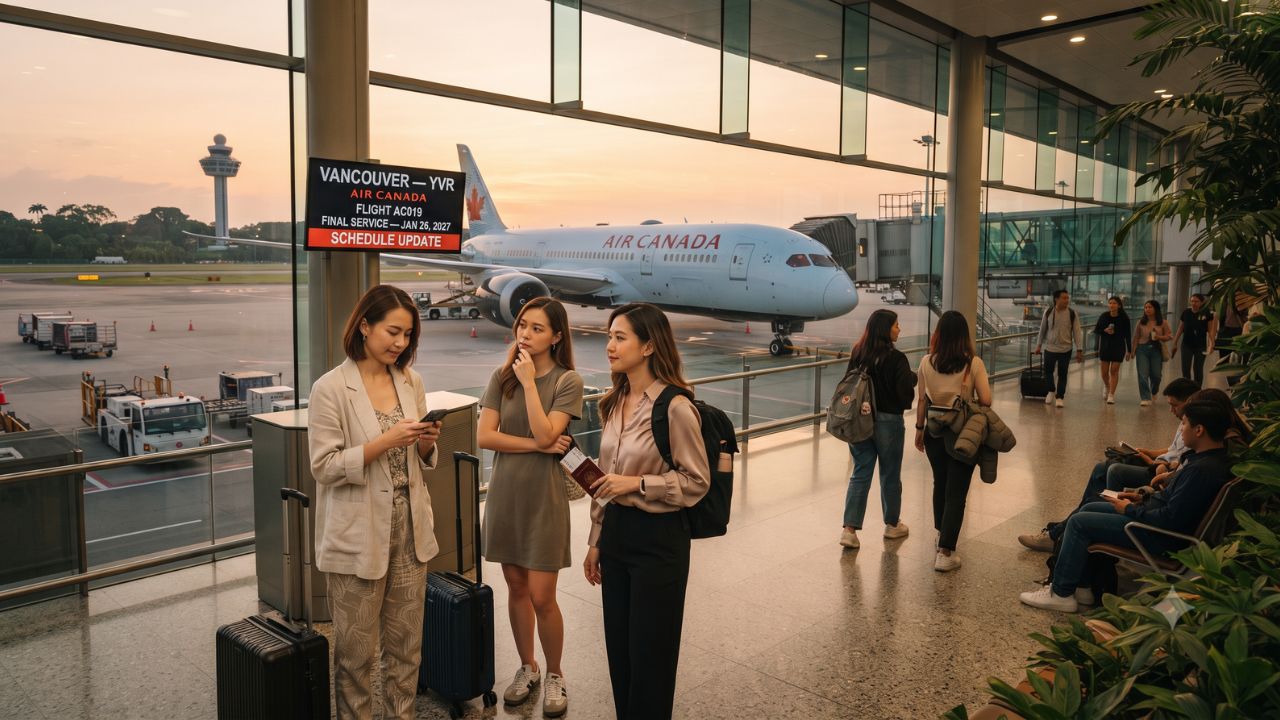
Covering an astonishing 12,818 kilometers across the Pacific Ocean, Air Canada’s longest nonstop international route will permanently exit the skies on January 26, 2027, when the final Boeing 787-9 Dreamliner departs Singapore Changi Airport for Vancouver. First inaugurated with great fanfare in April 2024 operating four times weekly, the ultra-long-haul service represented a pioneering direct bridge between the Canadian Pacific Rim and the heart of Southeast Asia.
According to operational confirmations from Changi Airport Group, the suspension marks the conclusion of Canada's sole direct passenger link to the Lion City. The decision reflects the intense economic headwinds facing ultra-long-distance aviation, where astronomical fuel burns, ultra-heavy crew requirements, and shifting corporate travel demand test the profitability of even the most prestigious flight paths. For transpacific adventurers, business leaders, and global nomads, the route’s sunset requires a tactical shift toward high-efficiency Asian layovers.
Anatomy of an Ultra-Long-Haul Exit: Why Singapore Nonstops Demand Scale
Operating an ultra-long-haul flight spanning nearly sixteen hours westbound demands near-flawless commercial performance. The Boeing 787-9 Dreamliner deployed on the Vancouver (YVR) to Singapore (SIN) corridor carried immense payload weight in aviation fuel alone, reducing the volume of commercial cargo the aircraft could haul across the Pacific.
When the route took flight in April 2024, it was celebrated by tourism officials and business councils across British Columbia as a gateway to ASEAN economies. However, maintaining four weekly rotations across a fifteen-hour time difference proved operationally intensive. Ultra-long routes depend heavily on steady, year-round corporate travel in premium cabins to subsidize economy seating. As airlines realign widebody fleets toward denser leisure markets and shorter transpacific corridors, Air Canada made the strategic determination that commercial returns did not justify continuous year-round dedication of long-range Dreamliner frames.
Following the final scheduled departure on January 26, 2027, Canadian travelers bound for Singapore will transition back to connecting itineraries. Star Alliance partner networks via Tokyo Narita, Tokyo Haneda, Seoul Incheon, and Taipei Taoyuan will absorb the passenger volume, offering seamless single-ticket bookings and baggage transfers through major East Asian hubs.
What Makes Singapore Different
Singapore defies the traditional expectations of a tropical Asian metropolis. Where other regional capitals sprawled rapidly outward, the island nation engineered an intensely disciplined urban environment that seamlessly weaves dense rainforest foliage directly into high-tech civic architecture.
Stepping beyond the futuristic indoor waterfalls and biodomes of the Jewel at Changi Airport, visitors enter a multicultural crossroads shaped by Chinese, Malay, Indian, and Peranakan heritages. The city’s identity thrives in its neighborhood food institutions: UNESCO-recognized hawker centres where second and third-generation cooks prepare claypot rice, Hainanese chicken rice, and spicy laksa beneath whirling ceiling fans.
Equally compelling is the city’s geographic intimacy. Within a compact 734 square kilometers, travelers can wander the preserved pastel shophouses of Katong and Joo Chiat in the morning, cycle through primary tropical rainforest at MacRitchie Reservoir by midday, and dine along the illuminated historic river quays by nightfall. The city operates with meticulous punctuality and spotless cleanliness, serving as both a gentle introduction to Southeast Asia and an endlessly sophisticated culinary capital.
Visitor Insider Tips
Maximizing a journey to the Lion City requires local insight into weather patterns, transit systems, and neighbourhood cultural rhythms. Use these practical strategies for a rewarding visit:
- Optimal Climate Windows: Singapore sits just one degree north of the equator, experiencing consistent warmth year-round. However, the wettest phase of the Northeast Monsoon occurs from November through January. For lower rainfall and vibrant cultural festivities, schedule visits between February and April, when clear skies make outdoor exploring along Marina Bay comfortable.
- Base Away from Tourist Strips: While Marina Bay and Orchard Road host major international hotel towers, basing yourself in heritage enclaves offers richer immersion. Consider boutique properties in Tanjong Pagar or Chinatown for immediate access to historic shophouses and cocktail bars, or stay in Tiong Bahru for quiet Art Deco architecture and indie bookstores.
- Effortless Mass Transit: Avoid hailing street cabs during peak evening hours when rain surcharges apply. Singapore’s Mass Rapid Transit (MRT) network is comprehensive, air-conditioned, and fully tap-to-pay using contactless international credit cards or mobile wallets, requiring no separate transit card purchase.
- Hawker Etiquette and the Chope Custom: When visiting bustling food centres like Maxwell, Old Airport Road, or Amoy Street, look for packets of tissue paper placed on empty tables. This local practice, known as choping, indicates the seat is reserved while the patron orders food. Carry small cash notes or scan local payment QR codes, and return your trays to designated clearing stations to adhere to local dining regulations.
- Official Cultural Itineraries: Explore curated heritage walking trails and updated cultural event schedules through the Singapore Tourism Board platform before mapping your daily neighborhood excursions.
Cultural and Environmental Context
Singapore’s global reputation as a "City in Nature" is the result of half a century of intentional environmental planning. Facing severe land constraints and tropical urban heat, the nation mandated green building standards that require new developments to replace lost ground vegetation with multi-level sky gardens, green walls, and rooftop tree canopies.
At the heart of the country's conservation ethos are the Singapore Botanic Gardens, established in 1859 and inscribed as a UNESCO World Heritage site under the UNESCO World Heritage Centre. The historic grounds safeguard rare heritage trees and ancient rainforest patches while leading international botanical research. Meanwhile, community-led initiatives in residential heartlands like Ang Mo Kio and Jurong focus on biodiversity corridors that allow native wildlife—such as smooth-coated otters and oriental pied hornbills—to thrive alongside modern high-rise housing estates.
Responsible travelers are encouraged to embrace Singapore's circular economy programs. The island recycles nearly all its wastewater through advanced purification facilities and enforces stringent marine conservation regulations across its southern offshore islands, including the coral nurseries at Sisters' Islands Marine Park. Supporting local heritage craftsmen, dining at community hawker stalls, and utilizing electric bus and train networks directly supports Singapore’s ambitious Green Plan targets.
FAQ: Visiting Singapore 2027
What is the best transit route from Canada to Singapore after January 2027?
Travelers from Vancouver and western Canada can book smooth one-stop connections through Tokyo (Narita or Haneda), Seoul Incheon, or Taipei with Star Alliance partners, keeping total journey times under nineteen hours.
Do Canadian citizens require a visa for Singapore?
No. Canadian passport holders do not require a visa for tourist visits up to 30 days. Travelers must simply complete the electronic SG Arrival Card online within three days prior to arrival.
How expensive is dining in Singapore?
Dining caters to every budget. Meals at UNESCO-listed hawker centres cost between four and eight Singapore dollars per dish, while upscale dining in heritage conservation areas ranges significantly higher.
Is tap water safe to drink across Singapore?
Yes. Tap water in Singapore strictly adheres to World Health Organization drinking water standards and is entirely safe to drink directly without filtration.
Related Travel Guides
Disclaimer
This article is for informational and educational purposes only. It does not constitute legal, financial, or professional advice. While we strive to provide accurate and up-to-date information, travel policies, regulations, and conditions change rapidly. Always verify information with official sources before making travel decisions. Nomad Lawyer makes no representations about the accuracy, reliability, completeness, or suitability of the information provided. Readers should consult qualified professionals for advice specific to their circumstances. The views expressed in this article are those of the author and do not necessarily reflect the views of Nomad Lawyer.
Raushan Kumar
Founder & Lead Developer
Full-stack developer with 11+ years of experience and a passionate traveller. Raushan built Nomad Lawyer from the ground up with a vision to create the best travel and law experience on the web.
Learn more about our team →