
AI Integration in Travel: The Shift Toward Human-Centric Leadership
Analysis of how AI automation is reshaping travel jobs and why empathetic leadership is critical for airlines, hotels, and cruise operators in 2026.

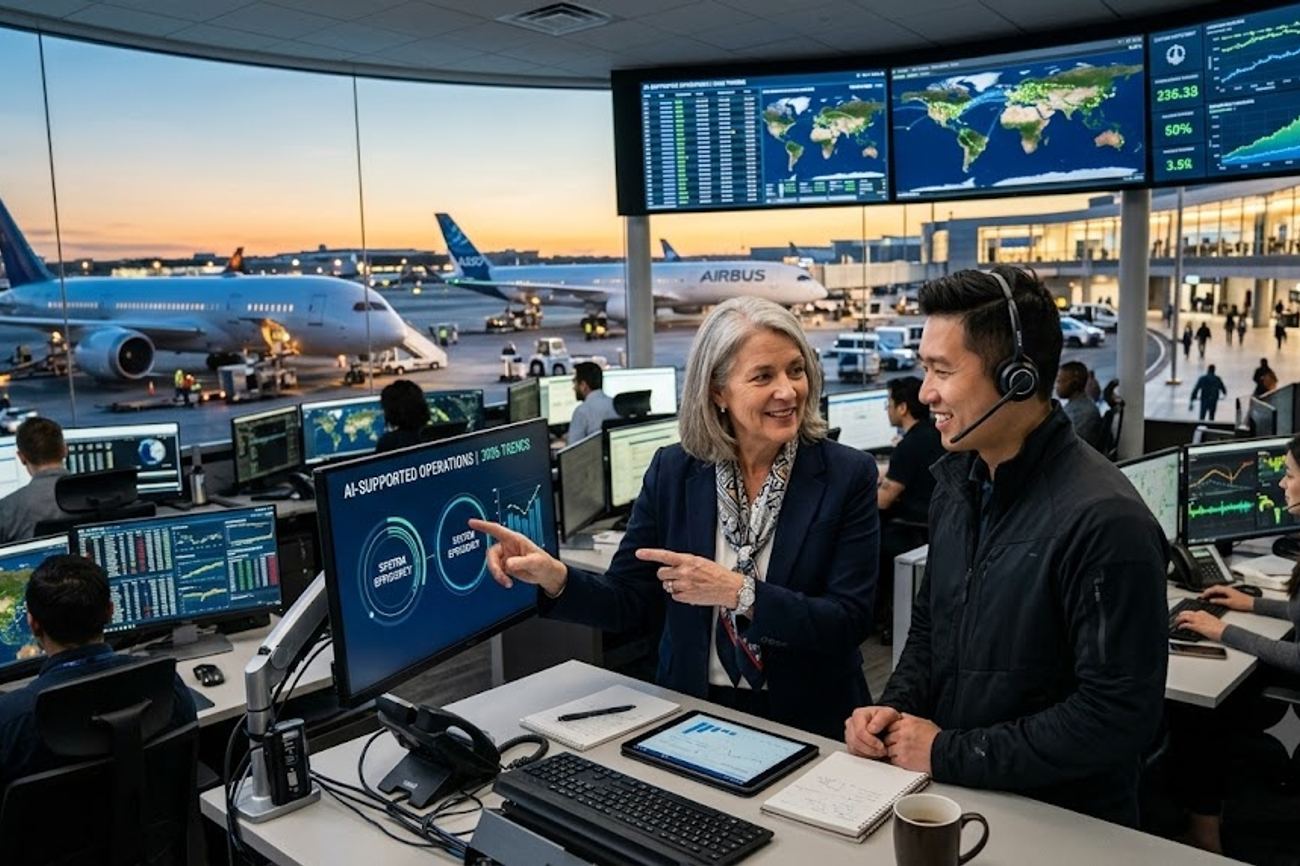
Image generated by AI
The travel industry is experiencing a structural shift as artificial intelligence moves beyond routine technical tasks into the reorganization of work, customer service, and team management. Analysis indicates that while airlines, hotels, cruise operators, and tour businesses are investing heavily in automation, the transition is creating significant workforce instability.
The integration of AI is no longer limited to backend data processing. It now directly impacts front-end operations, altering how employees interact with passengers and manage complex travel logistics.
Sector-Specific Impact Breakdown
- Aviation: Implementation of automated operational systems for flight management and ground handling, shifting human roles toward high-level oversight and exception handling.
- Hospitality: Deployment of AI-powered reservation and concierge tools, requiring hotel staff to pivot from administrative tasks to high-empathy guest relations.
- Cruise & Tourism: Use of AI for personalized itinerary planning and customer service, where human judgment remains the primary tool for service recovery and crisis management.
- Technology Providers: Rapid automation of repetitive coding and support processes, necessitating a redesign of professional development paths.
Passenger Rights & Advisory (Workforce Impact)
For the traveler, the shift toward AI-driven operations means a potential decrease in immediate human availability for routine queries but a critical need for human intervention during disruptions. Our analysis of current industry trends suggests the following for passengers:
- Service Recovery: In the event of flight cancellations or hotel overbookings, AI systems may offer standardized vouchers. However, passengers should insist on speaking with a human supervisor for complex rebookings, as "emotional intelligence" and "complex decision-making" remain human-led functions.
- Digital Friction: As companies automate, passengers may encounter "automation loops." We advise documenting all AI-driven interactions via screenshots to ensure a paper trail for compensation claims under frameworks like EU261/2004 or DOT guidelines.
- Expectation Management: Passengers should recognize that while AI speeds up booking, the "human factor" is now the premium service tier. Requesting human intervention early in a disruption event often yields more flexible results than relying on automated chatbots.
Industry Analyst View
The current trajectory suggests that the competitive advantage in 2026 will not belong to the company with the most advanced AI, but to those that successfully manage the "human-AI hybrid" workforce.
Operational data shows that introducing AI without comprehensive employee training leads to declining engagement and service failures. In a sector fundamentally built on hospitality, the inability to balance technological efficiency with empathetic leadership represents a significant operational risk. The "human element" is not a luxury; it is a requirement for maintaining customer trust during systemic failures.
Related Travel Guides
Disclaimer
This article is for informational and educational purposes only. It does not constitute legal, financial, or professional advice. While we strive to provide accurate and up-to-date information, travel policies, regulations, and conditions change rapidly. Always verify information with official sources before making travel decisions. Nomad Lawyer makes no representations about the accuracy, reliability, completeness, or suitability of the information provided. Readers should consult qualified professionals for advice specific to their circumstances. The views expressed in this article are those of the author and do not necessarily reflect the views of Nomad Lawyer.
Kunal K Choudhary
Co-Founder & Contributor
A passionate traveller and tech enthusiast. Kunal contributes to the vision and growth of Nomad Lawyer, bringing fresh perspectives and driving the community forward.
Learn more about our team →