
AI Transformation in Asian Hospitality: How Vietnam and Singapore are Redefining Hotel Bookings in 2026
Artificial intelligence is evolving from a novelty into the primary engine for hotel bookings across Asia, shifting the industry toward personalized, comprehensive travel solutions.

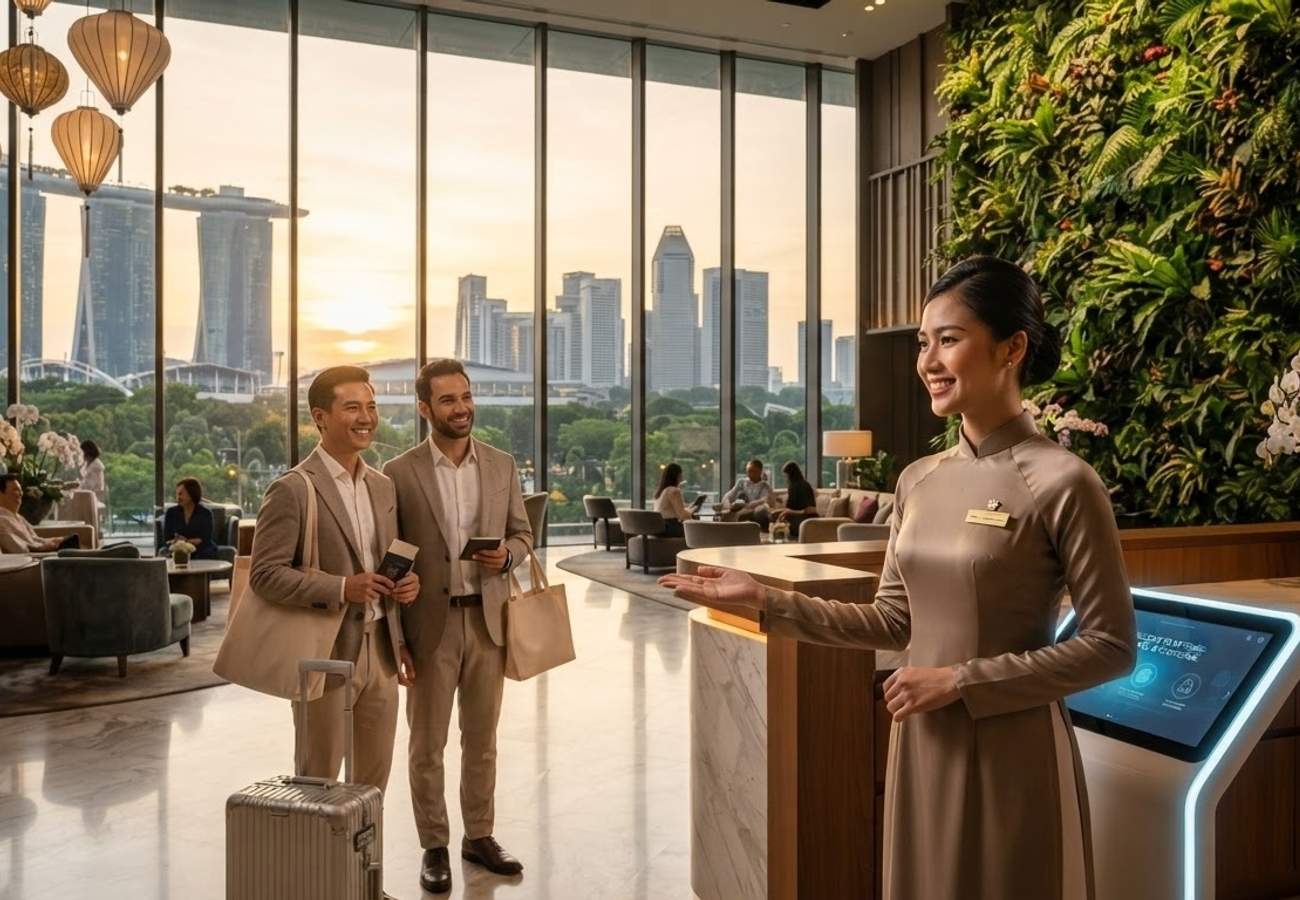
Image generated by AI
AI is shifting the hotel booking journey from a series of fragmented searches to a single, comprehensive "travel solution" provided by intelligent agents. Across Asia, nations like Vietnam, Singapore, and Japan are integrating AI to solve labor shortages while attempting to preserve the human-centric core of hospitality.
The Shift Toward Intelligent Booking Ecosystems
The mechanism of travel planning is undergoing a fundamental transition. As highlighted during the Vietnam Hotel Innovation Summit 2026, the industry is moving away from the traditional "search-and-filter" model. Philippe Le Bourhis, General Manager of Gallery Hotel Collection, notes that AI is increasingly functioning as a digital travel agent, capable of synthesizing complex guest needs into a single itinerary.
Rather than a traveler conducting five separate searches for a hotel, a local experience, a transport link, and a dining reservation, AI-driven platforms now offer complete destination solutions. This evolution means hotels are no longer just competing on room rates or amenities, but on how well their data integrates into the AI ecosystems that travelers use to plan their entire trip.
Regional Adoption Patterns Across Asia
The adoption of AI in hospitality is not uniform; it is being driven by specific regional pressures and goals:
- Japan: Integration focuses heavily on automation and robotics to mitigate severe hospitality labor pressures and aging workforce demographics.
- Singapore: The focus is on high-tech tourism innovation, creating seamless, destination-wide intelligent services that connect the airport to the hotel room.
- Hong Kong and China: These markets are scaling personalized, intelligent travel services that leverage massive data sets to predict guest preferences before they arrive.
- Vietnam: The industry is currently in a phase of active debate and rapid adoption, positioning itself as a key growth market for innovation in Southeast Asia.
Balancing Automation with Human Capital
While the technical capability of AI to handle bookings and concierge tasks is accelerating, a critical tension remains: the "people business" aspect of hospitality. The industry is discovering that while AI can optimize the transaction, it cannot replicate the emotional connection.
The real impact for the visitor is a hybrid experience. AI handles the friction—the booking, the check-in, the basic queries—freeing human staff to focus on high-value emotional labor and personalized guest care. However, this creates a new challenge for hotel operators: people development. The industry must now train staff to work alongside AI, ensuring that technological growth does not outpace the development of human skills.
Visitor Insider Tips for the AI-Driven Era
For the modern nomad or luxury traveler visiting these tech-forward hubs, navigating the new landscape requires a few local insights:
- The "Human-Touch" Window: In Japan and Singapore, use AI for the logistics (bookings, translations, schedules), but seek out "Omotenashi" (traditional Japanese hospitality) or local guides for authentic cultural immersion. The most valuable experiences are now those that AI cannot automate.
- Booking Strategy: Start your search with a broad, conversational prompt to an AI agent (e.g., "Find me a sustainable boutique hotel in Ho Chi Minh City near a traditional coffee market with a workspace") rather than using rigid filters on booking sites.
- Eco-Etiquette: Many AI-integrated hotels in Asia are linking their systems to energy-saving initiatives. Be aware that "smart rooms" may automatically adjust climate and lighting based on occupancy to support regional sustainability goals.
- Hidden Gems: While AI suggests the most "optimized" spots, the best local dining in Vietnam often remains offline. Use AI for the hotel, but walk the alleys of District 1 or 3 in Ho Chi Minh City to find eateries that aren't indexed in the major datasets.
Tourism Outlook: The Future of the Guest Experience
The long-term trajectory suggests a move away from "Instagrammable" aesthetics toward "experiential" value. The novelty of a visually striking lobby is fading; the new luxury is a frictionless journey where the hotel knows the guest's preferences instinctively through AI, yet provides genuine human warmth upon arrival.
For destinations like Vietnam, which remains a top-three market for several major collections, the ability to blend this high-tech efficiency with authentic cultural heritage will be the primary competitive advantage. The race is no longer about who has the best app, but who uses AI to make the human experience feel more effortless.
The future of travel is a paradox: the more we automate the process, the more we value the person.
Related Travel Guides
Disclaimer
This article is for informational and educational purposes only. It does not constitute legal, financial, or professional advice. While we strive to provide accurate and up-to-date information, travel policies, regulations, and conditions change rapidly. Always verify information with official sources before making travel decisions. Nomad Lawyer makes no representations about the accuracy, reliability, completeness, or suitability of the information provided. Readers should consult qualified professionals for advice specific to their circumstances. The views expressed in this article are those of the author and do not necessarily reflect the views of Nomad Lawyer.
Raushan Kumar
Founder & Lead Developer
Full-stack developer with 11+ years of experience and a passionate traveller. Raushan built Nomad Lawyer from the ground up with a vision to create the best travel and law experience on the web.
Learn more about our team →