
Indian Railways Facilitates Excursion Package Connecting Ahmedabad to Dubai with All-Inclusive Fares
IRCTC launches an all-inclusive international flight tour connecting Ahmedabad to Dubai and Abu Dhabi from Rs 92,200, featuring the BAPS Hindu Mandir and Miracle Garden.

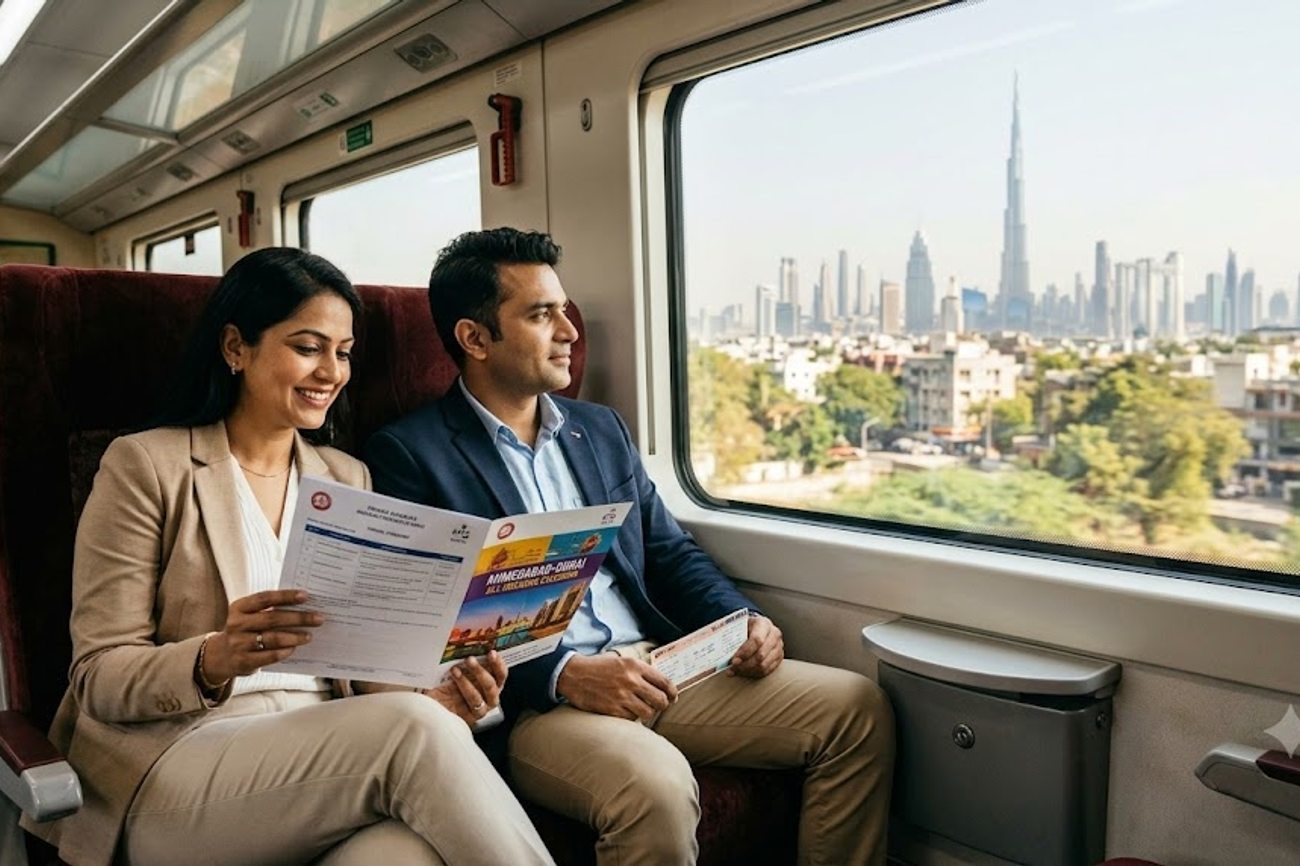
Image generated by AI
For generations, Gujarati merchants boarded wooden dhows from western Indian seaports to cross the Arabian Sea, but today India's national rail operator is sending travelers into Gulf skies for Rs 92,200 all-inclusive. The Indian Railway Catering and Tourism Corporation (IRCTC), the commercial arm of Indian Railways, has stepped outside its traditional track network to launch an outbound flight package linking Ahmedabad to Dubai and Abu Dhabi. Departing from Sardar Vallabhbhai Patel International Airport, this state-backed itinerary bundles direct airfare, hotel stays, guided ground transfers, and curated landmark visits into a single purchase. For travelers from Gujarat, this initiative transforms international transit into a predictable, heritage-infused journey connecting western India to the United Arab Emirates.
Traveling to Dubai and Abu Dhabi from Ahmedabad reveals a cultural bridge shaped by centuries of spice trade, merchant routes, and expatriate community ties. While independent overseas journeys require managing flight portals, currency exchange, visa paperwork, and local taxi negotiations, a public-sector guided tour offers logistical reassurance. By uniting modern engineering marvels with spiritual landmarks, this initiative demonstrates how state-led hospitality meets the rising travel ambitions of regional Indian voyagers.
The Gujarat-Emirates Air Bridge: State-Led Hospitality Reaches the Gulf
The Ahmedabad-to-Dubai excursion marks a major milestone in the evolution of Indian Railways. Historically focused on domestic routes and special pilgrim trains, IRCTC gradually introduced domestic air packages before launching select overseas itineraries to Bali and Nepal. Now, by operating flights directly from Sardar Vallabhbhai Patel International Airport into the United Arab Emirates, the railway enterprise enters one of South Asia's busiest aviation corridors.
Starting at Rs 92,200 per person based on occupancy, the package removes the uncertainty of independent planning. Independent travelers frequently navigate fragmented flight bookings, hotel deposits, visa filings, and cross-border transport between emirates. IRCTC integrates every element into a single booking, covering international airfare, accommodations, transfers, scheduled sightseeing, and designated meals. Reservations can be completed through the official IRCTC Tourism portal or regional passenger reservation counters.
The itinerary connects Dubai and Abu Dhabi, showcasing contrasting architectural milestones. In Dubai, travelers visit the waterfront around the sail-shaped Burj Al Arab and tour the floral exhibits at Miracle Garden. Continuing south to Abu Dhabi, the itinerary includes two monuments of global significance: the white marble domes of the Sheikh Zayed Mosque and the newly inaugurated BAPS Hindu Mandir. The inclusion of the hand-carved stone temple in Abu Dhabi reflects an understanding of Gujarati cultural heritage, offering travelers a meaningful spiritual stop alongside modern urban attractions.
What Makes Dubai and Abu Dhabi Different: From Maritime Heritage to Desert Modernity
The Arabian Gulf urban environment is distinct from any other travel circuit. Rather than expanding slowly over centuries, cities like Dubai and Abu Dhabi grew rapidly from coastal trading settlements into architectural centers framed by the Persian Gulf and desert sands. Despite modern skylines, historical connections linking Gujarat to the Emirates remain strong. For generations, dhows sailed between Gulf ports and western Indian harbors like Mandvi, Surat, and Porbandar, trading pearls, textiles, dates, and timber.
That shared past is visible along Dubai Creek. Walking the sand-colored lanes of Al Fahidi Historical Neighbourhood or watching wooden boats load cargo along Deira's quays connects visitors to an authentic merchant heritage. Arriving in the Emirates as an Indian traveler feels welcoming, supported by accessible vegetarian dining, multilingual signage, and active community networks.
The architectural contrast between the two emirates provides another layer of distinction. Dubai highlights soaring towers, engineering feats, and retail centers, while Abu Dhabi conveys a civic atmosphere focused on cultural institutions. At the Sheikh Zayed Mosque, eighty-two white marble domes and reflective pools demonstrate classical Islamic architecture. Nearby in Abu Mureikha, the BAPS Hindu Mandir rises from desert sands, carved from pink Rajasthani sandstone and Italian marble without structural steel, reflecting craftsmanship and religious harmony. Visitors can discover regional attractions through Visit Dubai and Visit Abu Dhabi.
Visitor Insider Tips: Navigating the Emirates with Ease
Traveling between Ahmedabad, Dubai, and Abu Dhabi requires adapting to Gulf climate conditions, transit systems, and local customs. A successful trip depends on timing, appropriate attire, and knowing how to explore beyond tour stops.
Timing Your Visit Plan your trip during the winter season from November through March. Daytime temperatures range between 20°C and 28°C, providing comfortable weather for exploring the Miracle Garden and heritage districts. Summer months from June through September bring temperatures exceeding 42°C, making outdoor sightseeing difficult and confining visitors to air-conditioned interiors.
Sacred Site Etiquette Visiting religious landmarks requires respectful preparation. At the Sheikh Zayed Mosque, visitors must observe modest dress codes: women must cover their hair, arms, and ankles in loose clothing, while men must wear full-length trousers. At the BAPS Hindu Mandir, shoes must be removed before entering the inner sanctum, with shoulders and knees covered. Carrying a light scarf ensures smooth entry.
Culinary Exploration While the package provides designated meals, explore local dining during free evenings. In Dubai's Karama and Bur Dubai neighborhoods, family eateries serve authentic Gujarati thalis and street chaat reminiscent of Ahmedabad's markets. For traditional Emirati dining in Al Seef, sample fragrant machboos rice, crispy luqaimat dumplings with date syrup, and spiced Karak chai infused with cardamom.
Transport Advice When exploring Dubai independently, buy a silver Nol card for the automated Dubai Metro, which connects Deira, Downtown, and the Marina efficiently. Across Dubai Creek, board a wooden abra for one dirham to cross the water alongside residents. For travel between Dubai and Abu Dhabi, modern coaches navigate the Sheikh Zayed Road (E11) highway in approximately ninety minutes.
Cultural and Environmental Context: Faith, Trade, and Desert Ecology
The launch of curated tours between western India and the Emirates reflects how tourism fosters cultural connection. The opening of the BAPS Hindu Mandir in Abu Dhabi represents a historic milestone for interfaith coexistence in the region, built on land gifted by UAE leadership to serve thousands of resident and visiting families.
Alongside cultural inclusion, the United Arab Emirates actively addresses desert environmental challenges. Maintaining extensive floral installations like Miracle Garden in an arid region depends on advanced drip irrigation and treated water recycling. In Abu Dhabi, renewable energy projects and protected coastal mangrove forests demonstrate expanding ecological commitments.
Travelers can practice sustainable tourism by reducing single-use plastics, supporting heritage craft stalls, and respecting environmental guidelines. The region's historical maritime trade networks, celebrated alongside sites listed with the UNESCO World Heritage Centre, illustrate that cultural exchange and desert habitats demand mindful care. Through respectful travel, visitors ensure that cross-border journeys benefit local communities while honoring regional traditions.
FAQ: Visiting Dubai and Abu Dhabi 2026
What does the IRCTC Ahmedabad to Dubai package include? The package starts at Rs 92,200 per person and covers return airfare from Ahmedabad, hotel lodging, local transfers, visa documentation assistance, scheduled sightseeing, and designated meals.
What is the best season to book this Emirates journey? The winter months from November to March provide comfortable weather between 20°C and 28°C, ideal for touring open-air sites like Miracle Garden and walking between monuments.
What dress code is required for the Sheikh Zayed Mosque and BAPS Mandir? Both monuments require modest clothing covering shoulders, knees, and midriffs. Women must cover their heads at the mosque, and shoes are removed prior to entering the temple.
How do independent travelers commute between Dubai and Abu Dhabi? Visitors can travel between the two emirates via air-conditioned regional buses, registered taxis, or organized tour coaches along the Sheikh Zayed Road highway in approximately ninety minutes.
From centuries-old dhow trade routes across the Arabian Sea to modern flights connecting Ahmedabad to the Emirates, this journey shows that authentic cross-border travel unites heritage, faith, and shared discovery.
Related Travel Guides
Disclaimer
This article is for informational and educational purposes only. It does not constitute legal, financial, or professional advice. While we strive to provide accurate and up-to-date information, travel policies, regulations, and conditions change rapidly. Always verify information with official sources before making travel decisions. Nomad Lawyer makes no representations about the accuracy, reliability, completeness, or suitability of the information provided. Readers should consult qualified professionals for advice specific to their circumstances. The views expressed in this article are those of the author and do not necessarily reflect the views of Nomad Lawyer.
Raushan Kumar
Founder & Lead Developer
Full-stack developer with 11+ years of experience and a passionate traveller. Raushan built Nomad Lawyer from the ground up with a vision to create the best travel and law experience on the web.
Learn more about our team →