
Southwest Airlines Launches Its Longest-Ever Mainland US Route: Boston to San Diego in 6.5 Hours
Breaking airline news and aviation industry updates for 2026.

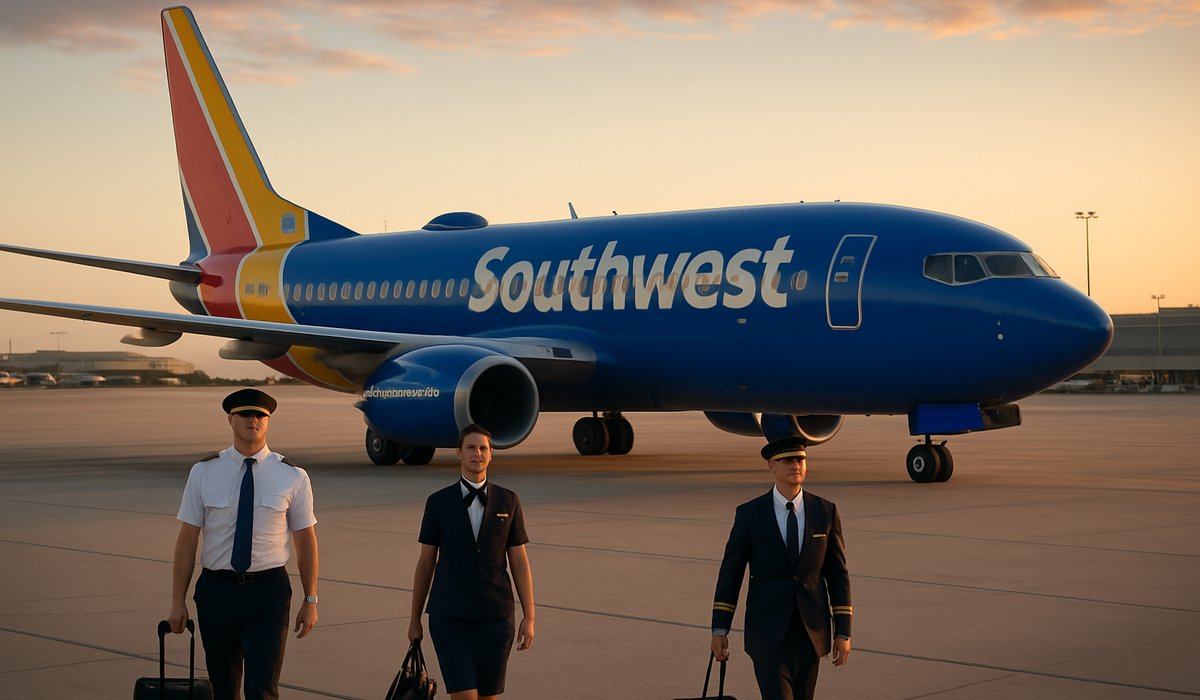
Image generated by AI
Southwest Airlines Launches Its Longest-Ever Mainland US Route: Boston to San Diego in 6.5 Hours
The carrier extends its domestic network with a transcontinental service that reshapes its operational footprint across the continental United States
Record-Breaking Route Marks Expansion Strategy
Southwest Airlines is set to operate its longest-ever scheduled flight within the continental United States this week, launching a new transcontinental service connecting Boston Logan International Airport to San Diego International Airport. The route, spanning approximately 2,400 miles, will require roughly 6.5 hours of flight time—establishing a new benchmark for the Dallas-based carrier's lower 48 operations.
The new Boston-San Diego corridor represents a significant strategic pivot for Southwest, traditionally known for shorter-haul, point-to-point flying. The service extends the airline's reach across the nation's densest business and leisure travel markets, positioning the carrier to compete directly with major full-service competitors on extended transcontinental routes.
Strategic Implications for Southwest's Growth
Industry analysts view this expansion as Southwest's continued effort to modernize its route network and capture premium revenue from longer-distance travelers. The carrier has gradually shifted its operational model over recent years, moving beyond its historical focus on secondary markets and regional hubs toward major metropolitan corridors dominated by larger competitors.
"This route demonstrates Southwest's ambition to establish itself as a serious player on cross-country travel," aviation experts note. The airline's existing domestic portfolio includes numerous long-haul services to Hawaii and Alaska, though those operations represent niche segments. The Boston-San Diego connection, by contrast, taps into mainstream leisure and business demand connecting two major US metropolitan areas.
Operational and Industry Context
The launch arrives as US airlines navigate complex cost pressures, including volatile jet fuel prices and labor agreements. While Southwest historically maintained cost advantages through operational efficiency, newer transcontinental routes require different economic calculations. Extended flight times increase crew scheduling complexity and fuel consumption—factors that influence baggage charges, seat selection fees, and other ancillary revenue streams that have become critical to airline profitability.
The carrier's expansion strategy also reflects broader aviation industry trends. Major competitors including United, American, and Delta have dominated transcontinental markets for decades. Southwest's entry into this segment signals confidence in post-pandemic travel demand and consumer appetite for competitive pricing on premium routes.
What This Means for Travelers
Passengers on this new service gain an additional choice on one of North America's busiest city-pair markets. Southwest's traditional low-cost model may pressure competitors' pricing on this corridor, potentially benefiting cost-conscious travelers while forcing industry-wide recalibration of transcontinental fares.
Frequently Asked Questions
Q: How does Southwest's baggage policy apply to this transcontinental flight? A: Southwest includes two free checked bags on all flights, including the new Boston-San Diego route, maintaining its traditional advantage over competitors who charge baggage fees.
Q: Will this route be profitable given jet fuel prices and operational costs? A: Long-haul viability depends on load factors and fuel efficiency. Southwest's newer aircraft typically offer better fuel economy, making transcontinental operations increasingly feasible despite current energy costs.
Q: How does this compete with existing Boston-San Diego services? A: United, American, and Delta currently dominate this market. Southwest's entry introduces price competition and may force fare adjustments across the corridor.
Q: Are there other transcontinental routes Southwest is planning? A: Southwest has historically signaled interest in expanding its mainland US network, though specific route announcements depend on aircraft availability and market demand.
Q: How long is the flight compared to Southwest's Hawaii services? A: The Boston-San Diego flight (6.5 hours) is significantly shorter than Southwest's West Coast-to-Hawaii routes, which typically exceed 10 hours of block time.
Related Travel Guides
Flight Delay Compensation Guide 2026
Understanding Airline Route Changes
Airport Security Process Updated (2026)
External Resources
Disclaimer
This article is for informational and educational purposes only. It does not constitute legal, financial, or professional advice. While we strive to provide accurate and up-to-date information, travel policies, regulations, and conditions change rapidly. Always verify information with official sources before making travel decisions. Nomad Lawyer makes no representations about the accuracy, reliability, completeness, or suitability of the information provided. Readers should consult qualified professionals for advice specific to their circumstances. The views expressed in this article are those of the author and do not necessarily reflect the views of Nomad Lawyer.
Raushan Kumar
Founder & Lead Developer
Full-stack developer with 11+ years of experience and a passionate traveller. Raushan built Nomad Lawyer from the ground up with a vision to create the best travel and law experience on the web.
Learn more about our team →