
Why the U.S. Air Force Refuses to Retire the A-10 Warthog Despite Decades of Pressure
Breaking airline news and aviation industry updates for 2026.

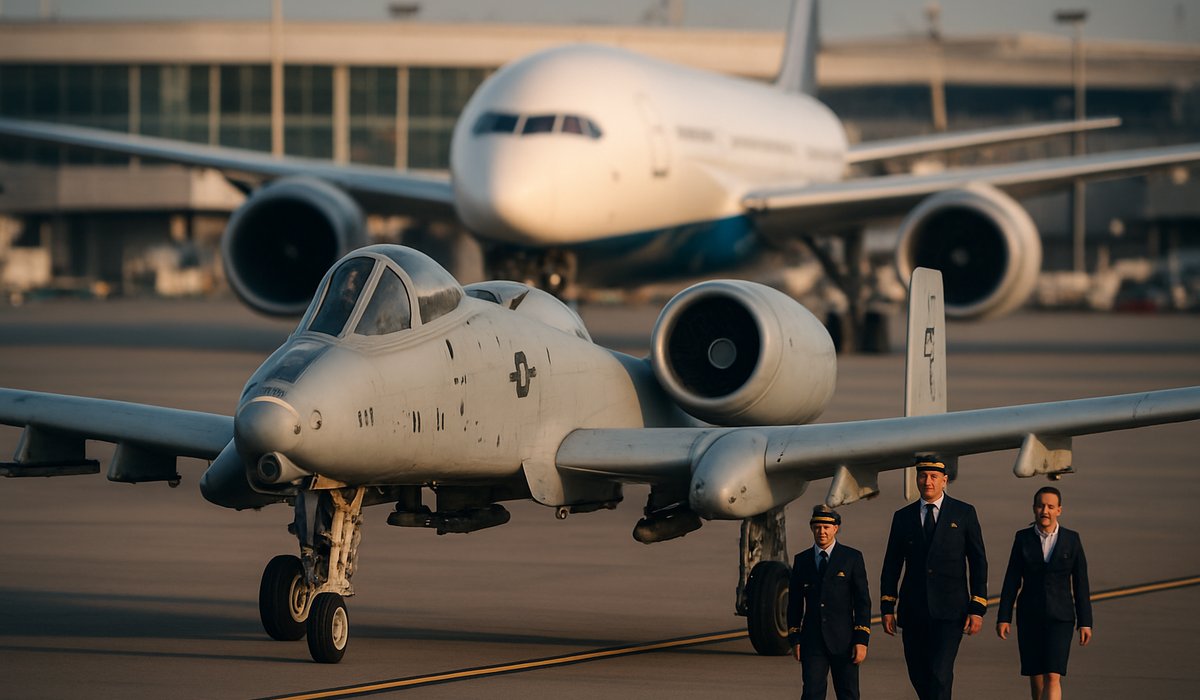
Image generated by AI
Why the U.S. Air Force Refuses to Retire the A-10 Warthog Despite Decades of Pressure
The enduring legacy of a Cold War-era aircraft that defied Pentagon expectations and continues to prove its worth in modern combat operations
The Unlikely Survivor of Military Aviation
The A-10 Thunderbolt II, affectionately known as the "Warthog," remains one of the most contentious yet operationally indispensable aircraft in the U.S. Air Force inventory heading into 2026. Despite repeated attempts by military leadership to retire the aging platform over the past two decades, the close-air-support jet continues to fly combat missions—a testament to both its rugged design and the political will of lawmakers and ground commanders who depend on it.
The aircraft's survival owes much to its unconventional origins. Born from the "Fighter Mafia" movement of the 1960s and 1970s, the A-10 represented a deliberate philosophical challenge to prevailing Pentagon doctrine. At a time when military aviation was trending toward expensive, complex, high-tech solutions, a cadre of visionary officers pushed back, advocating for simpler, more affordable designs that could deliver reliable firepower where it mattered most—in direct support of troops engaged in ground combat.
A Controversial Birth, A Proven Track Record
The aircraft emerged partially in response to institutional rivalry within the Defense Department. The Air Force's aggressive lobbying against the Army's preferred Lockheed AH-56 Cheyenne attack helicopter created an opening for a dedicated Air Force close-air-support platform. The resulting A-10 eschewed the technological complexity that was becoming standard, instead prioritizing durability, maneuverability at low altitudes, and devastating firepower.
What began as a compromise solution evolved into something far more valuable: a combat-tested system that has proven remarkably resilient across multiple conflict zones. From the Balkans through Iraq and Afghanistan, and into ongoing Middle Eastern operations, the A-10 has delivered consistent results where sophisticated alternatives sometimes faltered.
The Enduring Appeal in Modern Warfare
The aircraft's continued operational relevance reflects broader lessons learned across decades of military engagement. Ground forces consistently request A-10 support, citing the platform's ability to loiter over combat zones, identify targets with precision, and deliver ordnance with surgical accuracy. Its distinctive 30-millimeter GAU-8 rotary cannon remains unmatched in anti-armor capability, making it particularly valuable in contested environments.
As the Pentagon grapples with modernization priorities and budget constraints, the A-10's proven cost-effectiveness relative to newer platforms continues to find congressional champions. The result: an aircraft originally designed for a Cold War conflict scenario remains mission-critical in the twenty-first century, confounding predictions of its demise and validating the original vision of its visionary creators.
FAQ: Understanding the A-10 Warthog's Continued Service
Why does the Air Force keep the A-10 Warthog in service despite its age? The A-10 delivers reliable close-air-support capabilities at lower operating costs than newer alternatives. Ground commanders consistently request it for its precision, durability, and extended loitering time over combat zones.
What makes the A-10 different from modern fighter jets? The A-10 prioritizes simplicity, maneuverability at low altitudes, and direct ground support over the high-altitude, long-range capabilities of modern fighters. Its design reflects 1970s engineering philosophy focused on affordability and reliability.
How does the A-10's cost compare to replacing it with newer aircraft? Operating the legacy A-10 costs significantly less than acquiring and maintaining modern multi-role fighters. This cost advantage, combined with ground force demand, influences Pentagon retirement decisions.
What combat roles does the A-10 perform today? The A-10 specializes in close-air support, providing fire for ground troops, conducting armed reconnaissance, and delivering precision strikes against armored vehicles and fortified positions.
Could the A-10 be replaced by unmanned aircraft or helicopters? While alternatives exist, the A-10's unique combination of speed, firepower, altitude flexibility, and proven effectiveness in contested airspace continues to make it irreplaceable for specific operational requirements.
Related Travel Guides
Flight Delay Compensation Guide 2026
Understanding Airline Route Changes
Airport Security Process Updated (2026)
External Resources
Disclaimer
This article is for informational and educational purposes only. It does not constitute legal, financial, or professional advice. While we strive to provide accurate and up-to-date information, travel policies, regulations, and conditions change rapidly. Always verify information with official sources before making travel decisions. Nomad Lawyer makes no representations about the accuracy, reliability, completeness, or suitability of the information provided. Readers should consult qualified professionals for advice specific to their circumstances. The views expressed in this article are those of the author and do not necessarily reflect the views of Nomad Lawyer.
Kunal K Choudhary
Co-Founder & Contributor
A passionate traveller and tech enthusiast. Kunal contributes to the vision and growth of Nomad Lawyer, bringing fresh perspectives and driving the community forward.
Learn more about our team →