
Airbus A350-1000 Outranges Boeing 787-9 on Ultra-Long-Haul Routes: What It Means for Global Aviation
Breaking airline news and aviation industry updates for 2026.

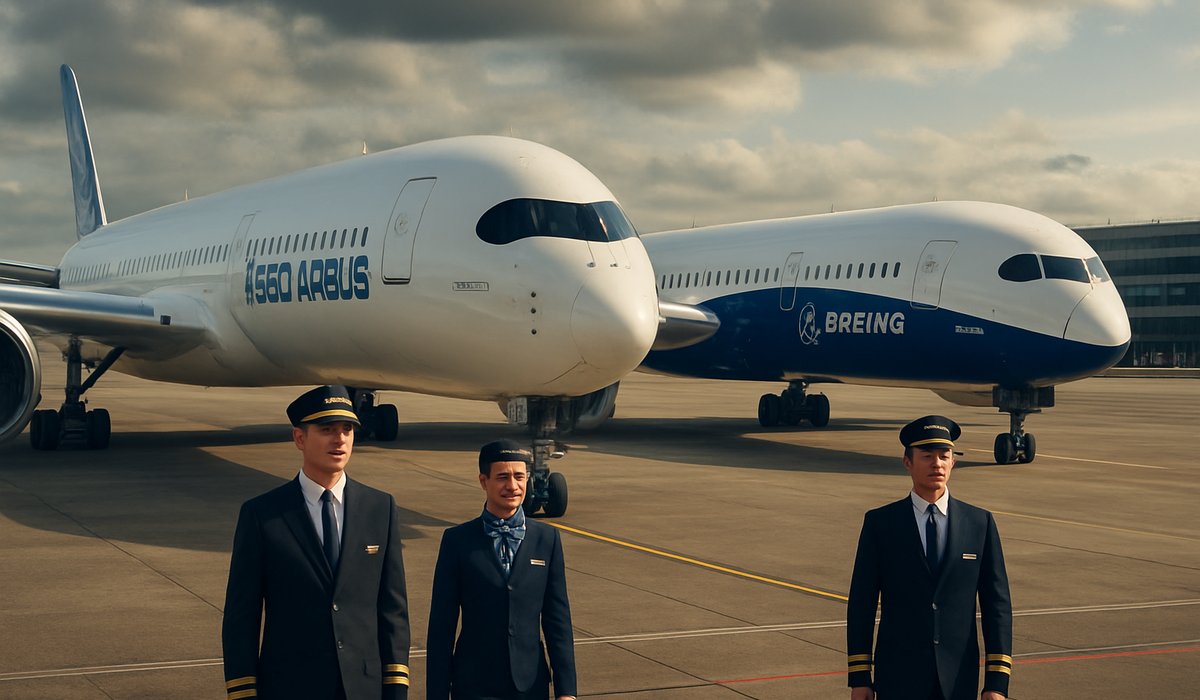
Image generated by AI
Airbus A350-1000 Outranges Boeing 787-9 on Ultra-Long-Haul Routes: What It Means for Global Aviation
The newest wide-body aircraft are reshaping transpacific and transcontinental flight networks, with significant implications for airline route planning and passenger connectivity
A New Generation of Range Capability
The aviation industry is witnessing a decisive shift in ultra-long-haul capability as the Airbus A350-1000 establishes itself as the range leader among modern wide-body aircraft, substantially outperforming the widely-deployed Boeing 787-9 on extended international routes.
This competitive advantage has immediate consequences for global route planning. Japan Airlines operates the A350-1000 on flagship routes connecting Tokyo Haneda to New York's JFK Airport—a grueling 14-hour journey covering approximately 6,700 nautical miles. Similarly, Qatar Airways leverages the aircraft's superior range to operate direct services from Doha Hamad International Airport to Los Angeles, a 5,300-nautical-mile gauntlet that pushes operational boundaries.
The Boeing 787-9, while maintaining impressive capability across most long-haul networks, operates within a more constrained range envelope. Airlines deploying the Dreamliner handle demanding routes such as San Francisco to Singapore and Perth to continental Australia, but face inherent distance limitations compared to the Airbus platform.
Technical Specifications and Performance Data
The Airbus A350-1000 boasts a maximum range exceeding 8,000 nautical miles with full passenger loads—a critical advantage for carriers seeking to eliminate fuel stops and maximize revenue-generating flight hours. The Boeing 787-9, by contrast, delivers maximum range around 7,635 nautical miles, creating meaningful operational constraints on the most distant routes.
This differential reflects Airbus's investment in lighter composite materials, advanced engine efficiency, and aerodynamic refinement. The A350-1000 configuration optimizes fuel economy while maintaining competitive passenger capacities in premium cabin layouts—a decisive factor for carriers seeking profitability on thin-margin transcontinental services.
Industry Implications and Strategic Positioning
The range advantage carries broader implications for network strategy. Airlines can now envision previously impossible routes: direct services between secondary cities and distant hubs, reduced fuel consumption per passenger-mile, and decreased dependency on intermediate stopover points. This translates to lower operational costs and enhanced passenger appeal through faster journey times.
For carriers operating mixed fleets of both aircraft types, route optimization becomes increasingly sophisticated. Network planners must strategically assign aircraft based on payload requirements, fuel costs, and revenue potential—a complexity that rewards operational excellence but penalizes inflexible scheduling.
Jet fuel economics amplify these considerations. With kerosene prices fluctuating based on geopolitical developments and crude oil dynamics, extended-range aircraft capable of avoiding fuel surcharges and additional stops provide compelling financial arguments for capital investment.
FAQ: Ultra-Long-Haul Aviation and Aircraft Range
How much farther can the Airbus A350-1000 fly compared to the Boeing 787-9? The A350-1000 exceeds the 787-9 by approximately 365-800 nautical miles depending on payload configuration and operational reserves, enabling non-stop services across previously impossible city-pair combinations.
Which airlines currently operate the Airbus A350-1000 on ultra-long-haul routes? Japan Airlines and Qatar Airways represent the primary operators, with both carriers deploying the aircraft on transcontinental services exceeding 14 hours flight time.
How does aircraft range affect airline ticket pricing and baggage fees? Extended range reduces per-passenger fuel costs and operational expenses, potentially lowering ticket prices while increasing competitiveness on price-sensitive markets—though airlines may reinvest savings into premium cabin experiences rather than economy fares.
What role do jet fuel prices play in aircraft range economics? Higher kerosene costs incentivize operators to maximize fuel efficiency and range capability, making extended-range aircraft increasingly valuable during periods of elevated energy prices.
Is the Boeing 787-9 becoming obsolete for long-haul aviation? No; the 787-9 remains commercially viable for 90 percent of current ultra-long-haul routes, though it faces competitive disadvantages on the most distant city pairs where the A350-1000's range advantage becomes operationally decisive.
Related Travel Guides
Flight Delay Compensation Guide 2026
Understanding Airline Route Changes
Airport Security Process Updated (2026)
External Resources
Disclaimer
This article is for informational and educational purposes only. It does not constitute legal, financial, or professional advice. While we strive to provide accurate and up-to-date information, travel policies, regulations, and conditions change rapidly. Always verify information with official sources before making travel decisions. Nomad Lawyer makes no representations about the accuracy, reliability, completeness, or suitability of the information provided. Readers should consult qualified professionals for advice specific to their circumstances. The views expressed in this article are those of the author and do not necessarily reflect the views of Nomad Lawyer.
Raushan Kumar
Founder & Lead Developer
Full-stack developer with 11+ years of experience and a passionate traveller. Raushan built Nomad Lawyer from the ground up with a vision to create the best travel and law experience on the web.
Learn more about our team →