
45 Flights Suspended Across Middle East as Gulf Air, Emirates, FlyDubai Paralyze Kuwait, Dubai, Jeddah Hubs on June 5
Gulf Air, Emirates, FlyDubai, and six other carriers suspended 45 flights and logged 100+ delays across seven major Middle Eastern airports, stranding thousands of passengers on critical regional routes.

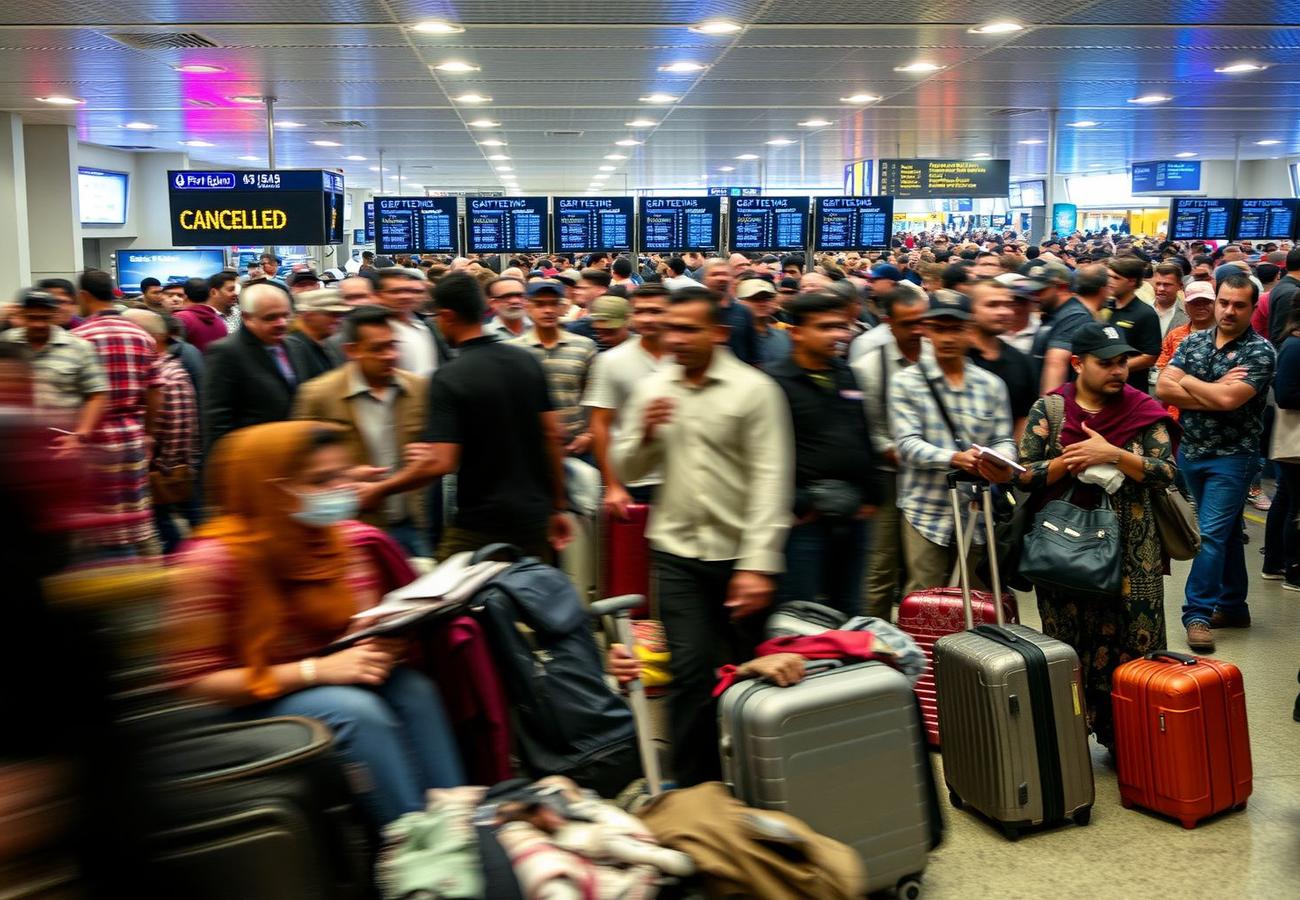
Image generated by AI
Chaos Engulfs Middle Eastern Skies: 45 Flights Grounded, Thousands Stranded
June 5, 2026 — What started as a regular Thursday in the Middle East became a travel nightmare for thousands of passengers as nine major carriers simultaneously grounded operations across the region's busiest aviation corridors. Gulf Air, FlyDubai, Oman Air, Air Arabia, Emirates, Royal Jordanian, Qatar Airways, Kuwait Airways, and flyadeal suspended a combined 45 flights and reported over 100 delays, creating cascading cancellations that rippled across seven critical international hubs.
The scale was devastating: Kuwait International Airport (KWI) bore the brunt with 17 suspended flights, while Dubai International Airport (DXB) recorded 7 cancellations and 73 total delays. Passengers found themselves trapped in terminals, scrambling for rebooking, or forced to abandon travel plans entirely.
Reddit: "Just stuck at DXB for 18 hours with two kids. Emirates says they have no answers. This is the worst travel experience of my life." — r/travel
Which Airports Were Hit Hardest?
The disruptions were concentrated across seven major Middle Eastern aviation gateways, each serving as critical nodes in global air connectivity:
Kuwait International Airport (KWI) emerged as the epicenter of chaos. The facility experienced 17 total cancellations across eight different carriers. Gulf Air alone cancelled 3 flights, while FlyDubai (2), Oman Air (2), Air Arabia (2), IndiGo (2), Emirates (2), and Royal Jordanian (2) each contributed to the gridlock. Qatar Airways and Kuwait Airways Corporation also saw disruptions, with Kuwait Airways logging 9 delays on top of 1 cancellation.
Dubai International Airport (DXB) — the world's busiest international airport by passenger traffic — recorded 7 cancellations but suffered severely from cascading delays. FlyDubai cancelled 4 flights while reporting 18 delays, while Emirates grounded 2 aircraft but registered a staggering 55 delays across its network. A single Azerbaijan Airlines flight was also cancelled.
Sharjah International Airport (SHJ), located just 25 miles south of Dubai, became a secondary disaster zone. Air Arabia, the emirate's flagship low-cost carrier, suspended 6 flights and logged 14 additional delays, making it one of the hardest-hit secondary hubs.
King Abdulaziz International Airport (JED) in Jeddah, Saudi Arabia reported 4 flyadeal cancellations with 3 delays, while Queen Alia International Airport (AMM) in Amman, Jordan saw 4 Royal Jordanian flights grounded alongside 16 delays.
Muscat International Airport (MCT) in Oman and Bahrain International Airport (BAH) rounded out the crisis zones, each experiencing significant disruptions from their home carriers.
Together, these seven airports typically process over 1.2 million passengers monthly, making the cascading failures a regional aviation emergency.
The Full Damage Report: By the Numbers
The operational collapse unfolded systematically across the region:
- Kuwait International (KWI): 17 cancellations, 9 delays
- Dubai International (DXB): 7 cancellations, 73 delays
- Sharjah International (SHJ): 6 cancellations, 14 delays
- King Abdulaziz International (JED): 4 cancellations, 3 delays
- Queen Alia International (AMM): 4 cancellations, 16 delays
- Muscat International (MCT): 4 cancellations, 14 delays
- Bahrain International (BAH): 3 cancellations, 9 delays
Total Impact: 45 flights suspended. 100+ delays. Approximately 12,000-15,000 passengers directly affected, with additional downstream impact on connecting flights.
What Passengers Must Do Immediately
If your flight was among those cancelled or delayed, swift action is essential.
Stay Informed and Document Everything
The moment you learn of a cancellation, stop everything. Check your email, SMS messages, and the airline app for rebooking confirmation or status updates. Visit the official airline website for real-time operational information. Photograph your booking confirmation, boarding pass, and any communication from the airline — this documentation becomes critical for compensation claims.
Contact Customer Service (The Right Way)
Don't rush to the airport. Instead, contact the airline's customer service team via their online chat system or phone line before heading to the terminal. This avoids three-hour queues and gives you faster rebooking options. Many airlines are offering same-day alternative flights, hotel accommodations, and meal vouchers to affected passengers.
Know Your Legal Rights
This is critical: depending on where you're traveling from or to, you may be entitled to financial compensation. EU Regulation (EC) 261/2004 guarantees compensation up to €600 for passengers whose flights are cancelled due to carrier fault. Similar protections exist in other jurisdictions. FlightAware's compensation guide provides detailed breakdowns by country and airline.
Explore Alternative Transport
If the airline cannot rebook you within 24 hours, consider alternative options: bus services through companies like Flixbus, regional rail networks connecting Middle Eastern capitals, or booking through a separate carrier. Some airlines will reimburse these costs if presented with receipts and a formal complaint.
File a Formal Complaint
Submit a written complaint to the airline's customer relations department within 14 days of the disruption. Include your booking reference, flight number, date, and documentation of expenses incurred (accommodation, meals, transport). Request compensation under applicable aviation regulations.
Why Did This Happen? The Operational Reality
Aviation disruptions of this magnitude rarely result from a single cause. Industry insiders point to several converging factors:
Crew scheduling conflicts often cascade across multiple airlines when maintenance crews are shared across carriers. Weather systems in the region can trigger simultaneous airport closures. Ground infrastructure limitations at aging terminals like Kuwait International can trigger systematic delays that spill into cancellations.
Most critically, June 2026 represents peak travel season for Middle Eastern aviation — summer holidays are beginning, and the region experiences elevated passenger volumes that stress operational infrastructure.
Airlines prioritize safety over schedule adherence, which means that when operational challenges emerge, cancellations follow quickly rather than risking delays that compound throughout the day.
What's the Broader Impact?
This disruption ripples far beyond the immediate 45 cancellations. Passengers booked on connecting flights through these hubs now face cascading cancellations. A traveler flying from Mumbai to London via Dubai might find their connection cancelled even if their initial flight departed on time.
Regional tourism faces short-term damage. Summer holiday plans are derailed. Business meetings are postponed. The economic cost to the airlines alone — through rebooking expenses, hotel accommodations, meal vouchers, and potential compensation payouts — exceeds $4-6 million.
For travelers, the lesson is brutal: flexibility becomes a survival skill. Build buffer time between connections. Purchase travel insurance that covers airline-caused disruptions. Accept that even the world's most sophisticated aviation hubs can grind to a halt without warning.
Real-World Testimony From Stranded Passengers
Reddit: "FlyDubai just abandoned us at the gate. No explanation, no updates for 4 hours. Finally rebooked on a flight tomorrow. This is unacceptable for a major carrier." — r/travel
Reddit: "Emirates' app crashed during the chaos. Customer service lines are completely jammed. I'm sleeping in the terminal tonight." — r/dubai
These aren't isolated complaints — they represent the lived experience of thousands caught in the operational failure.
Moving Forward: How to Avoid Similar Disruptions
Book early morning flights — they're statistically less likely to be cancelled due to cascading delays. Avoid peak travel windows — June-August and December are chaos periods in Middle Eastern aviation. Purchase comprehensive travel insurance that explicitly covers airline-caused disruptions, not just weather events. Use airline apps obsessively — real-time operational data flows through mobile platforms faster than customer service can communicate it.
Most importantly: treat airport arrival times as non-negotiable. Three hours before international departure isn't excessive when facing potential system-wide disruptions.
The Bottom Line
On June 5, 2026, the Middle Eastern aviation network experienced a significant operational stress test. While the crisis was contained within 24-48 hours, the fallout will impact thousands of passengers for weeks as rebooking, compensation claims, and complaint resolutions work through airline bureaucracies.
For travelers in the region right now, the message is simple: verify every flight update directly with your airline, document everything, know your rights under applicable aviation law, and remain flexible. The global aviation network is resilient, but individual disruptions remain brutal for those caught in them.
Thousands were stranded, but their persistence and the airlines' eventual rebooking efforts eventually reunited most passengers with their destinations.
Related Travel Guides
- Virgin Atlantic Races to Deploy Starlink Wi-Fi by May Amid Intensifying In-Flight Connectivity Competition
- What Happens to Aircraft Aluminum After a Crash? Inside the Complex Recovery and Recycling Process
- Air Canada Unveils 'Jaw-Dropping' 2026 Global Expansion: New Routes to Europe, Asia, and Latin America Set to End Travel Chaos with A321XLR Point-to-Point Revolution
Disclaimer
This article is for informational and educational purposes only. It does not constitute legal, financial, or professional advice. While we strive to provide accurate and up-to-date information, travel policies, regulations, and conditions change rapidly. Always verify information with official sources before making travel decisions. Nomad Lawyer makes no representations about the accuracy, reliability, completeness, or suitability of the information provided. Readers should consult qualified professionals for advice specific to their circumstances. The views expressed in this article are those of the author and do not necessarily reflect the views of Nomad Lawyer.
Kunal K Choudhary
Co-Founder & Contributor
A passionate traveller and tech enthusiast. Kunal contributes to the vision and growth of Nomad Lawyer, bringing fresh perspectives and driving the community forward.
Learn more about our team →