
Zurich, Switzerland 35,000 ft Luxury Shift: SWISS First Class Adds 1 Gourmet Hot Dog Serving — What Others Get Wrong About Airline Fine Dining Strategy
Zurich, Switzerland 35,000 ft Luxury Shift: SWISS First Class Adds 1 Gourmet Hot Dog Serving — What Others Get Wrong Abo

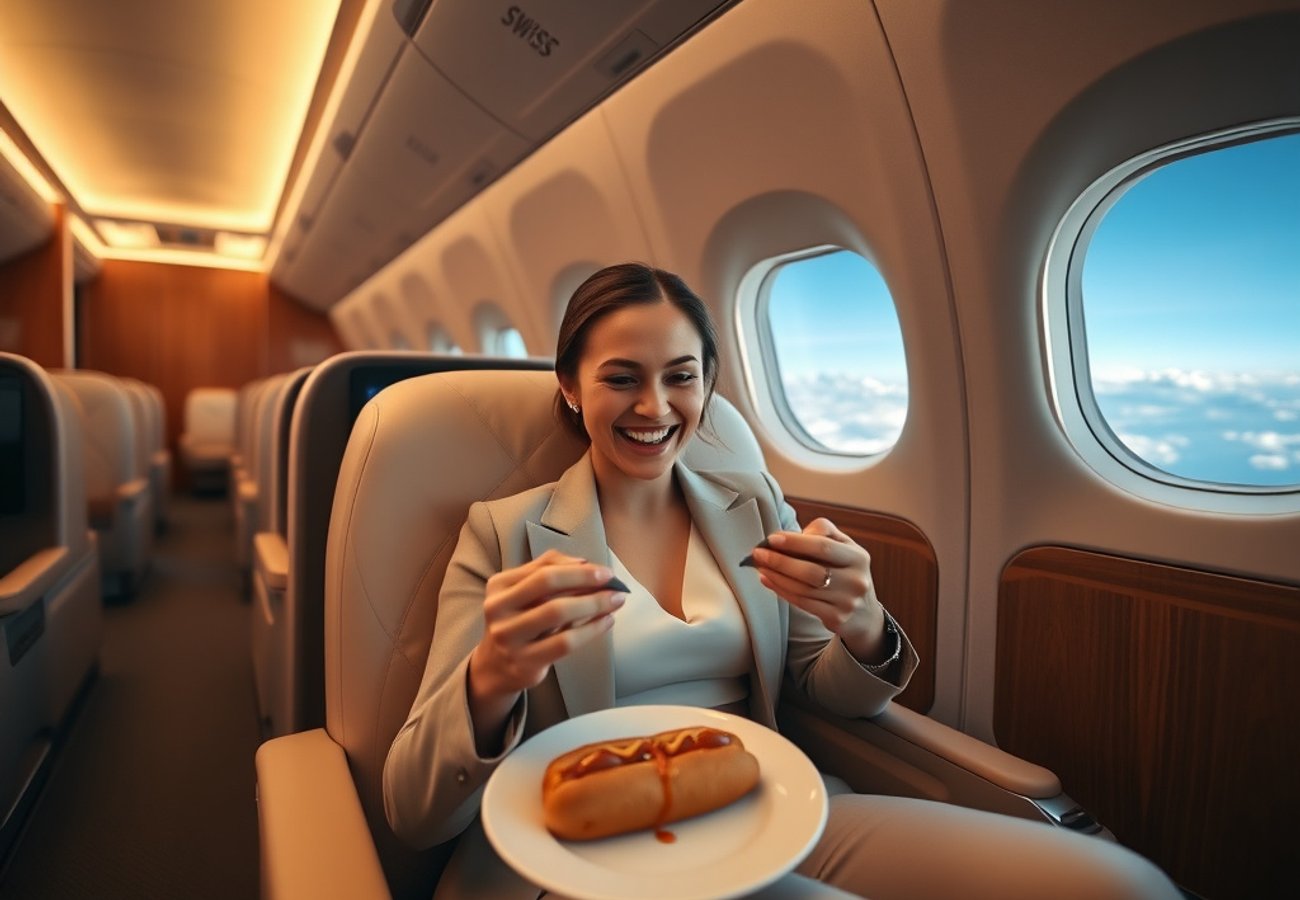
Image generated by AI
[Zurich, June 28, 2026] — SWISS International Air Lines is redefining the parameters of high-end aviation catering by introducing a gourmet hot dog into its First Class cabins operating from Zurich, Switzerland. This strategic move integrates a specialized artisan product into the airline's most exclusive service tier, signaling a departure from traditional luxury dining norms in 2026.
The shift comes at a time when premium aviation hospitality is under significant pressure to merge speed, authenticity, and evolving passenger expectations. By incorporating a high-end version of a common street food, the airline is challenging the long-standing industry belief that luxury is exclusively defined by rare or expensive ingredients.
Artisan Collaboration Between Winterthur and Zurich
The center-piece of this culinary update is the “Bastardo” hot dog, developed by Frau Hund, an artisan brand based in Winterthur. Founded by professionally trained chefs, Frau Hund specializes in transforming the standard hot dog into a premium gastronomic experience.
To bring this product to 35,000 feet, SWISS has partnered with Gate Gourmet, a global leader in inflight catering. This partnership ensures that the artisan product meets rigorous aviation safety standards and maintains consistency across long-haul flights. The integration represents a "culinary bridge" between local Swiss craftsmanship and global luxury travel.
The specific composition of the Bastardo hot dog includes:
| Component | Specification |
|---|---|
| Protein | Swiss meat sausage sourced from local butchers |
| Bread | Multigrain Swiss bun |
| Accompaniments | Coleslaw, apple chutney, sour cream, and roasted walnuts |
| Production | Handmade, controlled batch production |
| Logistics | Flash-frozen for aviation compliance |
Challenging Traditional First Class Dining Norms
For decades, First Class menus have been dominated by a predictable rotation of caviar, lobster, wagyu beef, and foie gras. Industry observers note that SWISS is disrupting this model by prioritizing execution and authenticity over sheer rarity.
The introduction of the Bastardo hot dog suggests that "perfected simplicity" can be more appealing to the modern luxury traveler than traditional prestige markers. This strategy repositions familiar comfort food as a cultural identity product, effectively turning the inflight menu into a narrative about Swiss regional quality.
This disruption is characterized by three primary shifts:
- The elevation of street food to the level of culinary craftsmanship.
- The replacement of imported luxury goods with high-quality local sourcing.
- A transition from "rare luxury" to a focus on technical perfection of simple dishes.
Technical Engineering for High-Altitude Presentation
Bringing a gourmet hot dog into a First Class cabin required more than just culinary skill; it required structural engineering. Because inflight dining is heavily dependent on visual appeal, the presentation of the Bastardo had to be meticulously planned.
Reports indicate that early tests using standard First Class porcelain plating resulted in the hot dog collapsing, which failed to meet the airline's aesthetic standards. In response, the chefs at Frau Hund redesigned the cut of the bun to ensure the product could remain upright and visually appealing even at cruising altitude.
The production process is governed by strict quality controls, including:
- Individual tasting and approval of every batch.
- The use of multi-tonne controlled batches for ingredient consistency.
- Pasteurization and flash-freezing to ensure stability during flight.
- Strict adherence to Swiss-only sourcing for core ingredients.
Strategic Alignment with Swiss National Identity
The decision to serve a Winterthur-origin product on Zurich-based flights is part of a broader corporate strategy to align the SWISS brand with national artisanal production. By utilizing its cabins as a showcase for Swiss food innovation, the airline is differentiating its premium offering from global competitors who often rely on standardized luxury templates.
This collaboration indicates a growing trend where airlines move away from static catering lists and instead use their menus as storytelling platforms. By supporting small-scale national producers, SWISS strengthens its connection to its home country while providing passengers with a unique, localized experience.
The Emergence of Democratized Luxury in Aviation
The inclusion of the Bastardo hot dog is a symptom of a larger trend termed "democratized luxury food." This movement sees the aviation industry moving away from exclusivity based on cost and toward exclusivity based on craftsmanship and narrative.
In this new model, a widely recognized street food is rebuilt using premium ingredients and repositioned within an exclusive environment. This appeals to a growing segment of travelers who value authenticity and a "story" behind their meal more than the traditional markers of wealth.
Impact on Global Aviation Catering Trends
The move by SWISS may signal a turning point for other global carriers. While many airlines are still refining traditional gourmet menus, the exploration of "elevated comfort food" opens a new category for competitive differentiation.
Potential industry-wide implications include:
- Menu Diversification: A shift away from the "caviar and champagne" cliché toward more diverse, culturally relevant options.
- Boutique Partnerships: Increased collaborations between major airlines and small, regional food artisans.
- Cultural Storytelling: A move toward menus that tell a story about a destination or a culture rather than just providing sustenance.
- Reduced Standardization: A decline in the use of generic luxury catering templates in favor of bespoke, identity-driven dining.
Why This Matters (Information Gain)
The introduction of a gourmet hot dog into First Class is not a gimmick; it is a calculated pivot in the psychology of luxury. For years, the aviation industry operated on the assumption that "premium" equaled "expensive ingredients." However, the SWISS initiative proves that the modern high-net-worth traveler is experiencing "luxury fatigue."
By elevating a humble hot dog through professional technique and local sourcing, SWISS is tapping into the "high-low" dining trend prevalent in urban culinary hubs. This strategy lowers the perceived pretension of First Class while increasing the perceived authenticity. If successful, this will force other legacy carriers to rethink their catering strategies, moving away from sterile luxury and toward an era of "curated authenticity" where the origin and craft of the food matter more than its price tag on the ground.
Related Travel Guides
Disclaimer
This article is for informational and educational purposes only. It does not constitute legal, financial, or professional advice. While we strive to provide accurate and up-to-date information, travel policies, regulations, and conditions change rapidly. Always verify information with official sources before making travel decisions. Nomad Lawyer makes no representations about the accuracy, reliability, completeness, or suitability of the information provided. Readers should consult qualified professionals for advice specific to their circumstances. The views expressed in this article are those of the author and do not necessarily reflect the views of Nomad Lawyer.
Raushan Kumar
Founder & Lead Developer
Full-stack developer with 11+ years of experience and a passionate traveller. Raushan built Nomad Lawyer from the ground up with a vision to create the best travel and law experience on the web.
Learn more about our team →