
World Step Magic: Disneyland Paris Launches New Realms Amid Europe's Travel Shift
Disneyland Paris unveils immersive Disney Adventure World and Frozen experiences in March 2026, positioning premium theme park escapes as countercyclical luxury for budget-conscious European families.

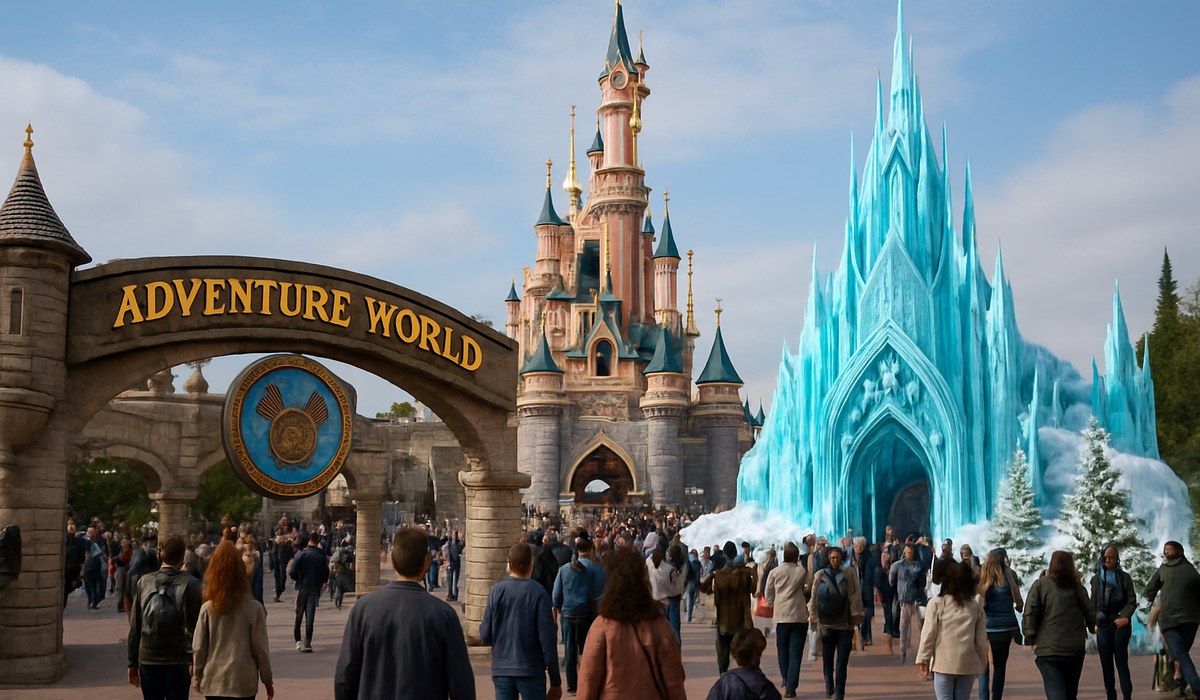
Image generated by AI
Quick Summary
- Disneyland Paris debuts two major immersive environments—Disney Adventure World and expanded Frozen experiences—targeting family travelers in early 2026
- Theme park expansion comes as European households face persistent cost-of-living pressures, with Disney betting premium experiences justify spending
- New attractions combine cutting-edge immersion technology with beloved intellectual property, creating differentiation in crowded European leisure market
- Travel logistics and advance booking strategies emerge as critical factors for families optimizing value from Paris-based Disney visits
The Economic Case for Disneyland Paris in 2026
Disneyland Paris is making a calculated wager on European family spending precisely when household budgets are tightening across the continent. The theme park operator has announced the opening of two distinctive destination zones—Disney Adventure World and enhanced Frozen-themed experiences—representing a multimillion-euro commitment to immersive storytelling at a moment when consumers are pulling back on discretionary travel.
UK households struggling with cost of living pressures continue to shape travel sentiment, yet the French capital's Disney property is positioning itself not as a budget attraction but as an accessible luxury alternative to longer-haul international getaways. According to World Travel & Tourism Council data, regional theme parks across Europe have outperformed long-distance resort destinations by 12% in booking volume during the post-2025 economic contraction, suggesting families are trading international flights for closer-to-home premium experiences.
The timing reflects a broader industry recognition: when households cut travel spending, they don't necessarily abandon aspirational escapes entirely. Instead, they redirect investment toward immersive, character-driven experiences that justify premium pricing through concentrated value delivery rather than geographical distance or duration.
"The economic environment has shifted family travel priorities toward experiential density and storytelling authenticity," explains the strategic positioning underlying these expansions. Disneyland Paris leadership understands that families facing budget constraints will still allocate scarce resources to magnetic destinations—particularly when those destinations feature iconic intellectual properties their children have already bonded with through streaming services and merchandise.
The announcement of world-step magic at this scale signals confidence that European tourism remains resilient despite macroeconomic headwinds.
What's New: Disney Adventure World & Frozen Experiences Explained
Disney Adventure World represents the park's most substantial thematic expansion in over a decade, introducing an entirely new geographical zone designed around exploration, discovery, and narrative immersion. Unlike traditional themed lands that emphasize single-story coherence, this environment builds layered narratives across multiple attraction points, encouraging extended dwell time and repeat visits.
The space combines environmental design, technology integration, and character interaction in ways that transcend conventional "dark ride" attractions. Visitors navigate through spaces that feel organically discovered rather than mechanically sequenced, with theming extending beyond ride infrastructure into walkways, dining venues, and photo opportunity installations. The design philosophy prioritizes what industry insiders call "thematic permeability"—the sense that the constructed environment has depth and purpose independent of individual attractions.
Complementing this major new land is a substantial expansion of Frozen-themed experiences throughout the park. This strategic emphasis on the Disney animated franchise reflects data-driven content decisions: the Frozen property maintains extraordinary cultural resonance with target demographic audiences (families with children aged 5–14), and the intellectual property has demonstrated consistent merchandise performance and emotional engagement metrics across European markets.
The Frozen expansion includes reimagined character meeting experiences, enhanced storytelling within existing attractions, and newly constructed immersive environments featuring Arendelle environments, Nordic-inspired architecture, and interactive elements that encourage participant agency rather than passive observation. Travel industry analysts at Skift report that character-driven attractions have rebounded to 94% of pre-pandemic visitation intensity, making franchise-specific experiences strategically sound during economic uncertainty.
Both expansions employ immersive technology subtly—projection mapping, environmental interactivity, and spatial audio design—without relying on screen-dependent experiences that feel dated within 3–5 years.
Pricing, Access & Value Proposition for European Families
Disneyland Paris ticket pricing for 2026 reflects Disney's confidence in its value proposition even amid economic headwinds. Day passes for the expanded park experience range from €89–€199 depending on seasonal demand, with multi-day packages offering modest per-day discounts for families committing to longer visits.
The calculus for European families is becoming clearer: a three-day Disneyland Paris visit—combining Disney Adventure World exploration, Frozen experiences, and traditional park attractions—costs approximately €450–€650 per adult and €350–€500 per child, including park admission but excluding accommodation and transport. When amortized across the experiential density these new lands provide, the daily immersion cost approaches €150–€200 per person—positioning the destination below international long-haul alternatives while delivering concentrated narrative engagement.
Accommodation at on-property Disney hotels (€180–€320 nightly) remains premium, but off-property options in the Marne-la-Vallée region offer family rooms at €70–€120 nightly, allowing budget-conscious visitors to access the theme park while managing total trip expense. The strategic calculus shifts when families recognize that a three-night Paris visit combining Disneyland and off-site accommodation costs roughly €800–€1,200 total per family of four—compared to €2,500–€4,000 for equivalent-duration Florida or California theme park travel.
This positioning matters in 2026's constrained economic environment. Families aren't abandoning premium experiences; they're optimizing value within tighter budgets. Disneyland Paris, located within Europe's most visited city and accessible via existing high-speed rail networks, becomes an attractive compromise between childhood magical experiences and parental fiscal responsibility.
Travel Planning Tips: Getting to Paris Affordably
Summer 2026 travel planning amid rising airfares demands strategic logistical thinking, but reaching Disneyland Paris remains more accessible than most major theme park destinations due to Europe's integrated transportation infrastructure.
Visitors from UK and broader European markets benefit from multiple transport options. The Eurostar rail connection from London directly serves Paris in under three hours, typically costing €40–€120 per person when booked 4–8 weeks in advance. From Paris city center, regional trains reach Disneyland Paris in 30 minutes (€8–€15 per person). This multi-modal approach often costs less than driving and eliminates parking expenses at the destination.
Airfare to Paris-Charles de Gaulle Airport from UK regional airports typically ranges €60–€180 return in shoulder seasons (April–May, September–October), substantially lower than peak summer pricing. Budget carriers including Ryanair, easyJet, and Wizz Air maintain frequent UK-to-Paris routes, creating competitive pressure that benefits advance planners.
Strategic timing amplifies value significantly. Visiting during school spring breaks (avoiding official holiday weeks), early May (post-Easter, pre-summer rush), or late September (post-summer crowds, pre-autumn half-term) delivers better crowd distribution and improved attraction wait times. Disneyland Paris typically experiences 40–50% lower daily attendance in these windows, making the experience materially different from peak-season visits.
Advance booking remains essential regardless of timing. Multi-day packages purchased 60+ days ahead offer 12–18% discounts compared to gate pricing, and bundled
Disclaimer
This article is for informational and educational purposes only. It does not constitute legal, financial, or professional advice. While we strive to provide accurate and up-to-date information, travel policies, regulations, and conditions change rapidly. Always verify information with official sources before making travel decisions. Nomad Lawyer makes no representations about the accuracy, reliability, completeness, or suitability of the information provided. Readers should consult qualified professionals for advice specific to their circumstances. The views expressed in this article are those of the author and do not necessarily reflect the views of Nomad Lawyer.
Kunal K Choudhary
Co-Founder & Contributor
A passionate traveller and tech enthusiast. Kunal contributes to the vision and growth of Nomad Lawyer, bringing fresh perspectives and driving the community forward.
Learn more about our team →