
Breaking Airline News: Wizz Air Deploys Massive Starlink Wi-Fi Shield to Rescue Passengers from Terrifying Inflight Travel Chaos
Breaking airline news: Amidst a terrifying era of severe European airspace delays and inflight isolation, Wizz Air executes a brilliant tactical bypass, launching massive SpaceX Starlink connectivity to rescue travelers from digital travel chaos.

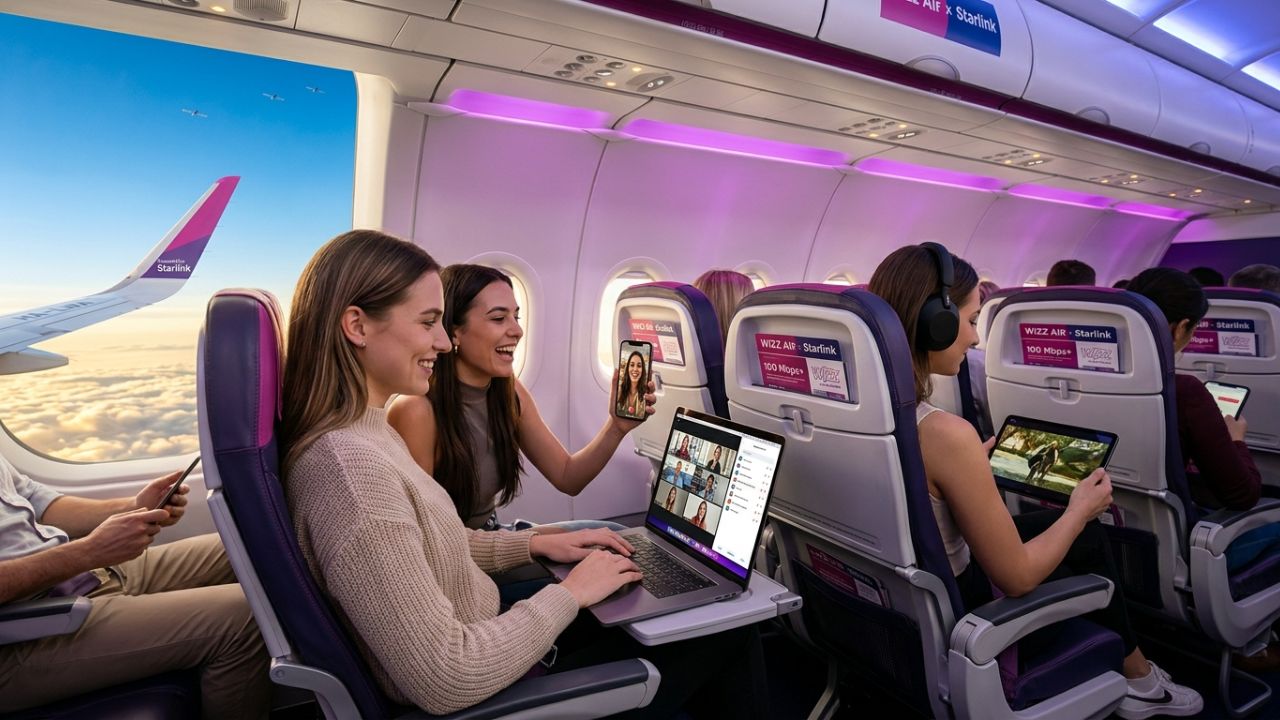
Image representing the intense strategic battle as global aviation authorities aggressively deploy massive satellite internet arrays to combat severe inflight isolation and bypass paralyzing communication blackouts during travel disruptions.
Breaking Airline News: Wizz Air Deploys Massive Starlink Wi-Fi Shield to Rescue Passengers from Terrifying Inflight Travel Chaos
As paralyzing European airspace congestion, terrifying ground stops, and severe operational fragility violently threaten to completely choke highly complex international transit itineraries, a massive European ultra-low-cost titan has executed a high-stakes infrastructural maneuver. In a desperate bid to physically and psychologically rescue budget-conscious travelers from the terrifying threat of extreme travel chaos triggered by total digital isolation during flight delays, Hungary’s Wizz Air has aggressively launched a massive tactical bypass. Officially confirming a revolutionary aerospace partnership, the carrier will forcefully deploy SpaceX’s highly advanced Starlink satellite internet across its fleet starting in 2027. By aggressively establishing this unified digital defense perimeter, this deployment is directly fighting to prevent the complete collapse of passenger mobility management, ensuring that furious corporate travelers and tourists are no longer trapped by the terrifying communication blackouts historically defining budget flights across the continent.
In a harrowing display of modern aviation vulnerability, the sheer logistical nightmare of attempting to navigate European skies during peak disruption windows has historically forced passengers into terrifying transit scenarios. For years, attempting to survive a massive air traffic control delay or a sudden diversion required travelers on ultra-low-cost carriers (ULCC) to endure highly fragile itineraries completely cut off from the outside world. This disjointed operational model frequently triggered terrifying bottlenecks, where passengers trapped inside a metal tube at 35,000 feet could not rebook missed connections, notify family of massive delays, or execute critical business decisions. However, Wizz Air is aggressively fighting back against this structural paralysis. By forcefully locking their aircraft directly into the massive SpaceX Starlink satellite grid, the airline ensures that passengers can violently slash their exposure to cascading logistical failures. This highly optimized digital routing completely decompresses transit anxiety, ultimately shielding millions of travelers from the agonizing misery of paralyzed transport networks by guaranteeing total, high-speed connectivity previously reserved exclusively for elite premium airlines.
Expanded Overview: The Massive Scale of the Transit Contagion
The terrifying crisis of overwhelming passenger stress currently gripping complex global itineraries brutally exposes the severe limitations of flying without real-time data access. Recognizing that aggressively forcing travelers into digital blackouts during chaotic weather events leads directly to severe psychological friction, aviation authorities are attempting to forcefully decompress the tension. The sheer scale of this Wizz Air operation is immense and structurally complex. Marking a massive industry milestone, Wizz Air will officially become the absolute first European ultra-low-cost carrier to deploy this level of aerospace technology. This massive infrastructural shift will aggressively decentralize the industry's reliance on premium carriers for basic communication, entirely destroying the terrifying threat of connection-induced travel chaos and establishing a powerfully resilient, hyper-connected transit bridge for budget travelers.
Section-Wise Breakdown: The Operational Realignment
Breaking the Digital Transit Gridlock
To survive the terrifying surge in global travel demand without triggering immediate passenger exhaustion, this massive deployment specifically targets the highly vulnerable inflight experience. Instead of risking a terrifying panic when a flight is abruptly placed into a holding pattern over a congested European gateway, travelers will aggressively utilize Starlink to bypass the uncertainty. The high-speed, low-latency internet operates as an incredibly efficient tactical shield. This aggressive network linking ensures that travelers originating from Hungary and flying across Europe are entirely shielded from the terrifying mass confusion currently paralyzing competing legacy transit hubs, offering massive streaming capabilities and instant messaging to orchestrate ground-level recovery plans mid-flight.
Deploying the SpaceX Tactical Shield
To guarantee the absolute reliability of this restored operational model, Wizz Air has executed a brilliant strategic deployment of hardware. The airline will forcefully deploy the Starlink equipment in a heavily calculated, phased approach. Rather than attempting a disorganized rollout, the advanced satellite arrays will first be aggressively installed onto the airline's new-generation aircraft. Following this initial deployment, older aircraft will be systematically retrofitted. This strategic defense mechanism drastically elevates the passenger experience, completely bypassing the extreme frustration usually associated with the slow, legacy Wi-Fi systems that constantly crash during critical communication windows.
Securing Operational Flight Control
The massive infrastructural shift aggressively centers around completely defending the airline's own operational survival. Looking beyond passenger Netflix streaming, the integration of Starlink violently enhances Wizz Air's internal operational efficiency. Flight crews trapped in terrifying weather diversions can now aggressively leverage the onboard connectivity for real-time communications with dispatchers. Access to instantaneous flight data and rapidly evolving weather radar allows crews to dramatically improve customer service responsiveness, entirely removing the threat of being abandoned by air traffic control during a massive airspace closure.
Strategic Airline Connectivity Matrix
To fully comprehend the massive logistical and strategic fallout of this new network integration, corporate travel managers and affected tourists must review the exact operational metrics defining the Wizz Air deployment. The following matrix provides a granular breakdown of the specific, officially verified strategic data driving this massive disruption mitigation effort.
| Strategic Aviation Metric | Confirmed Starlink Integration Data |
|---|---|
| Operating Carrier | Wizz Air (Hungary) |
| Technological Partner | SpaceX (Starlink) |
| Projected Launch Timeline | Rollout Commencing in 2027 |
| Aircraft Implementation Strategy | New-Generation Aircraft First, Retrofitting Older Fleet |
| Primary Connectivity Specification | High-Speed, Low-Latency Satellite Internet |
| Strategic Industry Milestone | First European Ultra-Low-Cost Carrier with Starlink |
Passenger Impact: Surviving the Holding Pattern
For the millions of global tourists and corporate commuters attempting to navigate the rapidly expanding European transit corridors, this massive Starlink deployment represents a highly anticipated lifeline against severe operational delays. The brutal reality of enduring a terrifyingly sudden holding pattern due to a massive thunderstorm, only to realize your onward train ticket is now entirely void and you cannot contact the rail operator, inflicts intense psychological stress and completely destroys meticulously planned itineraries. By aggressively deploying this massive direct data capacity into the cabin, Wizz Air is attempting to actively prevent the terrifying friction that results in severely abandoned travel plans and entirely ruined cross-continental vacations.
Survival Guide for Transit Travelers
Travelers desperately preparing to navigate the modernized European network in 2027 must immediately execute the following survival protocols:
- Leverage Digital Rebooking Shields: Passengers attempting complex inter-European jumps must aggressively book these Starlink-equipped Wizz Air flights; if the flight hits a massive air traffic delay, passengers must immediately use the Wi-Fi to aggressively rebook onward trains or hotels before they even land, completely beating the furious crowds to the customer service desks.
- Exploit the ULCC Pricing Model: Corporate travelers must relentlessly utilize this new dynamic; because Wizz Air operates as a budget carrier, securing high-speed Starlink internet without paying legacy airline base fares is an absolute requirement for surviving the economic toll of high-frequency European business travel.
- Monitor the Phased Rollout: Because the equipment will roll out starting with new-generation aircraft, travelers must aggressively verify their specific aircraft type prior to departure to ensure they are actually flying on a connected jet, avoiding the massive operational risk of assuming Wi-Fi is available on an older, un-retrofitted plane.
Industry Analysis: The Economics of Tactical Innovation
From a strategic aviation perspective, the travel turmoil currently forcing these massive technological realignments highlights the terrifying vulnerability of airlines operating without modern data links. Industry analysts confirm that securing massive global connectivity via a highly efficient, low-earth orbit satellite constellation like Starlink is an absolute masterstroke in corporate crisis management for a budget airline. Historically, passengers who attempted to fly ultra-low-cost were forced to accept terrifying digital isolation. The aggressive Wizz Air strategy lowers systemic passenger anxiety, providing the European market with massive digital access without the terrifying premium price tag, ultimately shielding the aviation ecosystem from severe communication-induced travel chaos.
Conclusion: A Strategic Retreat to Ensure Aviation Survival
As the extremely critical 2027 global travel season approaches, the massive deployment of this SpaceX partnership represents a massive warning to competing low-cost airlines attempting to force passengers to fly disconnected. The aggressive maneuvering by Wizz Air proves that capturing market dominance requires terrifyingly swift and highly optimized technological integration, connecting passengers directly to their digital lives while shielding them from the brutal reality of inflight isolation. Corporate travel buyers and everyday passengers attempting to navigate this highly unstable era of airport disruptions must embrace these new, highly efficient digital lifelines. By acting aggressively to leverage optimized, Starlink-backed flights, travelers can successfully survive the intense travel surges and completely avoid the paralyzing threat of connection-induced travel chaos.
Key Takeaways
- Massive Tactical Bypass: Hungary’s Wizz Air is aggressively deploying SpaceX's Starlink satellite internet across its fleet starting in 2027 to completely bypass the severe travel chaos of inflight digital isolation.
- Crushing the Industry Gridlock: Wizz Air will officially become the absolute first European ultra-low-cost carrier (ULCC) to offer high-speed, low-latency satellite internet.
- Strategic Fleet Management: The massive rollout will systematically target new-generation aircraft first, followed by a violent retrofitting schedule for the older fleet to ensure network consistency.
- Operational Ecosystem Protected: Flight crews will actively utilize the real-time data connection to secure vital flight data and communicate instantly with ground control during terrifying weather diversions.
- Traveler Advisory: Passengers navigating European routes in 2027 must aggressively utilize this onboard Wi-Fi to instantly rebook hotels and onward transit while still in the air, completely shielding themselves from the severe operational unpredictability of ground-based disruptions.
Related Travel Guides
Disclaimer
This article is for informational and educational purposes only. It does not constitute legal, financial, or professional advice. While we strive to provide accurate and up-to-date information, travel policies, regulations, and conditions change rapidly. Always verify information with official sources before making travel decisions. Nomad Lawyer makes no representations about the accuracy, reliability, completeness, or suitability of the information provided. Readers should consult qualified professionals for advice specific to their circumstances. The views expressed in this article are those of the author and do not necessarily reflect the views of Nomad Lawyer.
Kunal K Choudhary
Co-Founder & Contributor
A passionate traveller and tech enthusiast. Kunal contributes to the vision and growth of Nomad Lawyer, bringing fresh perspectives and driving the community forward.
Learn more about our team →