
Airbus A380's Four-Engine Design Now a Major Commercial Millstone as Airlines Shift Strategy
Breaking airline news and aviation industry updates for 2026.

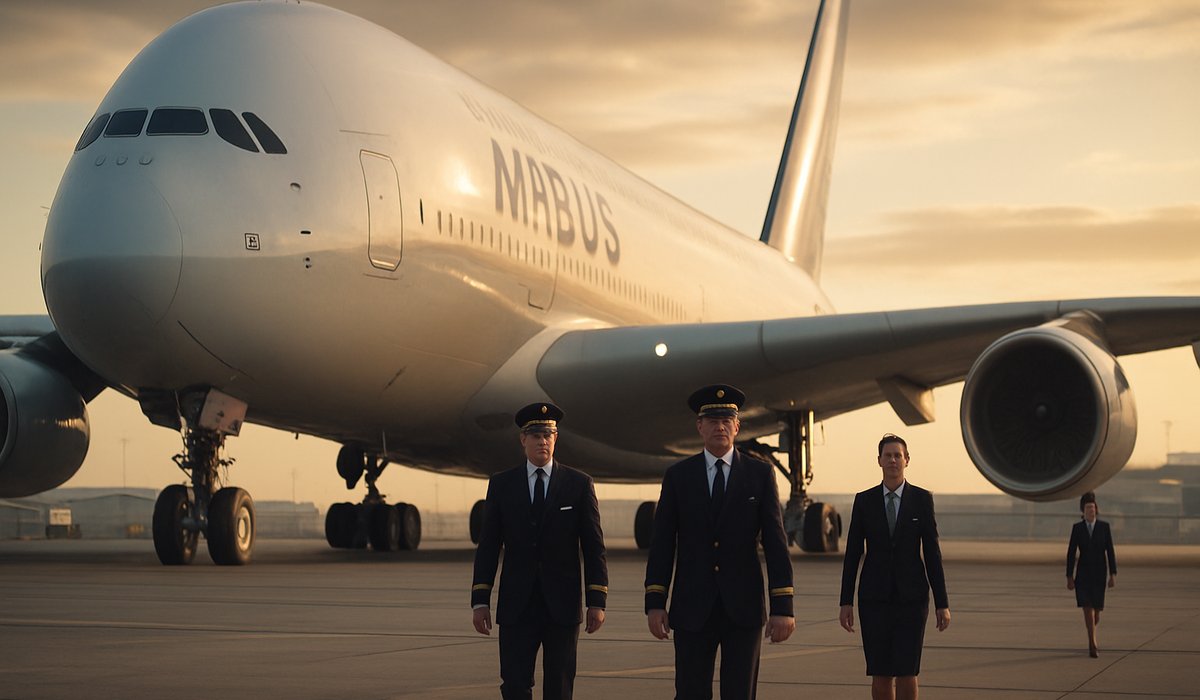
Image generated by AI
Airbus A380's Four-Engine Design Now a Major Commercial Millstone as Airlines Shift Strategy
The superjumbo's fuel-hungry architecture clashes with modern aviation economics, forcing carriers to reconsider the aircraft's viability
The A380's Post-2007 Paradox
When Airbus launched the A380 into commercial service in 2007, the double-deck superjumbo represented an uncompromising vision of aviation's future. With capacity for over 500 passengers and two complete passenger levels, the aircraft promised to revolutionize hub-and-spoke connectivity on the world's busiest long-haul routes. Major carriers rushed to acquire the prestige aircraft, viewing it as essential infrastructure for major international hubs.
Today, that same engineering architecture has become the A380's commercial albatross—particularly its quad-engine configuration, which now represents a fundamental mismatch with how global airlines operate.
Fuel Costs and Operating Economics Drive Strategic Reversal
The critical shift stems from volatile jet fuel markets and evolving aviation economics. Four-engine aircraft inherently consume substantially more fuel than twin-engine alternatives, a disadvantage that becomes crushing during periods of elevated oil prices. Recent years have seen fuel costs fluctuate dramatically, driven by geopolitical tensions, refining capacity constraints, and macroeconomic pressures—all factors that tighten airline margins and force fleet evaluations.
Modern twin-engine widebodies like the Boeing 777X and Airbus A350 offer comparable or superior long-range capabilities while reducing fuel consumption by 20-30 percent. These fuel-efficient aircraft deliver substantially better operational economics on the exact routes where A380s once dominated.
The Broader Industry Shift Away from Mega-Hub Models
Beyond fuel efficiency, the A380's decline reflects a fundamental reimagining of global aviation strategy. The traditional hub-and-spoke model that justified superjumbo operations has given way to point-to-point connectivity. Airlines now prioritize fuel-efficient aircraft that can profitably operate direct routes between secondary cities, rather than concentrating traffic through massive hub operations.
The COVID-19 pandemic accelerated this transition, with carriers retiring older, less-efficient widebodies first. The A380 faced particular pressure, as its massive seating capacity makes it economically unviable on routes with reduced demand.
What This Means for the Aviation Industry
The A380's predicament underscores how rapidly commercial aviation economics can shift. Airbus suspended A380 production in 2021 after securing just 251 orders—a stark contrast to initial projections. Remaining operators face mounting maintenance costs and limited resale value for a aircraft type increasingly viewed as commercially obsolete.
For travelers, the decline of the A380 means fewer opportunities to experience the superjumbo experience, though modern twin-engine aircraft increasingly offer superior comfort-per-passenger economics through advanced cabin technology and direct routing options.
Frequently Asked Questions
Why is the Airbus A380 no longer profitable for airlines? The quad-engine design consumes significantly more jet fuel than modern twin-engine alternatives, making it economically uncompetitive during periods of elevated fuel prices. Twin-engine widebodies like the A350 offer comparable range with 20-30% lower fuel consumption.
How do airline baggage fees and ancillary charges relate to aircraft efficiency? As fuel costs rise, airlines increasingly rely on ancillary revenue streams—baggage charges, seat selections, and premium services—to maintain margins. Less-efficient aircraft like the A380 require higher ancillary revenue targets to remain profitable.
What aircraft are replacing the Airbus A380 on long-haul routes? The Boeing 777X, Airbus A350, and Boeing 787 Dreamliner now dominate long-haul operations, offering superior fuel efficiency and the flexibility to serve point-to-point routes rather than requiring hub concentration.
When did Airbus stop producing the A380? Airbus suspended A380 production in 2021 after delivering 251 aircraft, making it one of the costliest aviation program failures in commercial history.
Are any airlines still ordering new A380 aircraft? No active production orders exist. Remaining A380 operators are focused on extending the service life of existing aircraft while gradually transitioning to more efficient widebodies.
Related Travel Guides
Disclaimer
This article is for informational and educational purposes only. It does not constitute legal, financial, or professional advice. While we strive to provide accurate and up-to-date information, travel policies, regulations, and conditions change rapidly. Always verify information with official sources before making travel decisions. Nomad Lawyer makes no representations about the accuracy, reliability, completeness, or suitability of the information provided. Readers should consult qualified professionals for advice specific to their circumstances. The views expressed in this article are those of the author and do not necessarily reflect the views of Nomad Lawyer.
Kunal K Choudhary
Co-Founder & Contributor
A passionate traveller and tech enthusiast. Kunal contributes to the vision and growth of Nomad Lawyer, bringing fresh perspectives and driving the community forward.
Learn more about our team →