
Boeing 787 Pilots Earn Premium Pay Over 777 Counterparts at Major US Carriers—Here's Why
Breaking airline news and aviation industry updates for 2026.

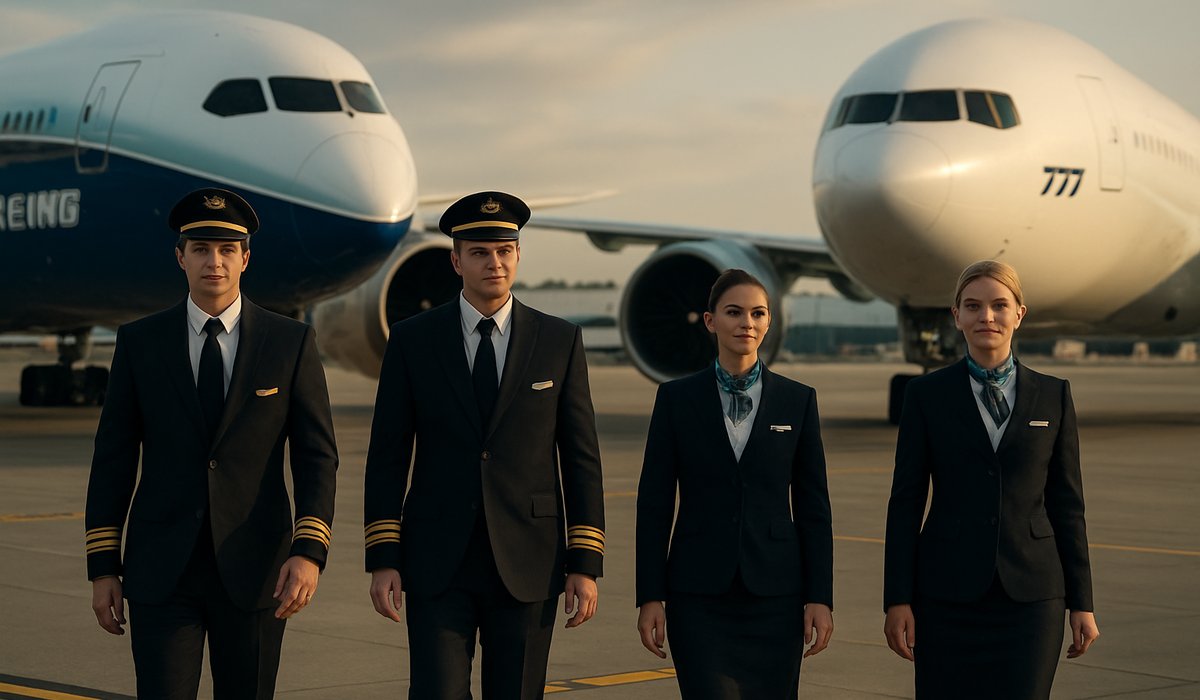
Image generated by AI
Boeing 787 Pilots Earn Premium Pay Over 777 Counterparts at Major US Carriers—Here's Why
Complexity, experience requirements, and aircraft capability drive wage differential in competitive pilot labor market
Pay Gap Reflects Aircraft Complexity and Crew Expertise
United Airlines' 2025 pilot compensation structure reveals a significant wage disparity between long-haul crews, with Boeing 787 Dreamliner operators commanding notably higher salaries than their Boeing 777-flying counterparts. The distinction underscores how aircraft sophistication directly influences pilot compensation in an increasingly competitive aviation labor environment, where experienced crews demand premium pay for managing cutting-edge technology.
The Dreamliner's advanced avionics, fly-by-wire systems, and operational flexibility create steeper learning curves and higher certification requirements compared to the 777, traditionally considered the industry's workhorse for transpacific and transatlantic routes. This technical complexity translates directly into wage negotiations, where pilot unions leverage aircraft difficulty as a justification for elevated pay scales.
Industry Standards Diverge on Compensation Strategy
While United's pay structure differentiates between the two widebody platforms, competitor American Airlines maintains uniform base salary rates for 777 and 787 pilots—a strategic choice that simplifies crew scheduling and avoids potential internal compensation conflicts. This bifurcated approach across the industry reflects broader tensions in aviation labor relations as carriers attempt to balance cost management with crew satisfaction.
The pay premium for 787 pilots at United reflects the airline's recognition that Dreamliner operations require seasoned professionals with advanced technical proficiency. Pilots transitioning to the 787 typically undergo intensive training covering systems redundancy, fuel efficiency optimization, and extended-range capability management—expertise that commands market-rate compensation.
Future Aircraft May Reshape Pay Hierarchies
The anticipated arrival of the Boeing 777X—featuring even greater technological sophistication and operational complexity—could fundamentally alter pilot compensation frameworks across the industry. However, no major US carrier has currently committed to 777X orders, rendering speculation about its wage impact largely academic for American-based crews.
Industry observers suggest that when next-generation widebodies enter service, carriers will face renewed pressure to adjust pay structures accordingly. The 777X's advanced systems and enhanced efficiency features may eventually command compensation levels exceeding current 787 premium rates, creating a three-tiered wage structure for long-haul operations.
Broader Labor Market Implications
The 787-777 compensation differential reflects tightening pilot labor markets post-pandemic, where experienced crews hold considerable negotiating leverage. Airlines competing for qualified talent must balance premium wage offers against operational budgets, particularly as fuel costs and maintenance expenses fluctuate unpredictably.
This wage stratification could influence fleet planning decisions, as carriers weigh operational costs alongside crew compensation when selecting between competing widebody platforms for international expansion.
FAQ: Pilot Pay, Aircraft Types, and Aviation Labor
Q: Why do Boeing 787 pilots earn more than 777 pilots at United Airlines? The Dreamliner's advanced technology, fly-by-wire systems, and operational complexity require more experienced pilots, justifying premium compensation beyond standard widebody rates.
Q: Do all US airlines pay 787 pilots more than 777 pilots? No—American Airlines maintains identical base salaries for both aircraft types, demonstrating that compensation strategies vary by carrier and labor agreements.
Q: What training differences exist between 777 and 787 pilot certification? 787 certification involves comprehensive systems training, extended-range procedures, and advanced avionics management that exceed standard 777 transition curricula.
Q: How might the Boeing 777X affect pilot compensation? The 777X's superior complexity could command even higher premiums than current 787 rates, though no US carrier has ordered the aircraft yet.
Q: Are pilot wages the largest operational cost for long-haul airlines? While significant, pilot salaries represent one component alongside jet fuel costs, maintenance, and airport fees in overall carrier expenses.
Related Travel Guides
Flight Delay Compensation Guide 2026
Understanding Airline Route Changes
Airport Security Process Updated (2026)
External Resources
Disclaimer
This article is for informational and educational purposes only. It does not constitute legal, financial, or professional advice. While we strive to provide accurate and up-to-date information, travel policies, regulations, and conditions change rapidly. Always verify information with official sources before making travel decisions. Nomad Lawyer makes no representations about the accuracy, reliability, completeness, or suitability of the information provided. Readers should consult qualified professionals for advice specific to their circumstances. The views expressed in this article are those of the author and do not necessarily reflect the views of Nomad Lawyer.
Raushan Kumar
Founder & Lead Developer
Full-stack developer with 11+ years of experience and a passionate traveller. Raushan built Nomad Lawyer from the ground up with a vision to create the best travel and law experience on the web.
Learn more about our team →