
Airbus A321 Design Choice Reveals Engineering Trade-offs Against Boeing 757 Mid-Cabin Boarding Advantage
Breaking airline news and aviation industry updates for 2026.

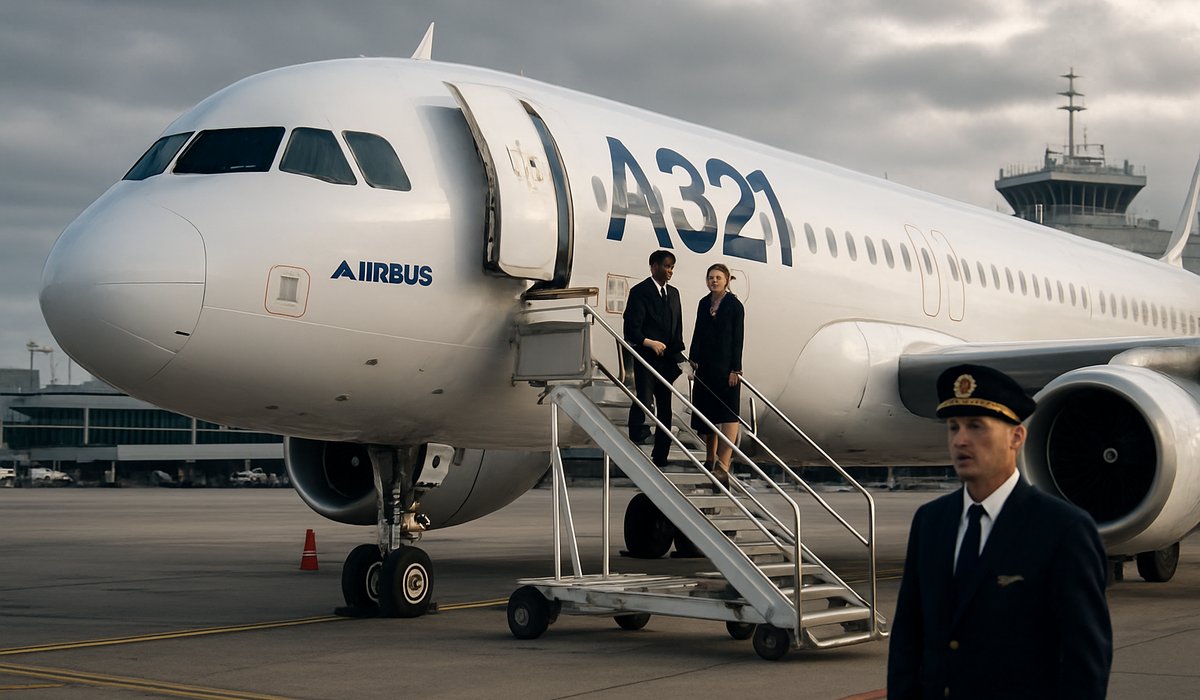
Image generated by AI
Airbus A321 Design Choice Reveals Engineering Trade-offs Against Boeing 757 Mid-Cabin Boarding Advantage
Why the European aircraft sacrifices operational flexibility for fuel efficiency and cargo capacity
The Successor That Chose Different Priorities
Since its introduction to commercial service, the Airbus A321 has systematically displaced the Boeing 757-200 on long-range, fuel-efficient routes worldwide. While both narrow-body aircraft serve comparable missions and carry similar passenger loads, a fundamental design difference has created distinct operational advantages—and disadvantages—for each platform.
The A321 measures approximately nine feet shorter than its Boeing counterpart, yet its cabin length falls only five feet short, a dimensional efficiency achieved through a notably smaller tail assembly. This compact empennage design prioritizes aerodynamic efficiency and weight reduction, allowing Airbus to deliver superior fuel consumption on routes well within the aircraft's operational envelope. However, this structural choice eliminates a capability the 757 has long offered: mid-cabin boarding doors.
Engineering Trade-offs in Narrow-Body Design
The 757's mid-cabin entry point—typically positioned at Row 10 or 11—enables airlines to accelerate ground turnarounds by simultaneously loading passengers through forward and aft doors. This operational flexibility has proven invaluable for carriers managing high-frequency schedules on trunk routes.
The A321's designers prioritized different objectives. The aircraft's reduced tail structure, while enhancing fuel economy, prevents the installation of mid-cabin doors without compromising structural integrity and aerodynamic performance. Airbus instead focused engineering resources on maximizing cabin volume relative to fuselage length—a trade-off that delivered superior cargo capacity and environmental credentials.
Continuous Range Improvements Reshape Market Competition
Airbus has progressively enhanced A321 capabilities since its 1987 debut. The revolutionary A321XLR variant, certified in 2023, now exceeds the 757-200's maximum range while maintaining the efficiency advantages that make the aircraft economically superior on most long-haul narrow-body missions.
Airlines operating the A321 compensate for single-door boarding through optimized ground procedures, advanced passenger management systems, and adjusted scheduling expectations. For many carriers, the fuel savings and extended range justify accepting slightly longer turnaround times.
Market Implications for Airlines and Operators
The A321 family's continuous evolution has solidified its position as the 757's primary successor, despite operational differences. With over 10,000 A321 variants on order globally, the aerospace industry has clearly validated Airbus's engineering philosophy: maximizing efficiency and range capacity over boarding convenience.
This design decision underscores how modern aircraft selection reflects broader airline priorities—primarily fuel costs, route profitability, and environmental compliance—rather than ground-handling conveniences that represent only minutes of daily operational time.
FAQ: A321 Design and Operational Questions
Why can't the Airbus A321 install mid-cabin doors like the Boeing 757? The A321's significantly smaller tail section, engineered for weight reduction and fuel efficiency, structurally prevents mid-cabin door installation without compromising aerodynamic performance and safety margins.
How much shorter is the A321 compared to the 757-200? The A321 is approximately nine feet (2.7 meters) shorter overall, though its cabin length differs by only five feet (1.5 meters) due to its compact tail design.
Does the newer A321XLR match the Boeing 757's range capabilities? Yes. The A321XLR, certified in 2023, exceeds the 757-200's maximum range while maintaining superior fuel efficiency on comparable routes.
Which aircraft is more fuel-efficient: A321 or 757-200? The A321 delivers significantly better fuel consumption on routes within its range, primarily through lighter weight and advanced engine technology.
Are airlines still ordering the A321 despite the boarding limitation? Overwhelmingly yes. The A321 family has over 10,000 orders, reflecting airlines' preference for range, efficiency, and cargo capacity over mid-cabin boarding convenience.
Related Travel Guides
Flight Delay Compensation Guide 2026
Understanding Airline Route Changes
Airport Security Process Updated (2026)
External Resources
Disclaimer
This article is for informational and educational purposes only. It does not constitute legal, financial, or professional advice. While we strive to provide accurate and up-to-date information, travel policies, regulations, and conditions change rapidly. Always verify information with official sources before making travel decisions. Nomad Lawyer makes no representations about the accuracy, reliability, completeness, or suitability of the information provided. Readers should consult qualified professionals for advice specific to their circumstances. The views expressed in this article are those of the author and do not necessarily reflect the views of Nomad Lawyer.
Kunal K Choudhary
Co-Founder & Contributor
A passionate traveller and tech enthusiast. Kunal contributes to the vision and growth of Nomad Lawyer, bringing fresh perspectives and driving the community forward.
Learn more about our team →