
British Airways' Transatlantic Gamble: Why The Airline Deployed Its Tiniest Airbus to New York
Breaking airline news and aviation industry updates for 2026.

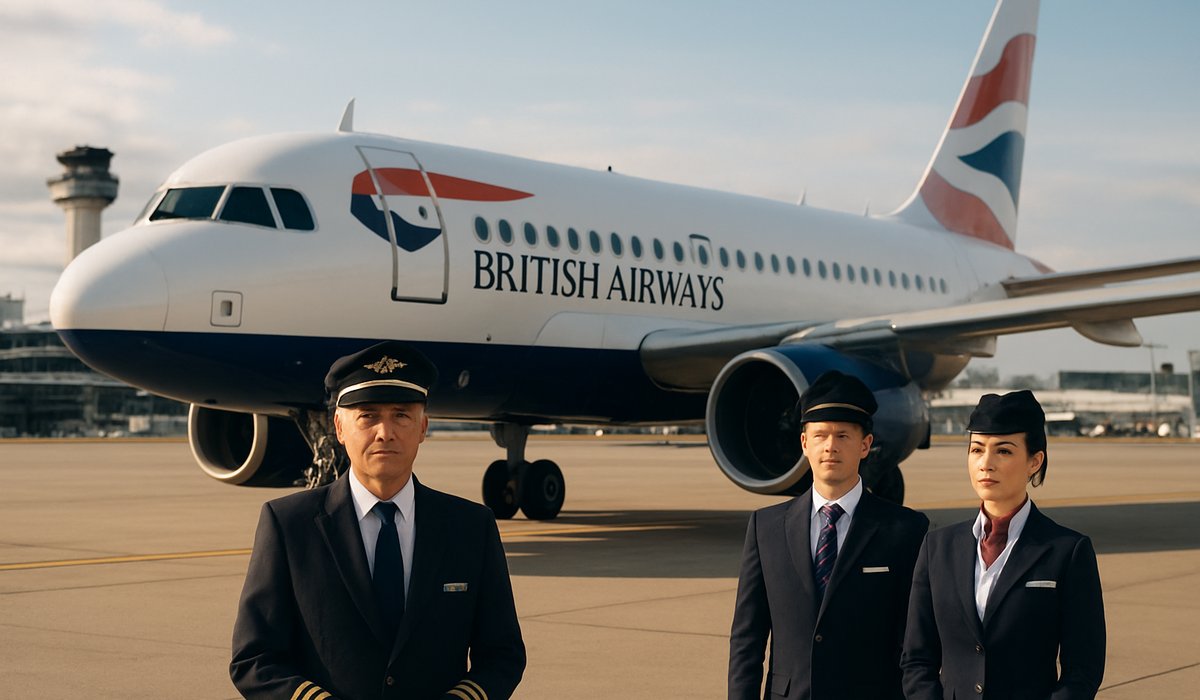
Image generated by AI
British Airways' Transatlantic Gamble: Why The Airline Deployed Its Tiniest Airbus to New York
An unconventional operational strategy reveals the complexities of long-haul aviation scheduling and fleet management
A Surprising Deployment
Between 2009 and 2020, British Airways operated an unusual transatlantic service that defied conventional aviation logic: the carrier deployed two Airbus A318 aircraft on scheduled flights between London and New York's John F. Kennedy International Airport. The move marked a striking departure from the UK flag carrier's storied history of operating premium wide-body aircraft across the Atlantic, including the legendary Concorde supersonic jet and the iconic Boeing 747.
The A318, Airbus's smallest commercial variant in the A320 family, represents one of the narrowest and least-capacious aircraft designed for modern airline operations. Its deployment on one of the world's most competitive and demanding long-haul routes stands as a testament to the complex operational decisions airlines must navigate when balancing fleet utilization, regulatory requirements, and market demands.
Understanding the Strategic Decision
While the specifics of British Airways' operational rationale remain rooted in the airline's internal planning strategies during that period, industry analysts point to several potential factors. The 2008 financial crisis and subsequent recovery period forced carriers to optimize fleet deployment across their networks. Airlines often face regulatory obligations requiring them to maintain specific route authorizations, sometimes necessitating creative scheduling solutions to preserve valuable landing slots and bilateral air service agreements.
As a founding member of the oneworld alliance, British Airways maintained critical transatlantic routes that anchored its network connectivity and partnership obligations. Maintaining JFK service continuity—even with smaller aircraft—could have served strategic purposes in preserving operational rights and schedule frequency during economically challenging periods.
Long-Haul Aviation's Evolving Landscape
The A318's transatlantic deployment highlighted the aviation industry's operational flexibility during the post-recession era. While the aircraft's range capability supported the London-New York routing, its limited passenger capacity (approximately 132 seats in typical configurations) presented revenue optimization challenges on premium transatlantic services where demand typically supports larger aircraft.
British Airways eventually retired this service model, consolidating its transatlantic operations around larger, more efficient wide-body platforms including the Boeing 777 and Airbus A350—aircraft better suited to the passenger volumes and profitability requirements of premium intercontinental markets.
FAQ: Understanding Airline Fleet Strategy
Why would British Airways use a small aircraft on a transatlantic route? Airlines occasionally deploy smaller aircraft to maintain route authorizations, preserve landing slots, or fulfill bilateral air service agreement requirements, particularly during periods of economic constraint or fleet transitions.
What is the Airbus A318 typically used for? The A318 is designed for short to medium-haul regional routes, making its transatlantic deployment highly unconventional for the aviation industry.
How does aircraft choice impact airline fees and ticket prices? Smaller aircraft generate higher per-seat operating costs, potentially leading to increased baggage charges and ticket premiums to maintain profitability on long-haul routes.
What changed British Airways' transatlantic fleet strategy? Modernization of wide-body fleets and improved fuel efficiency of aircraft like the A350 made dedicated large-aircraft deployment more economically viable for premium routes.
Does British Airways still fly to JFK? Yes, British Airways maintains regular JFK service using larger aircraft as part of its core transatlantic network.
Related Travel Guides
External Resources
Disclaimer
This article is for informational and educational purposes only. It does not constitute legal, financial, or professional advice. While we strive to provide accurate and up-to-date information, travel policies, regulations, and conditions change rapidly. Always verify information with official sources before making travel decisions. Nomad Lawyer makes no representations about the accuracy, reliability, completeness, or suitability of the information provided. Readers should consult qualified professionals for advice specific to their circumstances. The views expressed in this article are those of the author and do not necessarily reflect the views of Nomad Lawyer.
Preeti Gunjan
Contributor & Community Manager
A passionate traveller and community builder. Preeti helps grow the Nomad Lawyer community, fostering engagement and bringing the reader experience to life.
Learn more about our team →