
Boeing Weighs Reactivating C-17 Globemaster Production Line as U.S. Military Faces Strategic Airlift Shortage
Breaking airline news and aviation industry updates for 2026.

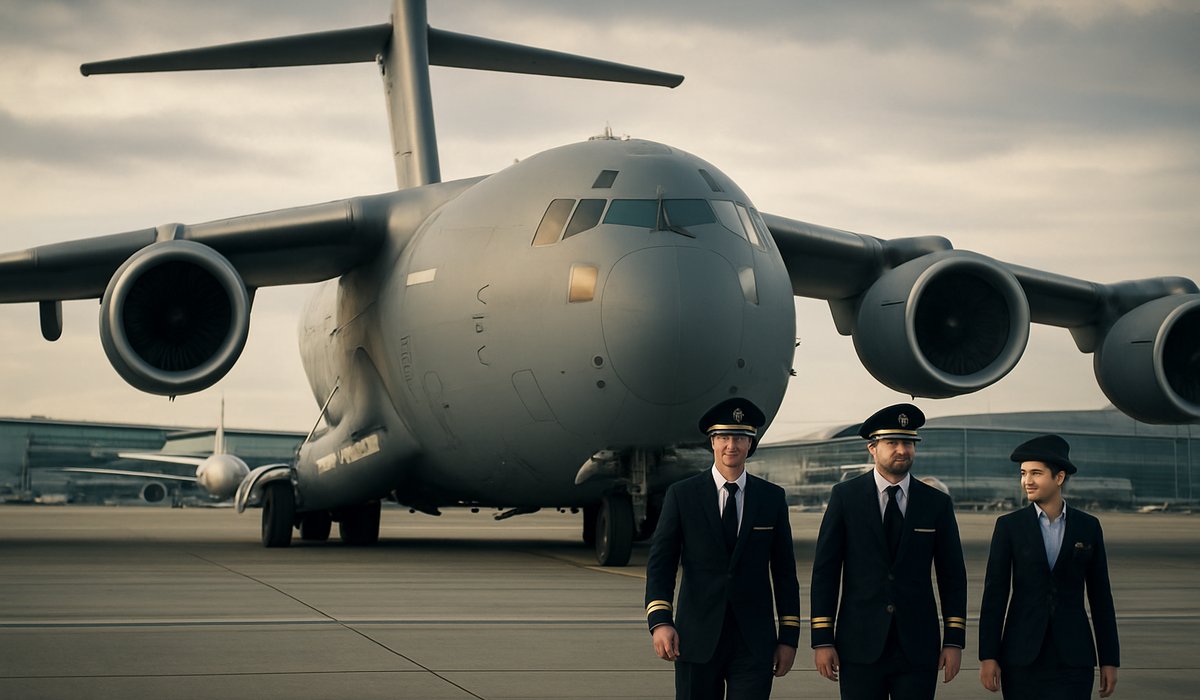
Image generated by AI
Boeing Weighs Reactivating C-17 Globemaster Production Line as U.S. Military Faces Strategic Airlift Shortage
Defense spending pressures and global instability spark reconsideration of long-dormant aircraft manufacturing capacity
The Strategic Airlift Crisis Reshaping U.S. Military Operations
Boeing is seriously evaluating the restart of its C-17 Globemaster III production line, dormant for over a decade, as the United States military grapples with an urgent capacity shortage in strategic cargo transport. The move signals growing recognition within Pentagon leadership that existing airlift capabilities may be insufficient to sustain America's far-flung military footprint amid heightened geopolitical tensions.
The reactivation proposal emerges at a critical juncture. Despite maintaining the world's most extensive network of military installations—spanning the Middle East, Europe, the Indo-Pacific, and beyond—the U.S. Armed Forces faces mounting challenges in rapidly deploying personnel, equipment, and supplies to distant operational theaters. While maritime logistics typically handle bulk cargo movement, specialized military transport aircraft remain indispensable for time-sensitive operations, emergency resupply missions, and maintaining readiness across dispersed bases.
Why Now? The Convergence of Strategic Demand
The timing reflects multiple converging pressures on America's defense infrastructure. Escalating regional conflicts, strengthened great-power competition with Russia and China, and the expansion of U.S. forward-deployed operations have strained existing heavy-lift capacity beyond sustainable levels. Current C-17 fleets, numbering in the hundreds across military services, operate at historically high utilization rates—a trend analysts warn cannot continue indefinitely without risking aircraft fatigue and operational gaps.
The C-17 Globemaster III, one of aviation's most capable heavy-lift platforms, was last produced in 2015 when Boeing ceased production after delivering 279 aircraft to domestic and international customers. Restarting this specialized production line represents a dramatic reversal of previous cost-cutting decisions, underscoring the military's reassessment of what constitutes adequate strategic airlift capacity.
Industrial and Economic Implications
Reviving production carries substantial economic consequences. Reestablishing manufacturing infrastructure, retraining specialized workforce personnel, and recalibrating supply chains would require significant capital investment and take considerable time before new aircraft entered service. However, proponents argue the long-term strategic benefits—ensuring sustained military mobility and reducing operational risk—justify the expenditure.
The potential restart also reflects broader shifts within defense procurement philosophy, where immediate cost minimization increasingly yields to capability assurance and strategic resilience. Industry observers note this mirrors wider aviation sector trends emphasizing supply chain redundancy and operational flexibility over pure efficiency metrics.
Looking Forward
While no formal production restart has been authorized, Boeing's serious exploration of the possibility demonstrates how geopolitical conditions and operational demands can fundamentally reshape military acquisition decisions—even reversing seemingly permanent manufacturing closures.
FAQ: Understanding Military Airlift and Strategic Transport Challenges
Q: Why is the C-17 Globemaster still considered critical despite being designed decades ago? A: The C-17 remains unmatched in its ability to carry oversized, heavy cargo directly into austere airfields with minimal ground infrastructure—capabilities no newer platform currently matches at comparable scale and reliability.
Q: What would restart costs likely entail? A: Comprehensive restart would require rebuilding supplier networks, requalifying manufacturing facilities, rehiring specialized technicians, and updating production tooling—potentially $1-2 billion before delivering first aircraft.
Q: How does airlift capacity connect to forward military base sustainability? A: Strategic bases depend on regular cargo resupply, personnel rotation, and emergency equipment delivery. Insufficient airlift forces reliance on slower maritime logistics, reducing operational responsiveness.
Q: Could other aircraft substitute for restarting C-17 production? A: No current alternative matches the C-17's combination of payload capacity, range, and austere-field landing capability, making true substitution infeasible.
Q: How many additional aircraft might be produced? A: Pentagon requirements studies suggest potential demand for 30-50 additional airframes, though final numbers depend on strategic assessments and competing budget priorities.
Related Travel Guides
External Resources
Disclaimer
This article is for informational and educational purposes only. It does not constitute legal, financial, or professional advice. While we strive to provide accurate and up-to-date information, travel policies, regulations, and conditions change rapidly. Always verify information with official sources before making travel decisions. Nomad Lawyer makes no representations about the accuracy, reliability, completeness, or suitability of the information provided. Readers should consult qualified professionals for advice specific to their circumstances. The views expressed in this article are those of the author and do not necessarily reflect the views of Nomad Lawyer.
Kunal K Choudhary
Co-Founder & Contributor
A passionate traveller and tech enthusiast. Kunal contributes to the vision and growth of Nomad Lawyer, bringing fresh perspectives and driving the community forward.
Learn more about our team →