
Why Americas Top 5 Historic Piers Are Transforming the Travel Experience
Why Americas Top 5 Historic Piers Are Transforming the Travel Experience

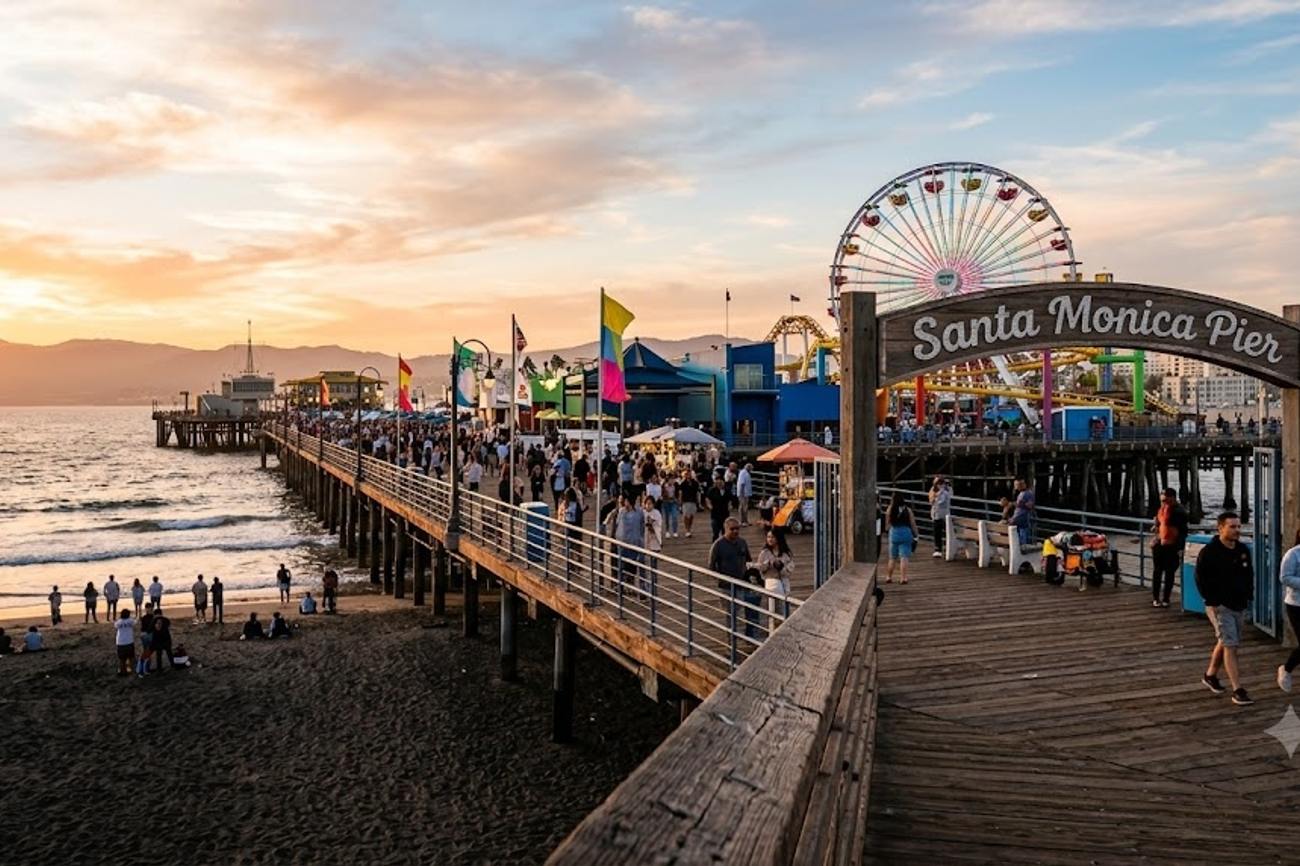
Image generated by AI
[Atlantic City, October 2024] — The historic Steel Pier is entering a transformative phase as city officials and stakeholders push to evolve the landmark beyond its traditional amusement roots to diversify Atlantic City's tourism economy.
The 965-foot-long pier, a fixture of the New Jersey coastline since 1897, is currently positioned as a primary tool for the city to reduce its heavy reliance on the gaming and casino sector. By leveraging its unique physical assets—including a 40,000-square-foot building, a helipad, and a sky bridge—the city aims to attract a broader demographic of family travelers, business conventions, and event-goers.
The Catalyst for Redevelopment
The push for a renewed Steel Pier stems from a strategic shift in Atlantic City's economic goals. While casinos remain a cornerstone of the local economy, current travel trends indicate a growing demand for "experience-based" tourism. Modern visitors are prioritizing culinary offerings, live music, family-centric entertainment, and "instagrammable" vistas over gambling alone.
Mayor Marty Small Sr. has explicitly warned that the loss of the pier's role as an entertainment hub would be "deeply damaging" to the city's brand. The urgency is driven by the need to create a year-round destination that can sustain foot traffic outside of the peak summer season, mirroring successful waterfront models in other major US cities.
Infrastructure and Asset Value
The Steel Pier possesses rare developmental rights that make it one of the most valuable pieces of coastal real estate in the United States. According to site specifications, the current structure measures 150 feet in width and 965 feet in length. However, the property holds a unique legal right to extend its footprint up to 2,850 feet into the Atlantic Ocean.
Current amenities available for potential redevelopment or expansion include:
- The Observation Wheel: A primary visual landmark and tourist draw.
- Commercial Space: A 40,000-square-foot facility capable of hosting diverse ventures.
- Transport Links: An on-site helipad and sky bridge.
- Hospitality: Existing bars, restaurants, and amusement rides.
Practical Traveler Advisory and Strategic Insights
For those booking trips to Atlantic City, the evolution of the Steel Pier signals a shift toward a more diversified vacation experience. Travelers should expect the following impacts:
Diversified Itineraries: Visitors will find more reasons to visit the Boardwalk beyond the casino floor. The focus is shifting toward family-friendly attractions and public spaces that do not require a gaming budget to enjoy.
Enhanced Convention Services: For those attending business events, the pier is being positioned as a secondary hub for networking and relaxation. With Atlantic City hosting 205 meetings and trade shows in 2025—generating 328,000 room nights and $362 million in economic impact—the pier will likely integrate more "bleisure" (business + leisure) amenities.
Increased Accessibility: Following the "Santa Monica Model," there is a strong push to maintain open public access. This means travelers can expect to utilize the pier for sightseeing and ocean views without mandatory entry fees, though specific rides and dining will remain paid experiences.
Strategic Benchmarks for Growth
To ensure the success of the Steel Pier's transformation, city planners are analyzing four specific US waterfront models:
Modern waterfront revitalizations are integrating seamless transit hubs to manage the surge in cruise and ferry traffic. Travelers can coordinate their arrivals and departures through the Port of Miami, which serves as a primary gateway for international tourism in the Americas.
The Public Access Model (Santa Monica Pier, CA): The City of Santa Monica demonstrates that free public access increases overall spending on paid attractions. Atlantic City intends to replicate this "open-door" policy to keep the Boardwalk welcoming to all demographics.
The Identity Model (Coney Island, NY): By focusing on historic landmarks like the Cyclone and integrating seasonal festivals, Coney Island maintains a year-round identity. Atlantic City is looking to implement similar spring, autumn, and winter programming—such as holiday markets and food festivals—to eliminate the "off-season" slump.
The Economic Engine Model (Navy Pier, Chicago): Navy Pier attracts nearly nine million guests annually by offering a massive variety of price points, from free walks to luxury cruises. Steel Pier aims to mirror this variety to capture both budget travelers and high-net-worth visitors.
The Simplicity Model (Daytona Beach Pier, FL): The Florida model proves that a pier can remain a vital landmark through simple, open utility for fishing and walking. This serves as a reminder for Atlantic City to balance high-end luxury development with basic public utility.
Environmental and Structural Risks
Any future expansion of the Steel Pier faces significant geological and climatic hurdles. Using the recent experience of the Santa Monica Pier—where severe surf and coastal erosion disrupted a planned music festival—planners are being cautioned to prioritize structural resilience.
The harsh Atlantic environment, characterized by salt-water corrosion and frequent storm surges, requires a rigorous maintenance schedule. Any new ownership or development phase must allocate substantial capital toward "hardened" infrastructure to avoid the costly emergency repairs that frequently plague coastal landmarks.
FAQ: Steel Pier Redevelopment 2025
Will there be an admission fee to walk onto the Steel Pier? Based on the city's desire to emulate the Santa Monica model, the goal is to maintain free public access for walking and sightseeing, while charging for specific rides, the Observation Wheel, and dining.
How does the pier support business travelers in Atlantic City? The pier provides a non-gaming environment for the 533,000 annual convention attendees to network and relax, expanding the city's appeal beyond the casino halls.
What are the plans for the pier during the winter months? The city is exploring "year-round appeal" strategies, including holiday markets, light shows, and seasonal food festivals to ensure the pier remains active outside of the summer peak.
Can the pier actually be extended further into the ocean? Yes. While the current structure is 965 feet long, the property holds a rare legal right to extend up to 2,850 feet into the Atlantic Ocean.
A gamble on experience over gaming as Atlantic City bets on its boardwalk heritage.
Related Travel Guides
- Texas Alongwith California and More US States Spark Fresh Debate with Growing Scrutiny Over Foreign Childbirth Travel
- USA Travel Spotlight: Florida’s Red, Gold and Orange Landscapes Attract Nature Lovers
- Seattle Ignites Latin American Pride as Sea Mar Fiestas Patrias Brings Music Food and Culture Alive
Disclaimer
This article is for informational and educational purposes only. It does not constitute legal, financial, or professional advice. While we strive to provide accurate and up-to-date information, travel policies, regulations, and conditions change rapidly. Always verify information with official sources before making travel decisions. Nomad Lawyer makes no representations about the accuracy, reliability, completeness, or suitability of the information provided. Readers should consult qualified professionals for advice specific to their circumstances. The views expressed in this article are those of the author and do not necessarily reflect the views of Nomad Lawyer.
Preeti Gunjan
Contributor & Community Manager
A passionate traveller and community builder. Preeti helps grow the Nomad Lawyer community, fostering engagement and bringing the reader experience to life.
Learn more about our team →