
Wheelchair-Accessible Vacation Destinations: Exploring Inclusive Global Tourism
Discover wheelchair-accessible vacation destinations from Pensacola Beach and the Great Smoky Mountains to Sydney, Singapore, and Vienna.

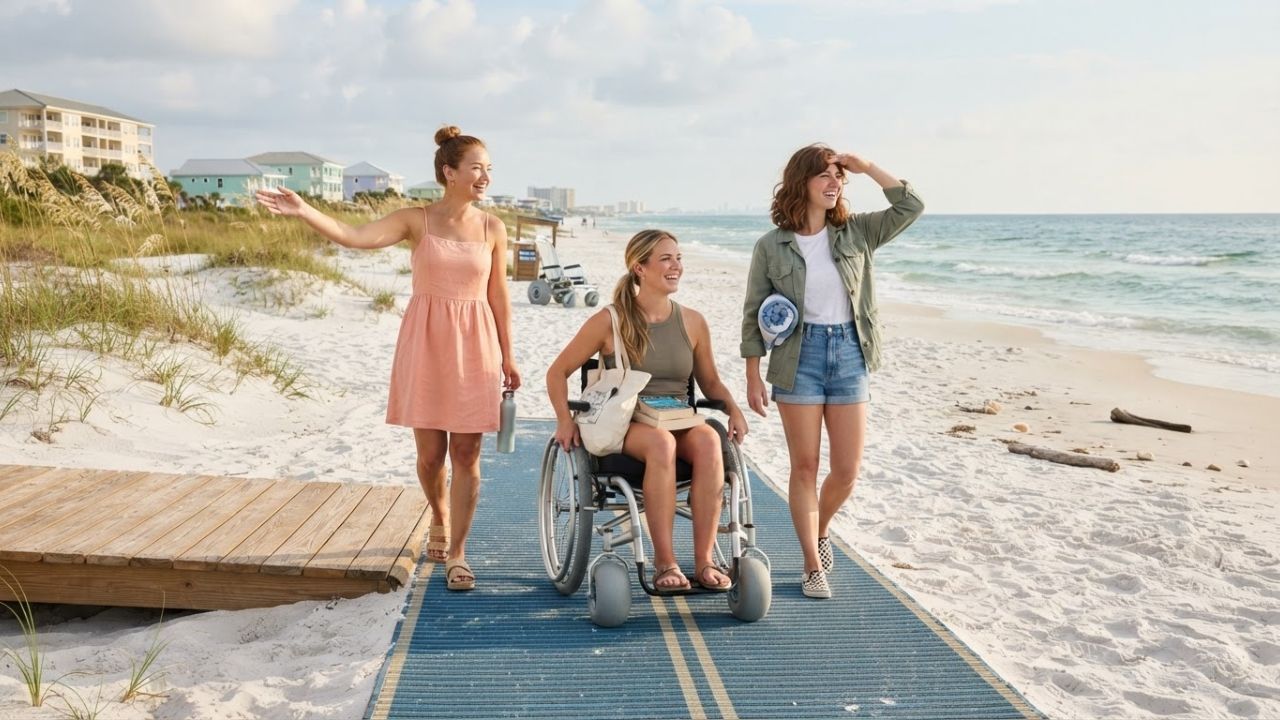
Image generated by AI
A significant transformation in the travel industry has been established as wheelchair-accessible vacation destinations expand inclusive tourism globally. From Pensacola Beach’s coastal paths to all-terrain trail systems in the Great Smoky Mountains, modern infrastructure ensures that travelers of all abilities can explore natural and cultural destinations independently.
The Evolution of Accessible Travel Infrastructure
The growth of accessible travel is shifting destination selection from traditional sightseeing to experience-driven itineraries. Historically, travelers with limited mobility faced significant barriers when attempting to explore natural environments, historic districts, and complex transit networks. In 2026, a coordinated effort by parks departments, transportation authorities, and city planners is creating a more inclusive travel environment, enabling independent exploration across beaches, mountain trails, and cities.
Having reliable, real-time data on trail grades, transport widths, and ADA compliance helps travelers avoid unexpected obstacles. As inclusive tourism gains recognition as a vital market segment, destinations are demonstrating that physical adaptations can be integrated into diverse environments, from pristine coastal conservation areas to historic European capitals. This comprehensive approach promotes personal independence while ensuring that tourism remains accessible to all.
Pensacola Beach: Streamlining Coastal Access for All Mobility Levels
Pensacola Beach stands out as a leading Florida destination for travelers seeking a classic seaside holiday with robust mobility support. The destination features five Mobi-mat paths deployed across five separate beaches, providing firm, non-slip pathways that help wheelchairs, strollers, and pedestrians cross the soft sand easily. On Casino Beach, two Mobi-mat access points are positioned strategically: one east of the Public Safety Building and another west of The Dock Bar.
Additional accessible coastal locations in the Pensacola area include Fort Pickens, Johnson Beach, Opal Beach, Park West North Beach, Quietwater Beach, and Baby Beach (off Avenida 18). These locations feature accessible dune crossings and beach wheels. To complement the permanent infrastructure, local rental providers offer both manual and motorized beach wheelchairs equipped with oversized balloon tires designed to roll smoothly over the sand, allowing visitors to explore the coastline without restrictions.
The integration of beach mats, adaptive rentals, and clear signage allows visitors to explore the Gulf Coast coastline without restrictions. By maintaining these facilities, local authorities ensure that the natural beauty of Florida's white-sand beaches remains open to everyone, supporting a welcoming environment for families and independent travelers alike.
Gatlinburg and the Smokies: Pioneer in Mountain Trail Accessibility
For travelers seeking a mountain environment, Gatlinburg serves as the gateway to Great Smoky Mountains National Park, which features advanced adaptive recreation programs. The park offers the Sugarlands Valley Nature Trail, a paved, ADA-compliant half-mile loop near the Sugarlands Visitor Center that allows visitors to explore the forest safely.
To help visitors explore deeper trails, the National Park Service offers free checkouts of GRIT Freedom Chairs. These manual, lever-driven, all-terrain wheelchairs cover approximately 14 miles of approved trails, including sections of the Gatlinburg Trail, Little River Trail, Oconaluftee River Trail, Deep Creek Trail, and Middle Prong Trail. The chairs are available at the Sugarlands and Oconaluftee Visitor Centers, with reservations recommended from May through October for users meeting the 250-pound weight limit and traveling with a companion.
The park's seasonal adaptive programs also include ranger-led hiking, biking, fly-fishing, and overnight backcountry camping experiences, running from May to October. Accessible campsites are maintained at Cades Cove, Elkmont, and Smokemont, ensuring that the backcountry remains open to all outdoor enthusiasts.
Inclusive Coastal Escapes in Rehoboth Beach
Rehoboth Beach, Delaware, offers another accessible coastal option that combines a historic boardwalk with convenient public transportation. The city’s famous Rehoboth Boardwalk is fully accessible, featuring flat, smooth wooden surfaces, accessible dune crossings, and beach wheels. Public transport plays an important role, as the Delaware Transit Corporation’s DART First State buses serving the beach and boardwalk areas are fully wheelchair accessible. Additionally, DART provides specialized paratransit services for eligible travelers who cannot access fixed-route bus services, offering door-to-door transportation that simplifies regional travel and ensures that visitors can access shops, restaurants, and the oceanfront without encountering unexpected barriers.
By combining boardwalk infrastructure, beach access tools, and inclusive public transit, Rehoboth Beach demonstrates how coastal communities can support visitor independence. This seamless coordination ensures that travelers can access shops, restaurants, and the oceanfront without encountering unexpected barriers.
Leading Global Cities: Step-Free Journeys in Sydney, Singapore, and London
Sydney, Australia, combines harbour views with accessible public transport, including wheelchair-accessible metro, train, bus, ferry, light-rail, and taxi services. Visitors can explore major attractions such as the Sydney Opera House, Bondi Beach, Barangaroo, and the Sydney Tower Eye.
Singapore is particularly attractive for wheelchair users due to its compact geography and fully accessible public transit network. All MRT trains and public buses are wheelchair accessible, allowing independent travel to Sentosa Island, Gardens by the Bay, and the Singapore Flyer. These options allow visitors to build varied itineraries around gardens, observation experiences, entertainment, and waterfront attractions. Singapore’s transport advantage is especially important for travelers who prefer to avoid frequent private transfers, making it one of the easiest destinations in Asia to navigate with mobility equipment.
London, United Kingdom, offers step-free access across its buses and trams, accommodating wheelchairs up to 70 centimeters wide and 120 centimeters long. Major attractions like the British Museum, Buckingham Palace, and Westminster Abbey offer wheelchair hire and lift-assisted access. While the Underground is not universally step-free, detailed accessibility maps help travelers plan compliant routes.
Historical Adaptation: Highly Accessible Capitals in Vienna and Barcelona
European historic capitals are demonstrating that ancient architecture can be adapted for modern accessibility. In Vienna, Austria, the Vienna Tourist Board reports that 100% of subway stations and 95% of tram and bus stops are accessible. Additionally, 80% of traffic lights feature audible signals. The city provides a comprehensive directory of accessible accommodations, ensuring that the historic center remains open to independent exploration.
Barcelona, Spain, offers an adapted metro system where the transport operator, TMB, recommends wheelchair users board through the second door of the first carriage. While the historic Gothic Quarter can contain uneven paving and slopes, accessible pedestrian pathways and adapted beach facilities allow visitors to combine cultural sightseeing with coastal relaxation in a concentrated metropolitan area without compromising the city's cultural character.
Local Specialist and Inclusive Travel Planning Tips
To help travelers plan an accessible vacation, destination specialists recommend these practical tips:
- Verify Dimensions in Advance: Confirm that your wheelchair meets the dimensions required for local transport, such as London’s 70-centimeter width limit.
- Reserve Special Equipment Early: For outdoor gear like the GRIT Freedom Chairs in the Smokies or beach wheelchairs at Casino Beach, reserve your device well in advance.
- Confirm Lodging Layouts: Contact hotels directly before booking to verify entrance widths and roll-in shower availability.
- Utilize Official Transit Apps: Use transit apps, such as TMB in Barcelona or DART in Delaware, to identify step-free stations and accessible boarding points.
- Plan Around Terrain Challenges: Review detailed trail descriptions, topographic maps, and photos to evaluate elevation changes and trail surfaces before embarking on nature walks.
Community Support and Sustainable Travel Practices
Promoting accessible travel aligns with sustainable travel practices. By choosing accessible public transit options, such as Sydney's ferries or Vienna’s subways, travelers reduce their environmental footprint while supporting public infrastructure. Additionally, travelers can support the local economy by booking stays at independent, accessible boutique hotels, dining at local markets, and hiring local guides who specialize in inclusive tours. This collaborative approach fosters social sustainability, ensuring that destinations remain welcoming and viable for everyone.
Long-Term Outlook for Accessible Global Tourism
The long-term outlook for accessible travel is highly positive, with more destinations recognizing the social and economic value of inclusive tourism. As global demographics shift and travelers prioritize independence, the demand for accessible transport, accommodations, and outdoor recreation will continue to grow. By continuing to invest in adaptive technologies, step-free transit, and transparent information systems, the global travel community can ensure that natural wonders and cultural landmarks remain open to all, allowing every visitor to explore the world with confidence.
Related Travel Guides
Halifax County Tourism Reaches Record $132.8 Million in Visitor Spending
New Caledonia and Mediterranean Escapes Drive Quiet Coastal Travel Trend
Cape Girardeau Tourism Begins New Chapter Driven by Mississippi River Heritage
Disclaimer
This article is for informational and educational purposes only. It does not constitute legal, financial, or professional advice. While we strive to provide accurate and up-to-date information, travel policies, regulations, and conditions change rapidly. Always verify information with official sources before making travel decisions. Nomad Lawyer makes no representations about the accuracy, reliability, completeness, or suitability of the information provided. Readers should consult qualified professionals for advice specific to their circumstances. The views expressed in this article are those of the author and do not necessarily reflect the views of Nomad Lawyer.
Raushan Kumar
Founder & Lead Developer
Full-stack developer with 11+ years of experience and a passionate traveller. Raushan built Nomad Lawyer from the ground up with a vision to create the best travel and law experience on the web.
Learn more about our team →