
What Pilots Really Do During Ultra-Long Haul Flights: Inside the Modern Cockpit's 14-Hour Reality
Breaking airline news and aviation industry updates for 2026.

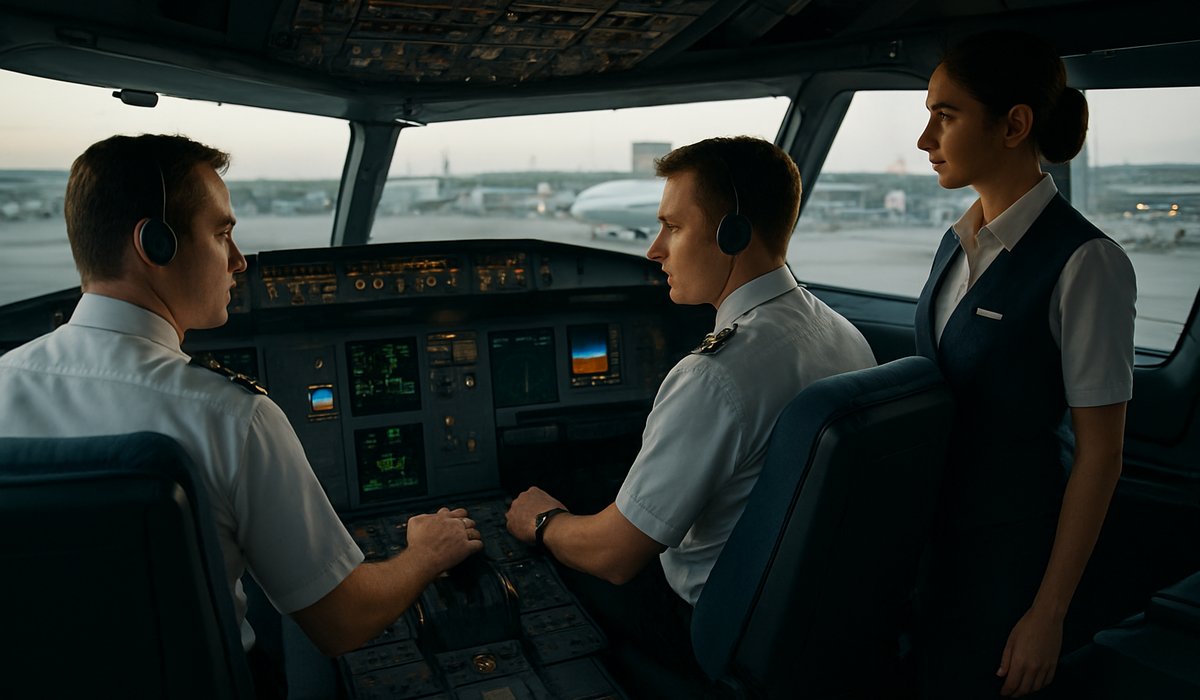
Image generated by AI
What Pilots Really Do During Ultra-Long Haul Flights: Inside the Modern Cockpit's 14-Hour Reality
Behind the scenes of modern aviation's most automated systems, human expertise remains irreplaceable
The Automation Myth vs. Aviation Reality
The cockpit door closes, altitude stabilizes at 43,000 feet, and the autopilot engages. To the casual observer, this might suggest that a commercial airliner is now on autopilot—literally and figuratively—for the next 14 hours of transoceanic flight. This widespread misconception fundamentally misunderstands how modern commercial aviation operates, obscuring the critical human role that remains essential even as aircraft systems achieve unprecedented levels of automation.
While today's long-range aircraft can autonomously manage airspeed, altitude, navigation routing, and portions of takeoff and landing sequences, these technological capabilities represent only a fraction of what safely operating a large commercial aircraft demands. The true complexity of piloting lies beyond the mechanical control of the aircraft itself.
The Hidden Workload: Monitoring, Decision-Making, and Crisis Management
Throughout a 14-hour flight, pilots engage in continuous systems monitoring, weather assessment, and strategic decision-making that no algorithm can fully replicate. They track fuel consumption against changing weather patterns, manage communications with air traffic control across multiple oceanic sectors, and interpret instrument data that often requires contextual judgment rather than predetermined responses.
During extended cruise phases, pilots conduct regular inspections of instrument readouts, verify navigational accuracy, monitor engine performance parameters, and assess meteorological developments that could affect routing or flight safety. They coordinate with cabin crew, manage passenger comfort decisions, and prepare contingency plans for potential mechanical anomalies or medical emergencies.
Why Humans Remain Indispensable
Modern aircraft automation excels at executing programmed tasks under normal conditions. However, aviation safety depends on handling the abnormal—the unexpected weather system, the instrument malfunction, or the novel situation requiring creative problem-solving. Pilots provide cognitive flexibility, risk assessment, and adaptability that current systems cannot replicate.
The 2009 Miracle on the Hudson and countless less-publicized incidents demonstrate that experienced human judgment becomes invaluable precisely when automated systems cannot resolve the challenge. Pilots must continuously anticipate potential failures, maintain situational awareness across complex systems, and make decisions that affect hundreds of lives.
The Professional Reality
Long-haul aviation demands that pilots remain mentally engaged throughout extended flights, maintaining the cognitive sharpness necessary to respond immediately to any system anomaly. This is not passive observation—it is active, professional aviating that justifies the extensive training, certifications, and experience required to hold a commercial pilot's license.
FAQ: Understanding Modern Cockpit Operations
Can autopilot truly fly a plane from takeoff to landing on long-haul routes? Modern autopilot systems can manage these phases, but pilots must monitor constantly and retain manual control authority. Automation handles execution; pilots manage oversight.
How long do pilots actually rest during 14-hour flights? Regulations mandate rest breaks, typically staggered between flight crew, with one pilot always monitoring the aircraft. Rest areas exist in larger commercial aircraft for this purpose.
What specific tasks occupy pilots during cruise altitude? Pilots conduct systems checks, weather monitoring, fuel management, air traffic control communications, navigation verification, and contingency planning throughout cruise phases.
Why can't completely autonomous aircraft replace human pilots? Autonomous systems require predefined responses to specific scenarios. Human pilots provide adaptive decision-making for novel situations and comprehensive risk assessment.
What training distinguishes commercial pilots from other aviation professionals? Commercial pilots complete extensive type-rating training on specific aircraft, emergency procedure drills, and recurring simulator sessions focusing on abnormal and emergency scenarios.
Related Travel Guides
Flight Delay Compensation Guide 2026
Understanding Airline Route Changes
Airport Security Process Updated (2026)
External Resources
Disclaimer
This article is for informational and educational purposes only. It does not constitute legal, financial, or professional advice. While we strive to provide accurate and up-to-date information, travel policies, regulations, and conditions change rapidly. Always verify information with official sources before making travel decisions. Nomad Lawyer makes no representations about the accuracy, reliability, completeness, or suitability of the information provided. Readers should consult qualified professionals for advice specific to their circumstances. The views expressed in this article are those of the author and do not necessarily reflect the views of Nomad Lawyer.
Preeti Gunjan
Contributor & Community Manager
A passionate traveller and community builder. Preeti helps grow the Nomad Lawyer community, fostering engagement and bringing the reader experience to life.
Learn more about our team →