
British Airways Club Suite vs. Virgin Atlantic Upper Class: Transatlantic Business Class Price War Heats Up
Breaking airline news and aviation industry updates for 2026.

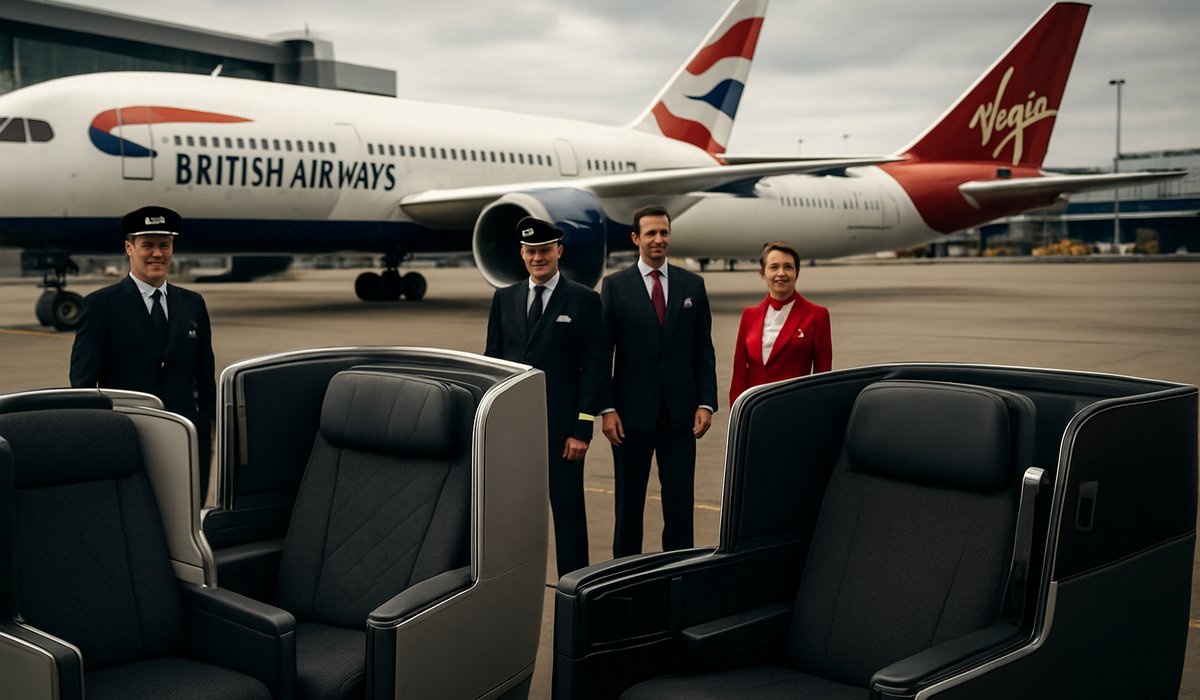
Image generated by AI
British Airways Club Suite vs. Virgin Atlantic Upper Class: Transatlantic Business Class Price War Heats Up
As both carriers vie for premium transatlantic travelers, ticket prices and product differentiation become critical battlegrounds in the competitive London-North America market
The Battle for Business Class Dominance Takes Flight
British Airways and Virgin Atlantic are locked in an intensifying competition for premium passenger revenue on transatlantic routes, with both carriers significantly upgrading their business class offerings to capture high-value travelers willing to pay premium fares. The clash between BA's newly-rolled-out Club Suite and Virgin Atlantic's A350-equipped Upper Class cabins represents a pivotal moment in transatlantic aviation, where product innovation and pricing strategies are reshaping how airlines compete on one of the world's most profitable routes corridors.
Massive Investment in Premium Products Reshaping the Market
Over the past five years, both carriers have committed substantial capital to their business class programs. British Airways has systematically deployed its Club Suite across its widebody aircraft fleet, fundamentally redesigning the passenger experience on long-haul flights. Meanwhile, Virgin Atlantic has concentrated its efforts on deploying Airbus A350 aircraft configured with Upper Class suites on its highest-traffic transatlantic services, particularly the critical London-New York route that generates enormous revenue for both airlines.
These parallel investments underscore a critical reality: business class passengers—typically representing fewer than 15% of seat capacity but generating upwards of 40% of revenue per flight—remain the primary profit engine for international carriers. As fuel costs continue to fluctuate and competition from Gulf carriers intensifies, both BA and Virgin Atlantic recognize that direct competition on transatlantic business class is non-negotiable.
Product Features and Pricing Under Scrutiny
The strategic positioning of these offerings reveals divergent philosophies. BA's Club Suite emphasizes technology integration, privacy features, and onboard hospitality consistency across its fleet. Virgin Atlantic's Upper Class approach prioritizes lounge experiences, personalized service, and the exclusivity of fewer, purpose-built aircraft on premium routes.
Pricing dynamics remain fluid, with both carriers adjusting fares based on demand, fuel surcharges, and competitive positioning. For premium-conscious travelers, fare variations between carriers can exceed £2,000-£5,000 on transatlantic routes, making direct product and price comparisons essential decision-making factors.
Broader Aviation Industry Implications
This competitive dynamic reflects broader trends reshaping international aviation. Rising jet fuel prices have pressured margins, forcing carriers to differentiate through premium cabin experiences rather than competing solely on base fares. Additionally, the recovery of transatlantic business travel post-pandemic has intensified competition among established carriers and Gulf rivals, elevating the importance of product innovation and customer loyalty programs.
Frequently Asked Questions
How much does British Airways Club Suite cost compared to Virgin Atlantic Upper Class on London-New York routes? Pricing varies by season and booking window, but transatlantic business class fares typically range from £5,000-£12,000+ per person depending on demand and advance purchase timing.
What are the key differences between BA Club Suite and Virgin Atlantic Upper Class? BA Club Suite emphasizes fleet-wide consistency and digital integration, while Virgin Atlantic Upper Class focuses on exclusivity through dedicated A350 aircraft and premium lounge experiences.
How have fuel prices influenced airline business class pricing strategies? Rising jet fuel costs have forced carriers to emphasize premium cabin differentiation rather than competing on base fares, directly impacting how airlines market their business class products.
Which airline offers better value on transatlantic business class routes? This depends on individual priorities—BA offers consistency across multiple aircraft, while Virgin Atlantic provides exclusivity on newer A350 equipment on select routes.
Are there other major competitors in the transatlantic premium cabin market? Yes, carriers including American Airlines, United Airlines, Air France, and Lufthansa compete intensely on this corridor, alongside Gulf carriers offering premium products.
Related Travel Guides
Flight Delay Compensation Guide 2026
Understanding Airline Route Changes
Airport Security Process Updated (2026)
External Resources
Disclaimer
This article is for informational and educational purposes only. It does not constitute legal, financial, or professional advice. While we strive to provide accurate and up-to-date information, travel policies, regulations, and conditions change rapidly. Always verify information with official sources before making travel decisions. Nomad Lawyer makes no representations about the accuracy, reliability, completeness, or suitability of the information provided. Readers should consult qualified professionals for advice specific to their circumstances. The views expressed in this article are those of the author and do not necessarily reflect the views of Nomad Lawyer.
Raushan Kumar
Founder & Lead Developer
Full-stack developer with 11+ years of experience and a passionate traveller. Raushan built Nomad Lawyer from the ground up with a vision to create the best travel and law experience on the web.
Learn more about our team →