
West Midlands Railway Appoints Betty the Cat as Junior Mouse Catcher at Sutton Coldfield Station in 2026
West Midlands Railway has named Betty the cat as the Junior Mouse Catcher at Sutton Coldfield station, leveraging personality-driven tourism to enhance passenger experience.

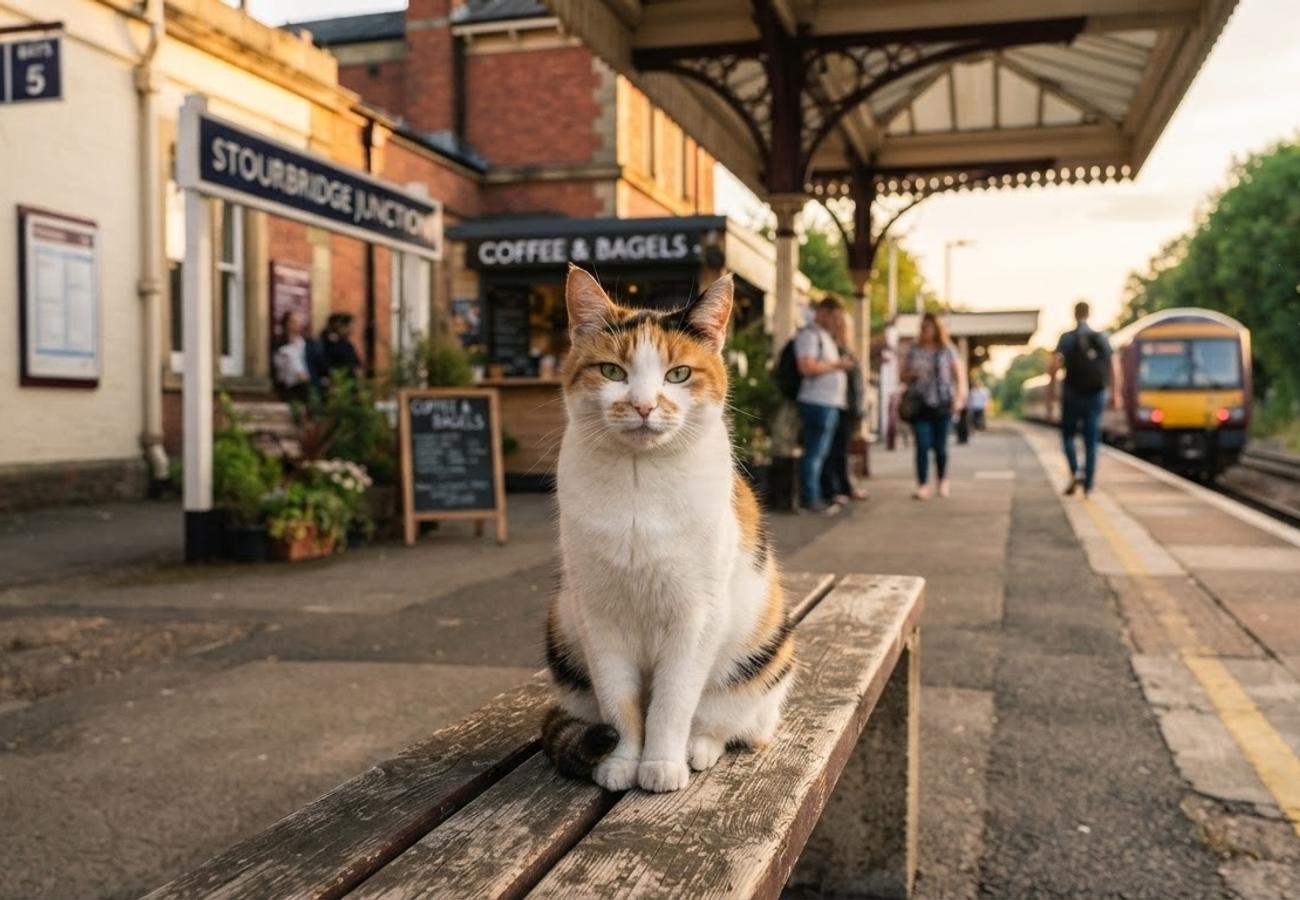
Image generated by AI
Sutton Coldfield station has officially appointed Betty the cat as the "Junior Mouse Catcher" as of August 10, 2026, in a strategic move by West Midlands Railway to foster deeper emotional connections between passengers and the local community.
The appointment marks a shift in how regional transport hubs approach passenger engagement, moving away from purely functional operations toward experience-based travel. By introducing a feline mascot, the station aims to transform a routine commute into a memorable interaction, mirroring a successful model previously implemented at other hubs within the network.
Community Engagement at Sutton Coldfield Station
The integration of animal mascots into the railway environment is designed to combat the perceived monotony of daily travel. For many commuters, railway stations are merely transitional spaces—sterile environments where the primary goal is efficiency and punctuality. However, industry reports indicate that passengers are increasingly seeking authentic, human-centric (or animal-centric) experiences that ground their journey in a specific locality.
Betty operates primarily out of Folklore Coffee and Bagels, located on Platform 2. Her presence provides a focal point for social interaction, encouraging travelers to slow down and engage with the station's ecosystem. This approach aligns with a broader trend in the travel sector where "micro-experiences"—small, unexpected moments of joy—are used to build brand loyalty and destination appeal.
From Abandonment to Official Railway Role
Betty’s path to her official title is a narrative of rescue and adoption. In 2025, she was adopted by Alex Light, the owner of Folklore Coffee and Bagels, after being found near an apartment complex with three kittens. While the kittens were successfully placed in new homes, Betty remained with Light, eventually becoming a fixture of the station's social fabric.
This backstory serves a dual purpose. Beyond the immediate charm of a station cat, Betty’s journey promotes animal welfare and the importance of adoption, coinciding with the themes of International Cat Day. By highlighting her origins, West Midlands Railway is not just appointing a mascot but is sharing a story of resilience and community kindness that resonates with the traveling public.
Comparative Analysis of West Midlands Railway Mascots
Betty is not the first feline to achieve celebrity status within the West Midlands network. She follows the precedent set by George the Station Cat at Stourbridge Junction, whose influence has reached a global scale.
| Category | Details |
|---|---|
| Location | Sutton Coldfield station, West Midlands, England |
| Railway Operator | West Midlands Railway |
| Official Appointment | Junior Mouse Catcher |
| Announcement Date | 10 August 2026 |
| Primary Base | Folklore Coffee and Bagels, Platform 2 |
| Predecessor/Mentor | George the Station Cat |
| George's Social Reach | 100,000+ followers |
| Primary Goal | Emotional visitor connection |
The Stourbridge Junction Blueprint
The "George Effect" provides the data-backed justification for Betty's appointment. George, an orange tabby who arrived at Stourbridge Junction in 2017, evolved from a local curiosity into a national icon. His presence helped Stourbridge Junction secure a victory in the World Cup of Stations competition in 2021, proving that a unique station identity can drive physical footfall and digital engagement.
The impact of George was so significant that in 2025, West Midlands Railway named a Stourbridge Shuttle train in his honor. This level of institutional recognition demonstrates that "personality-driven travel" is a viable marketing strategy.
| Feature | George the Station Cat | Betty the Junior Mouse Catcher |
|---|---|---|
| Station | Stourbridge Junction | Sutton Coldfield |
| Region | West Midlands, England | West Midlands, England |
| Role | Senior Mouse Catcher | Junior Mouse Catcher |
| Station Arrival | 2017 | Adopted 2025 |
| Influence | 100,000+ followers | Growing local popularity |
| Primary Impact | Station identity & charity | Adoption awareness & engagement |
The Evolution of Railway Tourism Marketing
Traditionally, rail tourism has been defined by heritage steam trains, scenic vistas, and architectural landmarks. However, the rise of Betty and George suggests a transition toward "personality-driven travel." In an era dominated by social media, a unique local character can act as a powerful catalyst for tourism.
The mechanism is a self-sustaining cycle: a compelling local story attracts digital attention, which leads to increased visibility on social platforms, which in turn encourages travelers to visit a location they might otherwise have bypassed. This benefits not only the railway operator but also local businesses—such as Folklore Coffee and Bagels—that become part of the attraction.
Implications for Regional Travel Economy
For smaller towns and regional hubs, creating a "destination identity" without massive infrastructure spending is a significant challenge. The use of authentic community stories provides a low-cost, high-impact alternative to traditional marketing.
When a station becomes a destination in its own right, it shifts the economic dynamic of the area. Travelers are more likely to stop, spend money at local vendors, and explore the surrounding neighborhood if they feel an emotional connection to the location. This represents a shift toward "slow travel," where the journey and the stops are as valued as the final destination.
Why This Matters: The Shift to Authentic Travel
For the modern traveler, the appointment of Betty is more than a quirky news story; it is a reflection of a deeper desire for authenticity in an increasingly digitized world. From a logistical standpoint, this creates a "soft" incentive for passengers to utilize regional rail networks over private transport.
When transport hubs transition from being "non-places"—spaces of anonymity and transit—into community anchors, the entire travel experience is elevated. For the passenger, this means the commute is no longer a chore but a series of potential interactions. By leveraging the simple appeal of a rescue cat, West Midlands Railway is effectively humanizing its infrastructure, proving that emotional intelligence in marketing can be just as effective as operational efficiency.
A small paw print can leave a lasting impression on the future of regional transit.
Related Travel Guides
Disclaimer
This article is for informational and educational purposes only. It does not constitute legal, financial, or professional advice. While we strive to provide accurate and up-to-date information, travel policies, regulations, and conditions change rapidly. Always verify information with official sources before making travel decisions. Nomad Lawyer makes no representations about the accuracy, reliability, completeness, or suitability of the information provided. Readers should consult qualified professionals for advice specific to their circumstances. The views expressed in this article are those of the author and do not necessarily reflect the views of Nomad Lawyer.
Preeti Gunjan
Contributor & Community Manager
A passionate traveller and community builder. Preeti helps grow the Nomad Lawyer community, fostering engagement and bringing the reader experience to life.
Learn more about our team →