
West Midlands Metro 11km Extension Connects Wednesbury, Dudley and Brierley Hill for 2026 Tourism
The 11-kilometre West Midlands Metro extension transforms regional accessibility, linking Wednesbury, Dudley, and Brierley Hill to boost sustainable urban tourism in 2026.

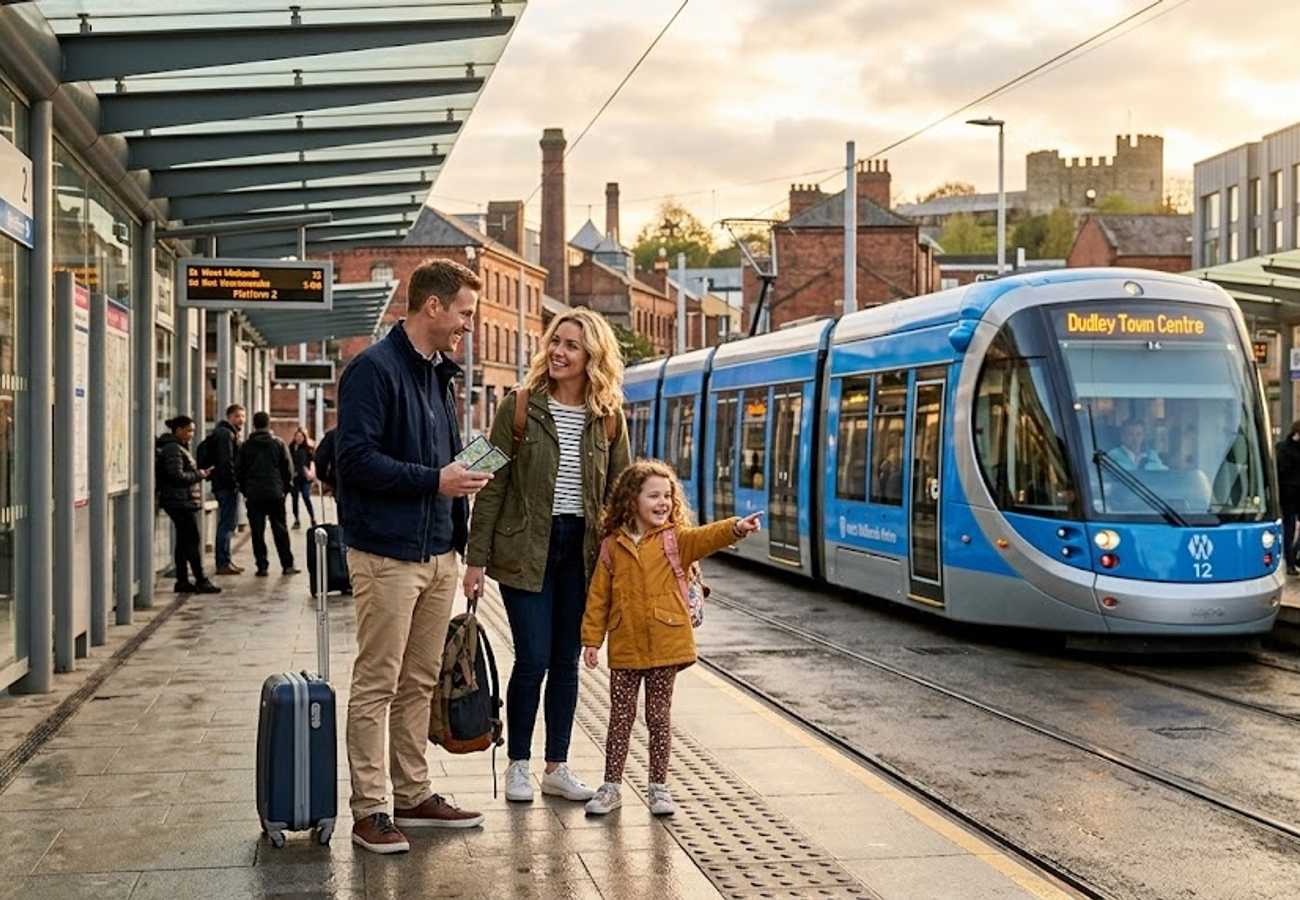
Image generated by AI
The West Midlands is shedding its image as a car-dependent industrial hub. An 11-kilometre light rail expansion is now fundamentally altering how visitors access the Black Country, replacing congested A-roads with seamless electric transit.
The Local Trend Revealed: A Shift in Urban Exploration
For decades, exploring the industrial heartlands of Wednesbury, Dudley, and Brierley Hill required a private vehicle and a tolerance for heavy traffic. That dynamic is shifting. The West Midlands Metro extension is not merely a commuter project; it is a strategic tourism catalyst. By bridging the gap between historic town centres and massive retail hubs, the region is pivoting toward a "hop-on, hop-off" model of urban exploration.
The project has hit a critical milestone with the substantial completion of major construction for Phase 1, which focuses on the route into Dudley town centre. The infrastructure is now moving into the final technical stages: testing, commissioning, and driver familiarisation. For the traveler, this means the transition from "construction zone" to "tourist corridor" is nearly complete.
Cultural & Environmental Value: Beyond the Tracks
The real impact of this expansion lies in the democratization of the Black Country’s heritage. Previously, sites like the Black Country Living Museum or Dudley Zoo and Castle were destination-specific trips. With the integration of track and signalling across Wednesbury and Wolverhampton, these sites are now nodes in a connected network.
For the visitor, the experience shifts from a single-point visit to a regional circuit. You can now realistically pair a morning of industrial archaeology in Dudley with an afternoon of high-street retail at Merry Hill without the stress of parking. This shift supports a "slow travel" ethos, reducing the carbon footprint of regional tourism and diverting traffic away from sensitive historic town centres.
The commitment to excellence is already evident; the network's shortlisting for Tram Operator of the Year at the 2026 National Transport Awards signals a level of reliability that encourages international tourists to trust public transit over rental cars.
Regional Connectivity Data
| Location | Key Attractions | Nearest Airport | Transport Integration |
|---|---|---|---|
| Dudley | Dudley Zoo, Black Country Living Museum | Birmingham (BHX) | Metro Link (New), Sandwell & Dudley Station |
| Brierley Hill | Merry Hill Shopping Centre | Birmingham (BHX) | Metro Link (New), Cradley Heath Station |
| Wolverhampton | Art Gallery, Grand Theatre | Birmingham (BHX) | Integrated Metro & Mainline Rail |
Visitor Insider Tips: Navigating the Black Country
To get the most out of this new transit era, keep these local nuances in mind:
- The "Hidden" Heritage Loop: Instead of visiting just one museum, use the Metro to create a "Heritage Day." Start in Wolverhampton for the arts, move to Dudley for the castle, and end at the Black Country Living Museum.
- Off-Peak Strategy: To avoid the local commuter rush, aim for mid-morning travel (10:00 AM to 11:30 AM). This is when the trams are emptiest and the local cafes in Dudley town centre are most welcoming.
- Dining Local: Skip the generic food courts at Merry Hill. Use the Metro to head back into Dudley town centre to find independent pubs and eateries that reflect the region's working-class roots.
- Etiquette: In the West Midlands, "Brummie" and "Black Country" accents are distinct. A friendly "Alright?" is the standard greeting—it's a question and a hello rolled into one.
Tourism Outlook
The long-term trajectory for the West Midlands is a move toward "Integrated Urbanism." By removing the friction of travel between Wednesbury, Dudley, and Brierley Hill, the region is increasing the "dwell time" of visitors. When people spend less time searching for parking, they spend more time—and money—at local galleries, independent shops, and heritage sites. This infrastructure ensures that the region's industrial legacy is not just preserved in museums, but is actively accessible to a global audience.
The Black Country is finally opening its gates, and the track is already laid.
Related Travel Guides
Disclaimer
This article is for informational and educational purposes only. It does not constitute legal, financial, or professional advice. While we strive to provide accurate and up-to-date information, travel policies, regulations, and conditions change rapidly. Always verify information with official sources before making travel decisions. Nomad Lawyer makes no representations about the accuracy, reliability, completeness, or suitability of the information provided. Readers should consult qualified professionals for advice specific to their circumstances. The views expressed in this article are those of the author and do not necessarily reflect the views of Nomad Lawyer.
Raushan Kumar
Founder & Lead Developer
Full-stack developer with 11+ years of experience and a passionate traveller. Raushan built Nomad Lawyer from the ground up with a vision to create the best travel and law experience on the web.
Learn more about our team →