
Waterways Leisure Tourism IPO Opens at July 2026 as Cordelia Cruises Parent Signals with Steady GMP and Strong Long-Term Cruise Tourism Growth in India
Waterways Leisure Tourism IPO Opens at July 2026 as Cordelia Cruises Parent Signals with Steady GMP and Strong Long-Term

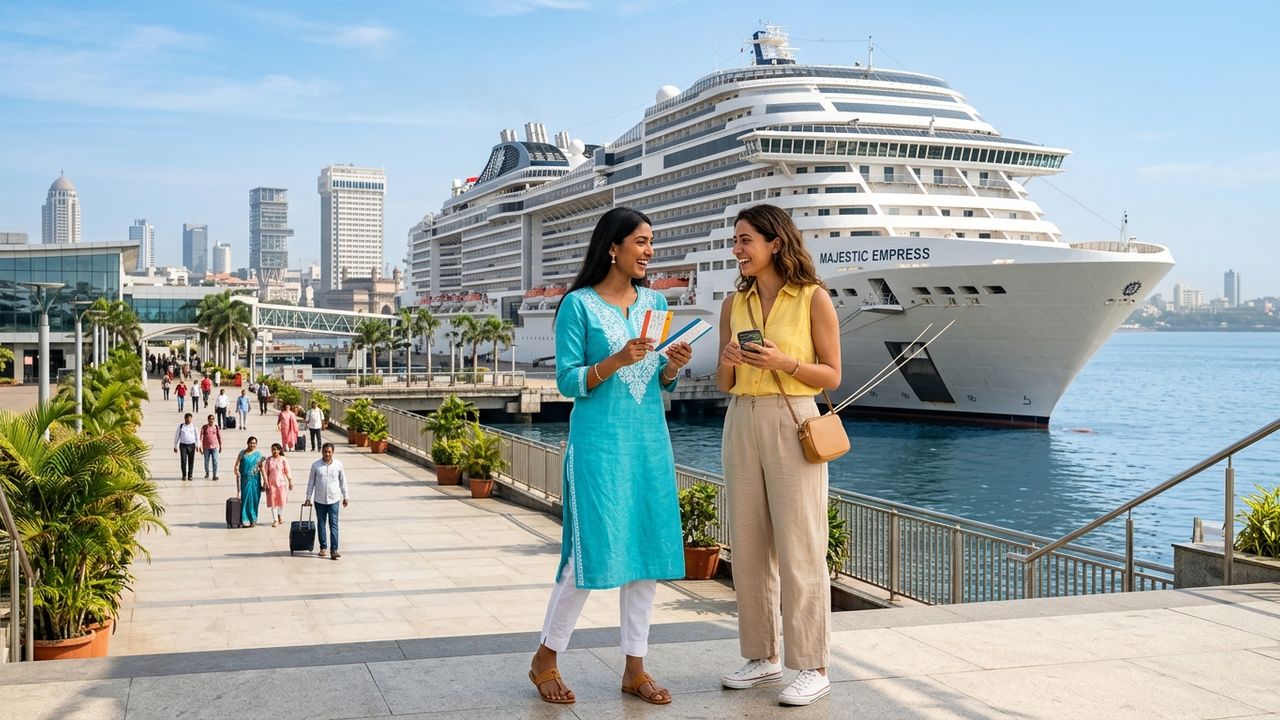
Image generated by AI
MUMBAI, June 22 — Waterways Leisure Tourism IPO opens June 23 as the parent company of Cordelia Cruises targets a Rs 585 crore capital raise ahead of its July 1 listing on the BSE and NSE. Industry reports indicate the primary equity offering will channel funds into operational infrastructure while the Indian cruise sector navigates shifting profitability margins and expanding port infrastructure.
The maritime tourism segment in India has transitioned from a niche leisure category to a structured investment theme. Regulatory frameworks supporting coastal development and rising consumer preference for integrated resort-style travel have prompted capital market participants to evaluate domestic operators. Market observers note that the upcoming equity debut arrives as government initiatives accelerate port modernization across western and southern Indian coastlines. This infrastructure push aligns with broader economic strategies to diversify domestic travel networks beyond traditional aviation and rail corridors.
Tourism authorities are simultaneously streamlining visa protocols and upgrading terminal facilities to accommodate larger passenger volumes. These coordinated efforts have attracted private capital into the leisure travel ecosystem. Investors are increasingly viewing domestic cruise operators as strategic assets capable of capturing rising middle-class disposable income. The sector benefits from favorable demographic trends, including expanding urban populations seeking short-haul vacation alternatives.
Grey Market Premium Signals Cautious Indian Investor Sentiment
Trading data in the unlisted secondary market places the grey market premium near Rs 10 per share, projecting a tentative listing valuation around Rs 818. This valuation represents a modest premium of just over one percent above the official upper price band. Financial analysts and unlisted market participants monitor this metric as a short-term gauge of retail positioning. The restrained premium reflects a calculated approach, where market participants weigh strong long-term tourism fundamentals against near-term operational cost pressures and seasonal demand fluctuations. Industry sources indicate that limited volatility is probable during the initial trading session unless subscription bids significantly exceed current projections.
Market strategists emphasize that grey market pricing remains an unofficial indicator that frequently adjusts closer to the book closure date. Retail investors are closely tracking subscription updates to determine whether institutional demand will drive the premium higher. The current pricing environment suggests a balanced risk-reward assessment among individual participants.
Book-Built Structure Prioritizes Retail Access in Indian Markets
The offering functions as a fully book-built equity issuance valued at Rs 585 crore, with capital directed exclusively toward fresh share creation. Retail participants enter the bidding process with a minimum lot requirement of 18 shares, translating to an upper-band investment of Rs 14,544. This tiered allocation framework ensures broad market accessibility while maintaining institutional participation thresholds. Small non-institutional applicants must secure a minimum of 14 lots, whereas larger non-institutional entities face a 69-lot minimum requirement. Centrum Broking Ltd manages the issuance process, and MUFG Intime India Pvt Ltd handles share registration and allotment procedures. The structured design balances individual investor access with institutional capital stability.
Regulatory guidelines mandate proportional allocation mechanisms to prevent market concentration during initial public offerings. Thelot sizing structure ensures that smaller retail participants maintain meaningful exposure while large institutional buyers contribute substantial capital depth. This approach aligns with broader securities market initiatives aimed at democratizing equity participation.
Capital Deployment Targets Port Leases at Indian Infrastructure Hubs
Corporate filings show that approximately Rs 480 crore will fund lease deposits and rental commitments tied to Baycruise IFSC, a subsidiary managing core operational assets. Cruise operations require substantial upfront capital for vessel financing, terminal docking agreements, and international port access rights. These recurring infrastructure costs dominate the operational expense structure for domestic maritime operators. The remaining capital addresses general corporate requirements, including working capital support, route marketing initiatives, and fleet efficiency upgrades. Strategic allocation patterns indicate a focus on consolidating existing service networks rather than pursuing aggressive geographic diversification.
Port authorities in major coastal cities are implementing tiered docking fee structures to encourage regular vessel scheduling. Lease agreements typically span multi-year terms to provide operational predictability for both terminal operators and cruise companies. This long-term leasing model reduces short-term cash flow volatility while securing priority berthing windows during peak travel seasons.
Cordelia Cruises Expands Coastal Routes Across Indian Maritime Hubs
The parent company operates premium leisure itineraries connecting major Indian coastal destinations including Mumbai, Goa, Kochi, Chennai, Lakshadweep, Visakhapatnam, and Puducherry. Service offerings integrate hospitality management, onboard entertainment, and curated destination experiences tailored to both domestic leisure travelers and premium tourism segments. The operator has also initiated controlled expansions into international waters, establishing routes toward Sri Lanka and Southeast Asian markets. This dual-network strategy bridges domestic experiential travel with regional cruise circuits. Industry analysts observe that the route portfolio aligns with shifting consumer preferences for multi-destination maritime vacations.
Route optimization relies heavily on tidal patterns, weather forecasting, and port congestion data. Operators continuously adjust departure schedules to maximize passenger occupancy while minimizing fuel consumption. The integration of regional cultural programming and destination-specific excursions has become a standard differentiator in competitive coastal tourism markets.
Financial Metrics Reveal Operational Pressures in Indian Tourism Sector
Recent corporate disclosures show revenue from operations settling at Rs 579.75 crore for fiscal year 2026, marking a 1.84 percent year-on-year contraction. Net profit declined more sharply, dropping 69 percent to Rs 52.14 crore over the same reporting period. These figures highlight the capital-intensive nature of maritime tourism, where fuel expenditure, crew staffing, and port fees create rigid cost structures. Seasonal occupancy variations and fluctuating passenger volumes further compound margin pressures. Market commentators typically interpret these financial fluctuations as characteristic of emerging sector development rather than structural deterioration, particularly in markets where maritime leisure travel continues its expansion trajectory.
Industry auditors note that fixed operational costs remain elevated until fleet utilization reaches optimal thresholds. Ticket pricing strategies closely track regional economic indicators and competitor fare structures. The profit contraction underscores the necessity of disciplined cost management and strategic route rationalization during early growth phases.
Maritime Tourism Expansion Drives Long-Term Regional Growth in Asia
The capital market debut coincides with a sustained growth phase for India’s domestic cruise sector, which analysts project will expand steadily throughout the next decade. Rising household disposable income, increasing demand for immersive travel experiences, and targeted government investments in coastal infrastructure form the primary growth catalysts. Port authorities in Mumbai, Goa, Chennai, and Kochi are currently executing terminal modernization projects designed to accommodate higher passenger volumes and larger international vessels. Industry observers identify three structural trends shaping future market dynamics: sustained demand for premium domestic itineraries, expansion of short-range Asian maritime routes, and integration of wellness and cultural programming into standard cruise packages.
Regional tourism boards are coordinating cross-border marketing campaigns to attract international visitors seeking Indian coastal experiences. Cruise operators are increasingly partnering with local hospitality providers to create bundled vacation products. These collaborative models enhance revenue streams while improving destination accessibility for international travelers.
Impact Analysis and Strategic Implications for Indian Travel Markets
Equity market participants are evaluating how this listing affects broader sentiment toward Indian leisure and hospitality sectors. The issuance demonstrates institutional confidence in domestic tourism infrastructure development, even as profitability metrics remain subject to cyclical fluctuations. Portfolio managers monitor subscription levels during the bidding window to gauge retail appetite for travel sector equities. Regulatory developments supporting coastal tourism, combined with private capital inflows into maritime operations, create a favorable environment for sector consolidation. Analysts suggest that successful capital deployment could establish new benchmarks for operational efficiency across domestic cruise operators.
Broader market indices may experience incremental upside if subscription figures exceed current projections. Institutional investors typically view infrastructure-backed tourism listings as defensive growth assets during periods of macroeconomic uncertainty. The performance of this offering will likely influence subsequent capital market activity in the Indian leisure and transportation sectors.
Forward Outlook for Domestic Waterborne Travel Across India
The June 23 to June 25 trading window will determine initial market reception as Waterways Leisure Tourism prepares for its July 1 exchange debut. Capital allocation toward core port infrastructure and route consolidation positions the company to capitalize on India’s expanding maritime tourism network. Long-term sector performance will depend on fleet utilization rates, passenger occupancy trends, and continued port modernization initiatives. Industry stakeholders will monitor subsequent quarterly filings to assess how capital market funding translates into sustainable operational margins.
Waterways Leisure Tourism IPO opens June 23 targeting Rs 585 crore as Cordelia Cruises parent targets Indian cruise market expansion and port infrastructure growth.
Related Travel Guides
Disclaimer
This article is for informational and educational purposes only. It does not constitute legal, financial, or professional advice. While we strive to provide accurate and up-to-date information, travel policies, regulations, and conditions change rapidly. Always verify information with official sources before making travel decisions. Nomad Lawyer makes no representations about the accuracy, reliability, completeness, or suitability of the information provided. Readers should consult qualified professionals for advice specific to their circumstances. The views expressed in this article are those of the author and do not necessarily reflect the views of Nomad Lawyer.
Raushan Kumar
Founder & Lead Developer
Full-stack developer with 11+ years of experience and a passionate traveller. Raushan built Nomad Lawyer from the ground up with a vision to create the best travel and law experience on the web.
Learn more about our team →