
Virtual Reality Tourism Boom Helps Travelers Inspect Destinations
Virtual reality is transforming travel marketing in 2026 through the try before you buy concept, reducing traveler uncertainty.
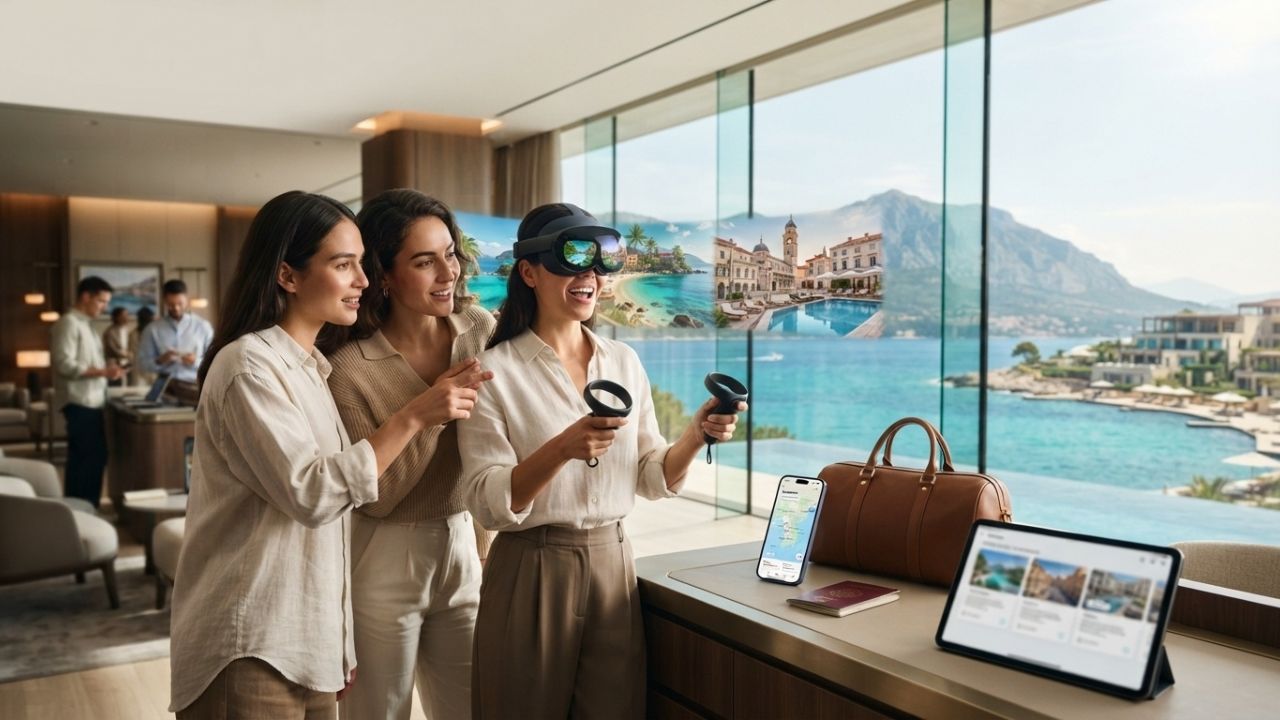
Image generated by AI
Allowing travelers to explore hotels, national parks, and heritage landmarks digitally before making purchase decisions, virtual reality has emerged as a major travel booking driver.
The Core Transit Update
Global travel marketing and passenger booking systems are integrating immersive technologies. The "try before you buy" concept is reshaping tourism, with tourism boards, airlines, hotels, and cultural organizations deploying 360-degree virtual reality (VR) previews to give travelers a realistic understanding of destinations.
Rather than replacing physical travel, VR acts as an accelerator, allowing prospective visitors to check hotel room quality, assess accessibility features, and preview remote locations—such as Australia's Great Barrier Reef or Japan's ancient temples—before making financial commitments, helping eliminate travel uncertainty.
Immersive VR Strategies & Booking Workflows
Deploying digital previews requires coordinating immersive content with booking engines. The following tables outline the VR strategies adopted by leading countries and compare traditional travel planning with smart VR/AI models.
| Country / Destination | Key Immersive VR Content | Primary Strategic Tourism Objective |
|---|---|---|
| Australia | Great Barrier Reef & wildlife | Previews for long-haul international visitors |
| Japan | Traditional heritage & temples | Connecting global travelers to ancient traditions |
| India | Wildlife reserves & historic sites | Showcasing vast tourism potential internationally |
| Singapore | Futuristic gardens & smart city | Highlighting urban innovation and tech integration |
| Spain | Secondary historic cities | Distributing demand to manage overtourism sustainably |
| New Zealand | National parks & adventure sports | Presenting the scale of outdoor natural environments |
Immersive VR tourism strategies and objectives by country (2026).
| Booking Workflow Phase | Traditional Travel Planning Model | Smart Tech-Driven VR/AI Model (2026) |
|---|---|---|
| Inspiration Stage | Static travel brochures & photos | Immersive 360-degree digital preview |
| Itinerary Customization | Manual research on reviews portals | AI analyzes preferences inside VR space |
| Confidence Level | Higher uncertainty about hotel quality | Visual digital check of rooms & accessibility |
| Final Transaction | Separate hotel & airline portals | Direct instant booking inside headset |
Traditional vs. smart VR/AI booking models.
Traveler Logistics Guide
From a ground-level perspective, the best way to navigate this is to use official tourism board VR platforms to check the layouts and accessibility parameters of historic monuments or national parks before booking, which helps you plan local transit schedules and select suitable mobility services. Checking equipment requirements is recommended.
To utilize digital travel tools:
- Review Accessibility Layouts: Seniors or travelers with limited mobility can walk through digital hotels or cruise cabins to verify bathroom handrails and corridor widths before booking.
- Explore Secondary Destinations: Spain uses VR to showcase lesser-known historic cities, helping visitors discover alternatives to overcrowded hot spots and plan cross-border rail connections.
- Observe Device Requirements: High-definition 360-degree video feeds require steady high-speed Wi-Fi. Ensure your devices are updated to support virtual tours smoothly.
- Differentiate Previews from Real Travel: Remember that virtual tours cannot replicate local gastronomy, cultural interactions, and sensory environments, making them invitations to visit rather than replacements.
Infrastructure Impact Assessment
The integration of VR with artificial intelligence is transforming the smart tourism infrastructure of futuristic hubs like Singapore and the UAE.
By utilizing virtual tours to manage visitor distribution (such as promoting secondary regions in Spain and heritage preservation sites in the UK and China), destination management organizations improve crowd flows, reduce seasonal bottlenecks, and support regional hospitality businesses during travel planning phases.
Related Travel Guides
SaveSage and IndiGo Partner for Bill Payment Travel Rewards
Shravani Mela 2026 Deoghar Travel Tips and Logistics Guide
10 Best Travel Tips for Using Virtual Reality Tools, Planning Smart Tourism Itineraries, and Booking Destinations with Tech Previews, According to Reddit
Disclaimer
This article is for informational and educational purposes only. It does not constitute legal, financial, or professional advice. While we strive to provide accurate and up-to-date information, travel policies, regulations, and conditions change rapidly. Always verify information with official sources before making travel decisions. Nomad Lawyer makes no representations about the accuracy, reliability, completeness, or suitability of the information provided. Readers should consult qualified professionals for advice specific to their circumstances. The views expressed in this article are those of the author and do not necessarily reflect the views of Nomad Lawyer.