
Virgin Atlantic VS8 Declares Mid-Air Emergency Over UK: Los Angeles to Heathrow A350-1000 Squawks 7700 and Lands Safely on Runway 09L After Serious Onboard Medical Crisis
Virgin Atlantic flight VS8 from Los Angeles to London Heathrow declared a full emergency using Squawk 7700 over UK airspace after a serious onboard medical situation, securing priority landing clearance and touching down safely on runway 09L with emergency teams waiting on the ground.

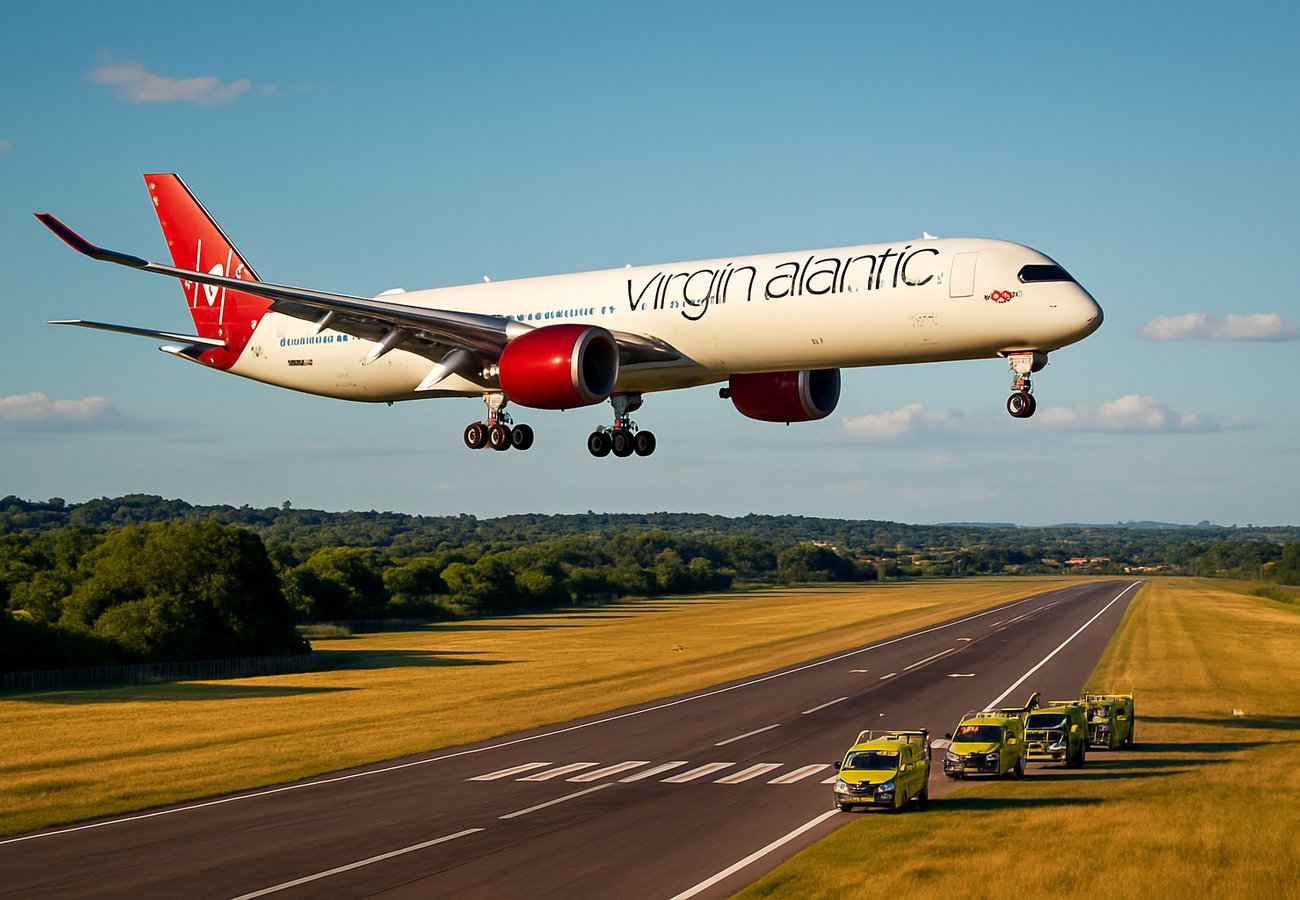
Image generated by AI
Virgin Atlantic VS8 Declares Mid-Air Emergency Over UK: Los Angeles to Heathrow A350-1000 Squawks 7700 and Lands Safely on Runway 09L After Serious Onboard Medical Crisis
Quick Summary
- Virgin Atlantic flight VS8 from Los Angeles declared a full emergency over UK airspace due to a serious onboard medical situation.
- The crew activated Squawk 7700 — the internationally recognised aviation emergency code — triggering immediate coordination with UK air traffic control.
- The aircraft, an Airbus A350-1000, was granted priority landing clearance at London Heathrow, landing safely on runway 09L.
- Emergency medical teams and ground crews were pre-positioned at the gate before the aircraft arrived.
LONDON, UK — A Virgin Atlantic transatlantic flight was at the centre of a dramatic aviation emergency over UK airspace on April 21, 2026. Flight VS8, operating a long-haul service from Los Angeles International Airport (LAX) to London Heathrow (LHR) aboard an Airbus A350-1000, declared a full emergency during the final phase of its transatlantic journey after a serious medical situation developed onboard. The crew responded immediately, activating Squawk 7700 — the universal aviation emergency transponder code — prompting instant coordination with UK air traffic control. The aircraft was granted priority approach clearance, clearing surrounding traffic, and touched down safely on runway 09L at Heathrow with emergency services already in position.
What Triggered the Emergency on Board VS8
The Virgin Atlantic VS8 emergency was initiated by a serious onboard medical condition affecting a passenger during the final hours of the transatlantic crossing. As the aircraft cruised at high altitude over UK airspace, the flight crew assessed the situation and determined that the passenger's condition warranted an escalated emergency response.
The decision to formally declare an emergency reflects the strict safety-first protocols mandated across global aviation. Under these standards, crew members are trained to prioritise passenger welfare above all scheduling and operational considerations — even a single serious medical case is sufficient grounds to trigger a full emergency declaration and request priority handling.
Squawk 7700: How the Emergency Signal Worked
At the heart of the aviation response was the activation of Squawk 7700 — the internationally standardised transponder code that signals a full emergency to every radar and air traffic control system monitoring the relevant airspace.
The moment Squawk 7700 is set, it triggers an instant cascade of responses across the aviation network: controllers redirect surrounding aircraft, clear approach corridors, and maintain priority communication with the stricken flight. The code eliminates the need for lengthy verbal explanations — every stakeholder across the airspace network recognises its meaning within seconds of activation.
For VS8, this meant UK air traffic control immediately cleared a direct approach path into Heathrow, removing holding patterns that would otherwise have added significant time to the final descent.
How the A350-1000 and Crew Performed Under Pressure
The Airbus A350-1000's performance during the emergency drew attention from aviation observers. The aircraft transitioned smoothly from cruise altitude through its descent over northern UK airspace, maintaining full operational stability throughout the high-pressure sequence.
The flight deck crew coordinated with ground-based medical experts via the aircraft's advanced communications systems, ensuring that informed, real-time decisions were being made throughout the descent. Simultaneously, cabin crew would have been managing the affected passenger using onboard medical protocols while maintaining calm among the broader passenger cabin.
The A350-1000 completed a controlled final approach and executed a safe touchdown on runway 09L at Heathrow — one of the airport's primary operational runways — without incident.
Heathrow's Priority Landing Response
Granting priority landing to VS8 required London Heathrow's air traffic controllers to rapidly reconfigure the arrival sequence for one of the world's busiest and most complex airports. Surrounding aircraft were repositioned, holding stacks were bypassed, and a direct approach was made available to VS8 ahead of other queued arrivals.
This kind of real-time reallocation is part of Heathrow's standard emergency contingency framework. Major international airports of this scale maintain continuous readiness for exactly such events — the ability to divert resources and restructure traffic flow within seconds is a critical operational capability at a hub handling hundreds of daily movements.
What Happened After Landing
Emergency medical teams and ground support crews had been pre-positioned and were waiting at the gate before VS8 completed its taxi. The advance preparation — made possible by early notification through the Squawk 7700 declaration — meant there was no delay between aircraft arrival and the initiation of medical intervention.
Virgin Atlantic has not publicly released detailed information about the affected passenger's condition, consistent with medical privacy protocols. What is confirmed is that the aircraft arrived safely, emergency procedures functioned as designed, and ground services responded without delay.
Airport operations at Heathrow continued without significant disruption following the incident, reflecting the integration of emergency contingency planning into the routine operational rhythm of a major international hub.
What This Means for Travelers
Aviation emergencies of this nature, while alarming in description, consistently demonstrate the effectiveness of the safety architecture that underpins commercial flight:
- Squawk 7700 ensures that any declared emergency receives instant, unambiguous prioritisation across all airspace systems.
- Crew training for onboard medical emergencies is rigorous and regularly tested across all major carriers, including Virgin Atlantic.
- Airport preparedness at major hubs like Heathrow means ground medical response is typically faster than comparable situations in any other environment.
For passengers planning transatlantic flights, the VS8 incident is a reminder that the aviation industry's emergency response frameworks are among the most tested and reliable of any transport sector globally.
Conclusion
The safe handling of Virgin Atlantic flight VS8's emergency landing at Heathrow on April 21, 2026 is a textbook demonstration of coordinated aviation safety in action. From the crew's immediate decision to declare an emergency and activate Squawk 7700, to UK air traffic control's rapid airspace clearance, to Heathrow's pre-positioned ground response — every layer of the safety network performed precisely as designed. The Airbus A350-1000 touched down on runway 09L without incident, and the passenger received immediate medical attention on arrival. It is a story that ended well, because a system built around the singular priority of human life worked exactly as it was supposed to.
FAQ: Virgin Atlantic VS8 Emergency Landing
Q: What caused the Virgin Atlantic VS8 emergency on April 21, 2026? A: Flight VS8, operating from Los Angeles to London Heathrow, declared an emergency due to a serious onboard medical condition affecting a passenger during the final phase of the transatlantic crossing.
Q: What is Squawk 7700 and what does it mean? A: Squawk 7700 is the internationally standardised aviation transponder code for a full emergency. When a crew sets this code, it immediately alerts all radar systems and air traffic controllers to prioritise the aircraft, clear approach corridors, and provide direct assistance.
Q: What aircraft was operating Virgin Atlantic VS8? A: The flight was operated by an Airbus A350-1000, Virgin Atlantic's premium long-haul widebody aircraft, known for its advanced systems and operational reliability.
Q: Which runway did VS8 land on at Heathrow? A: The aircraft landed safely on runway 09L at London Heathrow Airport following a priority approach granted by UK air traffic control.
Q: Are medical emergency landings common on transatlantic flights? A: While not routine, medical emergency diversions and priority landings do occur regularly across global aviation. Airlines, aircraft, and major airports like Heathrow maintain comprehensive protocols for exactly these situations, ensuring rapid and effective response when they arise.
Disclaimer
This article is for informational and educational purposes only. It does not constitute legal, financial, or professional advice. While we strive to provide accurate and up-to-date information, travel policies, regulations, and conditions change rapidly. Always verify information with official sources before making travel decisions. Nomad Lawyer makes no representations about the accuracy, reliability, completeness, or suitability of the information provided. Readers should consult qualified professionals for advice specific to their circumstances. The views expressed in this article are those of the author and do not necessarily reflect the views of Nomad Lawyer.
Raushan Kumar
Founder & Lead Developer
Full-stack developer with 11+ years of experience and a passionate traveller. Raushan built Nomad Lawyer from the ground up with a vision to create the best travel and law experience on the web.
Learn more about our team →