
Singapore and Vietnam Launch Cross-Border Digital QR Payments
Singapore and Vietnam establish a cross-border QR payment clearing system, allowing travelers to pay using domestic digital banking applications.
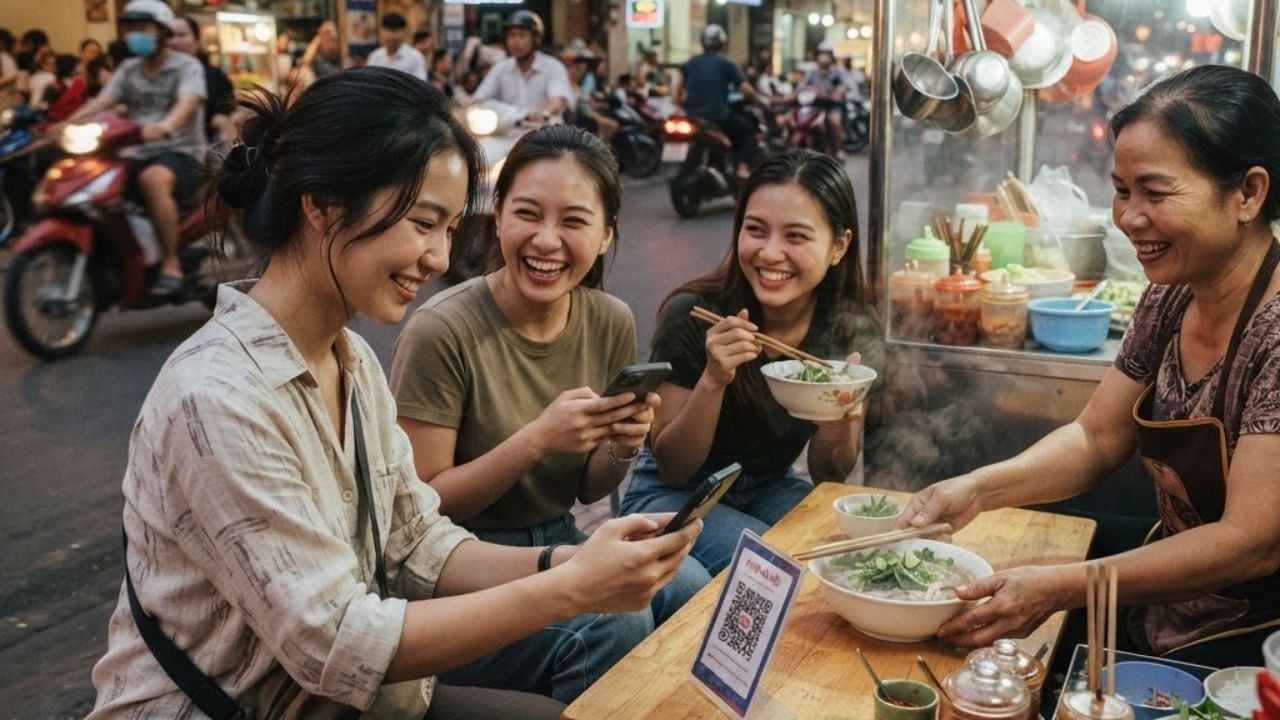
Image generated by AI
With 231,558 Singaporean visitors traveling to Vietnam in the first half of 2026—a 29.4% increase from last year—the launch of a cross-border QR payment clearing system is transforming regional travel logistics.
The new financial connection allows travelers from Singapore to complete transactions at participating commercial establishments in Vietnam by scanning regional VietQR Global codes. Using their domestic digital banking applications or electronic wallet platforms, travelers can complete purchases within seconds, with the system converting Singapore Dollars (SGD) directly into Vietnamese Dong (VND) at market-standard exchange rates. This digital clearing network eliminates the need for manual currency exchanges and helps tourists avoid high transaction fees traditionally associated with overseas card usage.
The Local Trend Revealed: Instant QR Interoperability
The cross-border clearing system officially launched on July 2, 2026, under the coordination of the State Bank of Vietnam (SBV) and the Monetary Authority of Singapore (MAS). This deployment establishes Singapore as the sixth international territory and the fourth ASEAN member state integrated into Vietnam's national QR clearing networks. To expand accessibility, merchant payment processors updated system capabilities on July 10, 2026, enabling both static display codes and dynamic SmartPOS checkout terminals across Vietnam.
This system grants terminal access to between 3,000,000 and 5,000,000 active digital banking users in Singapore. Singaporean travelers represent an affluent demographic that overwhelmingly favors cashless, mobile-first payment solutions. By integrating these systems, local small-to-medium enterprises, boutique hotels, cafes, and artisan shops can accept international payments instantly without investing in expensive physical terminal upgrades.
The following table provides the operational timeline, user parameters, and regional integration details of the payment clearing system:
| System Element | Measured Statistic / Date | Operational Integration Status | Primary Business Objective |
|---|---|---|---|
| Initial Launch Date | July 2, 2026 | Financial clearing bridge active | Enable SGD-to-VND instant conversions |
| POS Expansion Date | July 10, 2026 | Static and SmartPOS codes enabled | Allow small vendors to accept digital payments |
| Target User Pool | 3,000,000 to 5,000,000 users | Active Singapore digital banking accounts | Connect merchants with high-yield demographics |
| Bilateral Visitor Growth | 231,558 tourists (+29.4% YoY) | First half of 2026 statistical window | Support expanding tourist corridor traffic |
| Regional Rank | 6th Territory / 4th ASEAN state | Clearing network integration rank | Standardize cross-border regional checkouts |
| ASEAN Network Partners | Vietnam, Thailand, Cambodia, S. Korea | Fully interconnected digital corridors | Build borderless Asia-Pacific tourism market |
Technical Architecture of Cross-Border QR Interoperability
The seamless exchange of funds between Singaporean and Vietnamese banking systems relies on direct API integrations between national clearing houses. The State Bank of Vietnam’s National Payment Corporation of Vietnam (NAPAS) connects directly with Singapore’s Network for Electronic Transfers (NETS) and the PayNow network. This connection allows real-time messaging protocols to verify account balances and settle transactions instantly.
When a traveler scans a VietQR Global code, the NAPAS gateway routes the transaction data to the Singaporean customer's home bank, which authorizes the debit in SGD. The network instantly converts the amount based on current market clearing rates, and credits the merchant’s account in VND within seconds. This real-time gross settlement process bypasses intermediary correspondent banks, which reduces settlement fees and ensures transparent exchange pricing for travelers.
Democratizing Capital for Local Tourism Operators
The introduction of QR-based payments serves as a powerful tool for economic democratization within the local hospitality sector. Historically, foreign currency transactions in Vietnam were concentrated in international hotel chains and airport retail outlets that could afford legacy credit card terminal fees. Small-scale independent businesses, such as street food vendors, local transport operators, and rural artisans, operated exclusively in cash, which created a barrier for high-spending international travelers.
By adopting dynamic SmartPOS systems and static VietQR codes, small and medium enterprises (SMEs) can accept foreign digital payments without purchasing expensive physical hardware. The digital clearing system settles transactions within seconds, eliminating cash-handling risks, reducing administrative costs, and improving business cash flow. This allows local vendors to capture a larger share of the tourist economy, helping support family-owned micro-enterprises across both urban centers and rural destinations.
Cultural and Environmental Value: Empowering Local Merchants
For the visitor, the real impact is the democratization of tourist spending, which directly supports regional heritage and local economies. Traditionally, international tourist spending has been concentrated around major hotel chains and duty-free retail centers that accept global credit cards. By allowing travelers to pay via QR codes, this system enables tourists to buy directly from street-side hawker stalls, family-owned cafes, and local craft markets.
This direct flow of capital supports community-based tourism initiatives, such as homestays in Sapa or the Mekong Delta, where local families manage accommodation and food services. Furthermore, traveling without large amounts of banknotes reduces the risk of loss or theft, improving personal safety. This cashless framework ensures that travel spending directly benefits local families, helping preserve traditional crafts and culinary heritage.
Visitor Insider Tips: Navigating Vietnam's Digital Ecosystem
Navigating Vietnam’s digital payment ecosystem and local cultural spaces requires adapting local practices:
- QR Code Etiquette: When presenting your smartphone to scan a merchant's QR code, hold the device with both hands. In Vietnamese culture, presenting or receiving items with both hands is a sign of respect, especially when interacting with elders or independent vendors.
- Confirming Exchange Rates: Before finalizing a transaction, verify the converted amount on your mobile screen. The system calculates exchange rates in real-time, providing transparency and helping you avoid predatory conversion margins.
- Sampling Culinary Specialties: Use QR codes to pay for street food favorites like Pho (steamed beef noodle soup), Banh Mi (crisp baguettes with savory fillings), or Bun Cha (grilled pork with rice noodles). Try traditional egg coffee (Ca Phe Trung) at historic cafes in Hanoi.
- Under-the-Radar Spot: Visit the ancient town of Hoi An early in the morning (before 7:00 AM) to experience the quiet streets and local markets before day-trippers arrive. Many independent tailors and local craftsmen accept VietQR codes for custom clothing and souvenirs.
Tourism Outlook: Interconnected Travel Corridors
The future outlook for Southeast Asian tourism points to deeper financial integration. Monetary authorities plan to launch reciprocal payment functions later in 2026, allowing travelers from Vietnam to complete purchases in Singapore using their domestic banking apps. As this unified system expands to include Thailand, Cambodia, and South Korea, it will establish a borderless digital tourism corridor across the Asia-Pacific region, enabling travelers to explore multiple countries without carrying physical currencies.
Key Takeaways
- System Launch: Singapore and Vietnam launched a cross-border QR payment clearing system on July 2, 2026.
- Instant Settlement: Travelers pay using VietQR Global codes, converting SGD directly to VND via their home digital banking apps.
- SME Integration: On July 10, 2026, dynamic SmartPOS and static codes were enabled, helping small vendors capture tourist spending.
- Corridor Growth: The integration supports expanding travel volumes, with 231,558 Singaporean visitors recorded in the first half of 2026.
FAQ
How do Singaporean travelers use QR payments in Vietnam?
Travelers scan VietQR Global codes displayed at participating Vietnamese merchants using their Singaporean digital banking or e-wallet applications.
Are there transaction fees for using cross-border QR codes?
The system converts SGD to VND instantly at market clearing rates, eliminating the transaction surcharges and exchange margins of credit cards.
Which Singaporean banks support the cross-border QR payment link?
Major Singaporean consumer banks and digital wallet providers integrated into the national clearing network support the system.
Related Travel Guides
Singapore Airlines and Navan Launch Direct NDC Technology Connection
Hainan Airlines Launches New Haikou to Penang Direct Flights
Singaporean Travelers Vietnam Cultural Itinerary and Logistics Guide
Disclaimer
This article is for informational and educational purposes only. It does not constitute legal, financial, or professional advice. While we strive to provide accurate and up-to-date information, travel policies, regulations, and conditions change rapidly. Always verify information with official sources before making travel decisions. Nomad Lawyer makes no representations about the accuracy, reliability, completeness, or suitability of the information provided. Readers should consult qualified professionals for advice specific to their circumstances. The views expressed in this article are those of the author and do not necessarily reflect the views of Nomad Lawyer.