
Vietnam Approves Landmark Tourism Law: Resolution 59/2026/QH16, Digital Nomad Visas, Medical Travel, and Multibillion-Dollar Investment Tiers

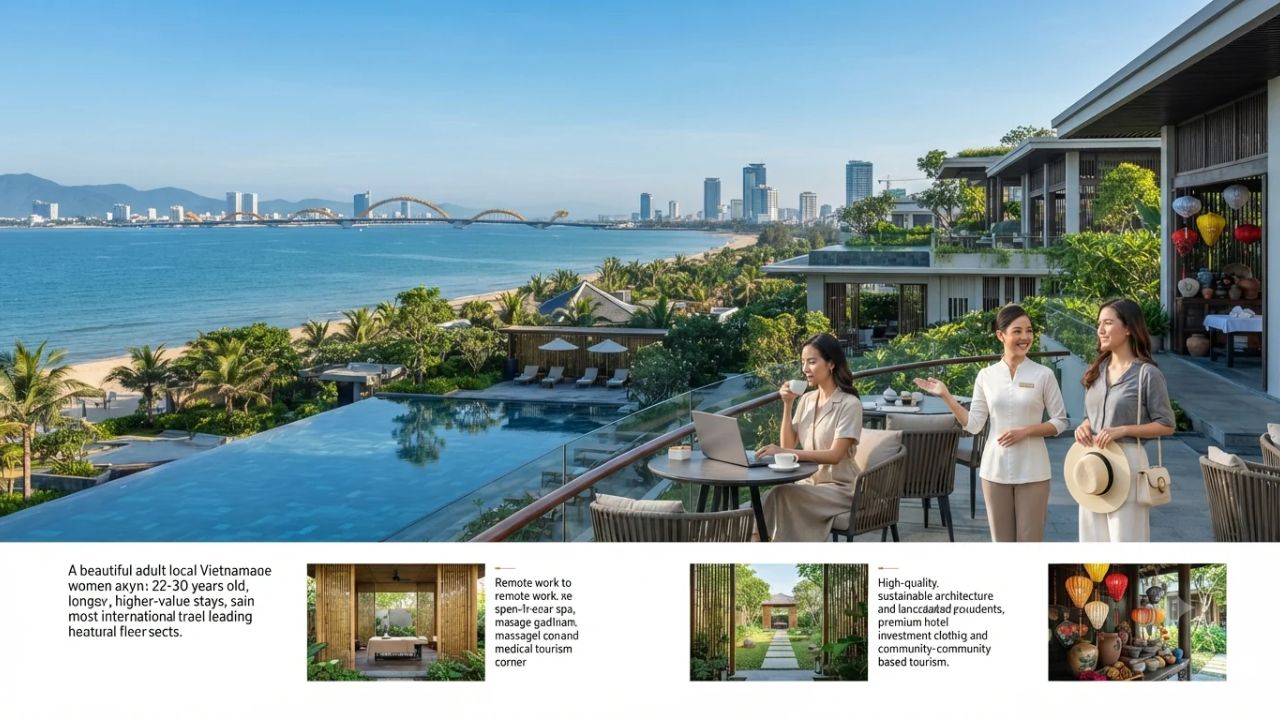
In a historic legislative move, Vietnam’s 16th National Assembly has voted overwhelmingly to enact Resolution No. 59/2026/QH16, a comprehensive 14-article legal package that liberalises the nation's tourism economy, introduces pilot residency streams for remote workers and medical travellers, and establishes a four-tier multibillion-dollar investment framework backed by lucrative tax concessions.
Passed by 468 of 480 parliamentary delegates during the legislature's second session, the groundbreaking resolution takes effect on January 1, 2027, and will govern the development of Vietnam's visitor economy for a full decade through December 31, 2036. The legislation formally codifies Politburo Resolution No. 26—issued in August 2026—which established the national mandate of transforming tourism into a core economic pillar capable of driving sustained gross domestic product growth, generating high-skilled employment, and enhancing international prestige across the Asia-Pacific region.
Rather than pursuing uncalibrated arrival volumes, Resolution 59 marks a strategic pivot toward high-yield, long-stay international visitors. By offering customized visa exemptions for high-spending markets, pioneering specialized residency pathways for foreign remote workers and healthcare tourists, authorizing 24/7 nighttime entertainment zones, and slashing corporate income taxes for strategic hospitality developers, Vietnam is repositioning itself to compete directly with regional heavyweights including Thailand, Malaysia, and Indonesia.
VIETNAM RESOLUTION NO. 59/2026/QH16: STRATEGIC PILLARS
| Category / Entity | Details / Impact |
|---|---|
| Legislative Span | 10-Year Framework (January 1, 2027 - December 31, 2036) |
| Target Demographics | Remote workers, digital nomads, wellness & medical tourists |
| Investment Classifications | 4 Tiers (up to VND 30T / US$1.16B for strategic mega-projects) |
| Tax & Fiscal Concessions | Up to 70-year land leases, 4-year tax holidays, 10% CIT rates |
| Next-Gen Innovations | 24/7 entertainment hubs, single-window licensing, AI incentives |
| Grassroots Empowerment | Community tourism, OCOP integration, ethnic minority safeguards |
Legislative Breakthrough: Unpacking Resolution No. 59/2026/QH16 and Politburo Mandates
The enactment of Resolution No. 59/2026/QH16 represents one of the most consequential economic policy shifts in modern Vietnamese history. For years, tourism development was guided by fragmented ministerial decrees and regional masterplans that struggled to reconcile local conservation with rapid commercial growth. The new law provides an overarching statutory framework that unifies immigration policy, land-use zoning, fiscal incentives, and environmental regulations under a single legal instrument.
The political impetus behind the law stems directly from Politburo Resolution No. 26. Recognizing that global tourism dynamics have shifted dramatically toward wellness, remote employment, and bespoke cultural immersion, the highest echelon of Vietnam’s leadership mandated the creation of legislative mechanisms flexible enough to adapt to international trends over the coming decade.
The 14 articles of Resolution 59 establish several foundational principles:
- Decentralized Implementation with Central Standards: Provincial People’s Councils and Committees receive expanded autonomy to subsidize new flight routes, zone round-the-clock entertainment districts, and grant local fiscal rebates, provided they meet national environmental and security benchmarks.
- Statutory Protection for Long-Term Investors: Large-scale hospitality investors are insulated from sudden regulatory changes through grandfathered lease agreements extending up to 70 years.
- Cross-Sector Integration: Tourism is legally tied to national transport infrastructure, agricultural supply chains through the One Commune One Product (OCOP) program, and digital technology acceleration.
Evolution of Vietnamese Tourism Policy:
=============================================================================
Pre-2020 Era:
* Focus on mass volume and budget package tour consolidators
* Restrictive visa regimes requiring complex approval letters
* Fragmentation between local province initiatives and national ministries

2020 - 2025 Recovery:
* Staged reopening, introduction of 90-day electronic visas (e-visas)
* Expansion of unilateral visa waivers to 45 days for select European nations
* Rapid return of international flights and regional connectivity

2027 - 2036 Modern Era (Resolution 59):
* Focus on high-spending independent travellers, remote workers, medical guests
* Specialized long-stay residency pilots and bespoke bilateral exemptions
* Tiered corporate tax holidays, 24/7 nighttime zones, and grassroots equity
=============================================================================
The Strategic Pivot: Shifting from Mass Tourism to High-Yield Long-Stay Travellers
A central thesis of Resolution 59 is that raw international arrival numbers do not equate to sustainable economic prosperity. While budget backpackers and zero-dollar group tours generate headline statistics, they frequently impose heavy burdens on municipal water treatment systems, waste management infrastructure, and historical heritage sites while leaving minimal retained earnings within local host communities.
To rebalance this equation, the legislation mandates a pivot toward extending the average length of stay and maximizing per-day visitor expenditure. According to tourism economics research, an international visitor staying three weeks and participating in eco-trekking, dental procedures, and fine dining contributes five to seven times more economic value to domestic supply chains than a short-haul visitor on a four-day metropolitan stopover.
Visitor Economic Contribution Comparison:
+-----------------------------------------------------------------------------+
|  Short-Stay Mass Tourist:                                                   |
|  * Average Stay: 3 to 5 nights                                              |
|  * Focus: Standard hotel buffets, central retail, low-cost transport        |
|  * Local Retention: Low (high leakage to international tour operators)      |
|                                                                             |
|  High-Yield Long-Stay Visitor (Remote Worker / Wellness Guest):             |
|  * Average Stay: 21 to 90+ nights                                           |
|  * Focus: Boutique villas, wellness clinics, co-working, regional culinary  |
|  * Local Retention: High (funds circulate directly into local businesses)  |
+-----------------------------------------------------------------------------+
The law directs the government to negotiate expanded bilateral visa exemptions tailored market by market. Instead of applying uniform criteria, immigration authorities will evaluate key source markets based on average daily spending, propensity for repeat visits, and appetite for combining leisure trips with international conferences, business seminars, and medical treatments.
Tailored Visa Liberalisation: Digital Nomad Residencies and Medical Tourism Pilots
The most internationally anticipated element of Resolution 59 is the formal authorization of controlled pilot programs for specialized visa and residency categories. Specifically, the resolution creates statutory space for two fast-growing demographics: international remote workers and medical tourism patients.
SPECIALIZED PILOT VISA FRAMEWORKS (2027-2036)
| Entity / Route | Metrics | Operational Status |
|---|---|---|
| Pilot Visa Stream | Target Demographic | Proposed Core Provisions |
| Remote Work / Nomad Visa | Digital nomads, global tech staff | Multi-entry, extended stay, tax |
| independent contractors | status clarity, co-working access | |
| Medical & Wellness Stream | Healthcare patients, dental, IVF, | Streamlined clinical companion |
| cosmetic, post-op rehabilitation | permits, hospital-resort packages | |
| High-Value MICE Exemption | Conference delegates, trade expo | Expedited airport fast-tracks, |
| attendees, keynote speakers | multi-entry corporate flexibilities |
The Remote Work and Digital Nomad Visa Pilot
Southeast Asia has long been a global magnet for remote workers, with destinations like Bali, Chiang Mai, and Da Nang attracting thousands of location-independent entrepreneurs. However, digital nomads in Vietnam have historically operated in a legal grey zone, relying on repeated 90-day tourist e-visas or leaving the country on "visa runs."
Resolution 59 remedies this uncertainty by instructing the Ministry of Public Security and the Ministry of Foreign Affairs to design a dedicated remote worker visa pilot. Key objectives of the upcoming pilot include:
- Providing clear residency rights permitting foreign nationals employed by overseas entities to live in Vietnam legally while working remotely.
- Establishing transparent taxation rules ensuring nomads are not subjected to double taxation on foreign-earned income during the pilot period.
- Granting holders access to local banking services, residential lease registrations, and mobile telecommunications contracts.
Medical, Health, and Wellness Tourism
Vietnam has developed an international reputation for high-quality, cost-effective private medical and dental care. From advanced dental implants and corrective eye surgeries in Ho Chi Minh City to integrative herbal medicine, hot mineral spring rehabilitation in Quang Ninh, and cosmetic procedures in Hanoi, international patients receive treatment at a fraction of Western costs.
The new medical visa stream authorized under Resolution 59 will allow foreign patients and their accompanying caregivers to secure extended residency permits tied to accredited hospital treatment plans. In addition, the legislation incentivizes partnerships between private tertiary hospitals, wellness retreats, and luxury resort operators, enabling patients to recover in scenic coastal and mountainous settings.
Post-Pandemic Momentum: Evaluating 2025–2026 Inbound Travel Trajectories
The legislative overhaul comes at a time of remarkable strength for Vietnam’s tourism sector. Having emerged swiftly from regional travel restrictions, Vietnam recorded 21.17 million international arrivals in 2025, representing a 20.4% year-on-year surge.
This rapid growth trajectory continued throughout 2026. Official data from the Vietnam National Authority of Tourism (VNAT) reveals that during the first 10 months of 2026, the country welcomed 19.5 million international visitors—a 13.8% increase compared to the corresponding period in 2025. This performance placed the nation at roughly 78% of its ambitious full-year target of 25 million international visitors.
Annual International Visitor Arrivals (Millions)
25M +-----------------------------------------------------------------------+
    |                                                      [25.0M Target]   |
20M +---------------------------------- [21.17M] ---------- [19.5M (10 Mo)] -+
    |                                                                       |
15M +-----------------------------------------------------------------------+
    |                                                                       |
10M +-----------------------------------------------------------------------+
    |                                                                       |
 5M +-----------------------------------------------------------------------+
    |                                                                       |
 0M +------+-------------------------------+------------------------+-------+
          2024                            2025                     2026
| Source Market Region | 2025 Total Arrivals | 2026 (Jan-Oct) Performance | Strategic Trend Under Resolution 59 |
|---|---|---|---|
| Northeast Asia (South Korea, China, Japan, Taiwan) | 12.45 Million | 11.20 Million | Expanding luxury golf, MICE, and coastal family travel |
| Southeast Asia (ASEAN Partners) | 3.10 Million | 2.95 Million | High-frequency weekend leisure, culinary exploration |
| Europe (UK, France, Germany, Nordics) | 2.15 Million | 2.20 Million | Long-stay cultural journeys, winter sun escapes |
| North America (United States, Canada) | 1.12 Million | 1.05 Million | Heritage travel, overseas Vietnamese diaspora, medical |
| Oceania (Australia, New Zealand) | 0.85 Million | 0.92 Million | Extended winter stays, adventure and wine trails |
| Emerging Markets (India, Middle East) | 1.50 Million | 1.18 Million | Direct flight connectivity, wedding tourism, halal food |
The data underscores that while Northeast Asia remains the volume foundation of inbound arrivals, long-haul and emerging markets exhibit the highest growth rates and willingness to spend on premium experiences. Resolution 59 provides the legal machinery to convert this post-pandemic surge into permanent, high-value economic relationships.
Four-Tier Tourism Investment Architecture: Capital Requirements and Social Commitments
To modernize Vietnam’s hospitality infrastructure, Resolution 59 introduces a four-tier investment classification framework. The law departs from traditional speculative real estate development by tying financial incentives directly to verifiable socio-economic returns, minimum job creation quotas, and domestic supply chain integration.
FOUR-TIER TOURISM INVESTMENT CLASSIFICATION
| Entity / Facility | Delays | Cancellations | Details |
|---|---|---|---|
| Tier Level | Minimum Total Capital | Tourism Component Share | Permanent Job Quota |
| Tier 1: Small/Med | Market Determined | Varies by Sector | Baseline Labour Laws |
| Tier 2: High-Qual | VND 3 Trillion (~US$116M) | Min. VND 1.5 Trillion | 1,000 Jobs (20% Local) |
| Tier 3: Driving | VND 10 Trillion (~US$387M) | Min. VND 5.0 Trillion | 1,500 Permanent Jobs |
| Tier 4: Strategic | VND 30 Trillion (~US$1.16B) | Min. VND 15.0 Trillion | 2,000 Permanent Jobs |
Tier 1: Small and Medium-Sized Projects
Encompasses boutique eco-lodges, community homestays, specialized tour operators, and experiential craft workshops. These projects do not face prohibitive capital thresholds and receive priority access to state-backed technical assistance, digital marketing subsidies, and infrastructure connections.
Tier 2: High-Quality Projects
Requires a minimum total capital investment of VND 3 trillion (approximately US$116.2 million), with at least VND 1.5 trillion dedicated exclusively to core tourism facilities (such as hotels, theme parks, convention centers, or wellness spas). Developers must create at least 1,000 permanent jobs, with a mandatory statutory quota requiring at least 20% of positions to be filled by local provincial residents.
Tier 3: Driving-Force Projects
Demands a total capital commitment of at least VND 10 trillion (over US$387 million), with a minimum of 50% allocated to tourism infrastructure. These ventures must generate at least 1,500 permanent jobs and serve as regional economic engines that stimulate ancillary hospitality businesses across entire provinces.
Tier 4: Strategic Driving-Force Projects
The pinnacle of the investment hierarchy, requiring an immense capital threshold of at least VND 30 trillion (over US$1.16 billion), including at least VND 15 trillion directed into tourism assets, alongside generating a minimum of 2,000 permanent jobs. Investors qualifying at this level must satisfy rigorous qualitative criteria, including:
- Developing globally recognized branded hospitality or entertainment concepts.
- Financing and constructing connecting civic infrastructure, such as access roads, public water filtration, and marine jetties.
- Establishing comprehensive training academies to upskill local talent into managerial roles.
- Actively integrating domestic small businesses and agricultural producers into their procurement networks.
Recognizing that regional disparities exist across the country, Resolution 59 explicitly establishes concessionary adjustments: projects situated entirely within designated socio-economically disadvantaged or remote regions qualify for reduced capital thresholds and lower employment quotas while retaining full access to state incentives.
Fiscal and Land Incentives: Preferential Corporate Income Taxes and Concessionary Leases
To mobilize private capital, Resolution 59 pilots an unprecedented suite of fiscal and land incentives for a five-year window starting January 1, 2027. These measures significantly reduce the financial payback period for complex hospitality developments.
CORPORATE TAX AND LAND CONCESSION MATRIX
| Entity / Route | Metrics | Operational Status |
|---|---|---|
| Classification | Corporate Income Tax (CIT) Rate | Land Lease & Rental Concessions |
| Standard Corporate | 20% Standard Statutory CIT Rate | Standard Provincial Land Rental |
| Driving-Force Tier | 10% Preferential CIT Rate for 5 Years | Targeted rental exemptions/rebates |
| Strategic Tier | 0% CIT for 4 Years (Full Tax Holiday), | Operating tenure up to 70 Years; |
| followed by 50% reduction for 9 Years | maximum land lease concessions | |
| Eco-Resorts (4-5★) | Standard or Preferential Rate by Tier | Up to 30% land rental reduction |
| on green/water non-commercial land |
Concessions for Driving-Force and Strategic Projects
Enterprises operating approved driving-force developments will enjoy a preferential 10% corporate income tax rate for five consecutive years on revenue generated by their tourism components. Concurrently, provincial authorities are empowered to provide land rental waivers during construction phases.
For strategic driving-force investors committing over US$1.16 billion, the financial terms are among the most attractive in the Asia-Pacific:
- Extended 70-Year Operating Tenure: Grants developers long-term operational certainty, matching international standards for mega-infrastructure investments.
- Four-Year Total Tax Holiday: Complete 100% exemption from corporate income tax for the first four profitable operational years.
- Nine-Year Half-Tax Concession: A 50% reduction in standard corporate income tax rates for the subsequent nine years, ensuring stable cash flows during debt-servicing phases.
Green Incentives for Low-Density Eco-Resorts
In a forward-thinking environmental clause, the legislation incentivizes sustainable resort architecture. Four-star and five-star resort properties located within designated national tourist areas can obtain up to a 30% reduction in annual land rent for five years on land dedicated to landscaping, native botanical gardens, water features, and shared open spaces. To qualify, the property's overall structural building footprint must remain strictly below 25% of the total site area, encouraging developers to preserve primary forest canopies and coastal mangroves.
Geographic Focus: Metropolitan Growth Hubs and Rural Grassroots Inclusivity
Resolution 59 avoids the trap of concentrating development entirely within coastal enclaves. Instead, it balances rapid metropolitan modernization with grassroots rural expansion.
Geographic Deployment Framework:
[National Growth Strategy]
               │
               ├────────────────────────────────────────┐
               ▼                                        ▼
[Tier-1 Metropolitan Hubs]                [Grassroots & Hinterland Regions]
* Hanoi: Culture, Heritage, MICE          * Northern Highlands: Sapa, Ha Giang Trekking
* Da Nang: Coastal Luxury, Golf, Tech     * Central Highlands: Da Lat, Buon Ma Thuot Coffee
* Ho Chi Minh City: Finance, Nightlife    * Mekong Delta: Floating Markets, Agritourism
                                          * Border & Island Zones: Phu Quoc, Con Dao
The Metropolitan Triumvirate: Hanoi, Ho Chi Minh City, and Da Nang
The resolution explicitly positions Vietnam’s three primary metropolises as strategic growth engines:
- Hanoi: Designated as the epicentre for international political summits, cultural heritage tourism, museum quarters, and high-end MICE delegations.
- Ho Chi Minh City: Focuses on commercial commerce, medical travel clusters, international concerts, and innovative 24/7 dining and lifestyle concepts.
- Da Nang: Acts as the central coastal gateway, connecting luxury beach resorts, championship golf courses, and smart-city digital nomad hubs with UNESCO World Heritage sites in Hoi An and Hue.
Protecting and Promoting Rural, Island, and Border Areas
Simultaneously, the law allocates substantial resources to community-based tourism across ethnic minority settlements in the northern mountainous provinces (such as Lao Cai, Ha Giang, and Yen Bai), the Central Highlands, and isolated island districts like Con Dao and Ly Son. By providing targeted funding for rural access roads, clean water distribution, and satellite internet connectivity, the policy ensures that indigenous communities benefit directly from the national tourism expansion.
Community Empowerment, Agritourism, and One Commune One Product (OCOP) Integration
A distinguished aspect of Resolution 59 is its legal mandate preventing the economic displacement of local populations. The legislation formally recognizes that authentic local culture is Vietnam’s most valuable tourism asset, and that commercial mega-resorts must coexist with and support traditional livelihoods.
COMMUNITY EMPOWERMENT & OCOP VALUE INTEGRATION
| Category / Entity | Details / Impact |
|---|---|
| Mandatory Community Inclusivity | Local residents must participate in tour |
| operations, guiding, and supply chains | |
| OCOP Commercial Linkages | Hoteliers receive tax credits for buying |
| certified local agricultural goods | |
| Traditional Craft Preservation | State funding for silk weaving, ceramics |
| lacquerware, and herbal medicine villages | |
| Aviation & Route Subsidies | Provincial funds deployable to restore |
| or launch regional flight connections |
The One Commune One Product (OCOP) Catalyst
Vietnam's national OCOP initiative certifies high-quality, authentic regional foodstuffs, handicrafts, and agricultural products produced by rural cooperatives. Under Resolution 59, commercial hotels, resorts, and tour operators that execute long-term procurement contracts with certified OCOP producers become eligible for specialized local tax deductions and promotional subsidies.
This synergy bridges the gap between rural farms and five-star kitchens. High-end restaurants in Da Nang and Phu Quoc are incentivized to source highland Arabica coffee from Lam Dong, organic black peppercorns from Phu Quoc, lotus tea from Dong Thap, and handwoven textiles from ethnic Cham or Hmong artisans, directly circulating international visitor dollars into rural agricultural communities.
Provincial Flight Subsidies
Recognizing that regional airports often struggle to maintain commercial flight frequencies, the law grants Provincial People's Councils statutory authority to utilize provincial budgets to provide marketing support, landing fee rebates, and passenger volume guarantees to domestic and international airlines that launch new direct air corridors or restore suspended regional connections.
The 24/7 Nighttime Economy and Next-Generation Tech Incentives
To boost daytime visitor expenditure and create a dynamic nocturnal entertainment scene, Resolution 59 introduces landmark legal mechanisms authorizing round-the-clock commercial operations and rewarding artificial intelligence integration.
NIGHTTIME ECONOMY AND TECH ACCELERATION FRAMEWORK
| Entity / Route | Metrics | Operational Status |
|---|---|---|
| Strategic Feature | Regulatory Provision | Governance & Safeguards |
| 24/7 Night Zones | Controlled 3-year pilot permits for | Sound mitigation, dedicated police |
| round-the-clock entertainment complexes | patrols, waste sanitation sweeps | |
| Major Event Bureau | Single-window licensing with one point | Streamlined approvals for concerts |
| of contact and single-stage appraisal | music festivals, and trade expos | |
| AI & Tech Adoption | 2-year full CIT exemption, followed by | Deployment of VR, AR, AI concierges |
| 4 years at 50% reduced tax rates | and multilingual smart platforms |
Round-the-Clock Entertainment Districts
Historically, strict curfews across major Vietnamese cities required bars, restaurants, and entertainment venues to shutter operations by midnight or 2:00 AM, curtailing nightlife revenue. Resolution 59 establishes a controlled three-year pilot program allowing designated performing arts complexes, concert arenas, festival promenades, and integrated entertainment enclaves to operate 24 hours a day, seven days a week.
These round-the-clock zones are subject to strict administrative safeguards:
- Provincial People's Committees must draft comprehensive zoning plans ensuring entertainment zones do not infringe upon quiet residential neighborhoods.
- Mandatory acoustic isolation and noise management standards must be implemented by commercial tenants.
- Deploying dedicated community policing, late-night public transport links, and continuous street sanitation services to ensure safety and cleanliness.
- Projects planned within sensitive frontier or coastal defence regions require direct authorization from the Prime Minister.
Streamlined Single-Window Event Licensing
International event promoters have previously cited bureaucratic hurdles when organizing world-tour concerts, sporting events, or global tech conferences in Vietnam. The new resolution establishes a unified single-window licensing process. Organizers of large recurring or major international events can obtain all necessary administrative, security, and cultural performance clearances through a single government contact point following a unified appraisal, dramatically reducing bureaucratic overhead.
Tax Exemptions for Artificial Intelligence and Smart Tourism
To accelerate digital transformation, Resolution 59 offers lucrative tax breaks for travel tech enterprises. Businesses developing or integrating artificial intelligence, augmented reality (AR), virtual reality (VR), and advanced digital platforms into tourism operations receive a full two-year corporate income tax exemption, followed by a 50% tax reduction for the subsequent four years. Applications include multilingual AI travel assistants, virtual historical recreations at archaeological sites, and automated hotel check-in kiosks.
Regional Asia-Pacific Context: Positioning Vietnam Against Thailand and Indonesia
Vietnam’s proactive reform agenda comes as nations across Southeast Asia compete aggressively for high-spending travellers. With post-pandemic travel fully restored, destination choice is increasingly dictated by visa accessibility, infrastructure quality, and lifestyle offerings.
Competitive Destination Matrix: Southeast Asia
         High Ease
             ▲
             │             [THAILAND]
             │             * 60-Day Visa Waiver for 93 Nations
             │             * Established Medical & Nightlife Brand
             │
             │             [VIETNAM: RESOLUTION 59]
             │             * 10-Year Comprehensive Master Law
             │             * Tailored Nomad & Medical Pilots
             │             * Multibillion-Dollar Mega-Resort Tax Breaks
             │
Short Haul ──┼─────────────────────────────────► Long Haul
             │
             │             [INDONESIA / BALI]
             │             * Second-Home & Golden Visa Streams
             │             * Established Remote Worker Enclaves
             ▼
          Low Ease
Thailand has led the region in visa liberalization, granting 60-day visa-free entry to citizens of 93 countries, introducing a dedicated Destination Thailand Visa (DTV) for remote workers, and cultivating a multibillion-dollar medical and wellness ecosystem. Similarly, Indonesia has deployed its Golden Visa and Second Home Visa frameworks to attract high-net-worth foreign retirees and tech entrepreneurs to Bali.
Rather than merely replicating neighbouring strategies, Vietnam’s Resolution 59 achieves competitive differentiation through structural depth:
- Decade-Long Legal Stability: By codifying reforms into a ten-year National Assembly resolution (2027–2036), Vietnam offers investors and long-term expatriates greater legislative predictability compared to ministerial decrees that are subject to frequent administrative revisions.
- Unmatched Manufacturing and Culinary Heritage: Vietnam pairs pristine coastal tourism with a dynamic economy, world-renowned street gastronomy, and remarkable geographic diversity spanning from tropical delta waterways to alpine highlands.
- Cost-Value Advantage in Tertiary Healthcare: While Thailand’s private healthcare costs have risen substantially in response to global demand, Vietnam’s accredited hospitals offer world-class clinical care at highly competitive pricing, creating an ideal runway for medical travel expansion.
Frequently Asked Questions About Vietnam's New Tourism Law and Visa Policies
What is Vietnam’s Resolution No. 59/2026/QH16?
Resolution No. 59/2026/QH16 is a comprehensive 14-article tourism reform law passed by the 16th National Assembly of Vietnam with 468 out of 480 votes. Taking effect on January 1, 2027, and remaining in force until December 31, 2036, the resolution formally codifies Politburo Resolution 26, establishing a ten-year legal foundation to transform tourism into a primary economic pillar through visa liberalisation, major hospitality investment incentives, and nighttime economy expansion.
When will the remote work and medical tourism visas become available?
The resolution formally takes effect on January 1, 2027, authorizing controlled pilot programs for foreign remote workers (digital nomads) and international medical and wellness visitors. The relevant government ministries, including the Ministry of Public Security and the Ministry of Foreign Affairs, are formulating the operational decrees that will define eligible nationalities, validity durations, minimum income thresholds, and application procedures ahead of the 2027 launch.
What are the investment tiers established under the new legislation?
Resolution 59 categorizes tourism investments into four distinct tiers based on capital expenditure, job creation, and economic value:
- Small and Medium-Sized: Local community projects, boutique lodges, and craft operations.
- High-Quality: Minimum capital of VND 3 trillion (~US$116.2M), at least VND 1.5 trillion in tourism assets, creating 1,000 permanent jobs (minimum 20% local hire).
- Driving-Force: Minimum capital of VND 10 trillion (~US$387M), at least 50% in tourism assets, creating 1,500 permanent jobs.
- Strategic Driving-Force: Minimum capital of VND 30 trillion (~US$1.16B), at least VND 15 trillion in tourism assets, creating 2,000 permanent jobs with major community infrastructure and branded services.
What tax incentives are available to major tourism investors?
Strategic driving-force projects (VND 30 trillion+) receive a complete 100% corporate income tax exemption for four years, followed by a 50% tax reduction for nine subsequent years, alongside operational leases extending up to 70 years. Driving-force projects (VND 10 trillion+) benefit from a preferential 10% corporate income tax rate for five years, while four- and five-star eco-resorts with low building density (under 25%) can obtain up to a 30% reduction on land rent for non-commercial open spaces.
How does the law support technology companies and smart tourism?
Enterprises that develop or deploy artificial intelligence, virtual reality, augmented reality, and next-generation digital platforms to enhance tourism services, expand international markets, or elevate national competitiveness receive a full corporate income tax exemption for two years, followed by a 50% tax reduction for the subsequent four years.
What are the 24/7 nighttime economy zones?
The law authorizes provincial authorities to pilot round-the-clock (24 hours a day, 7 days a week) operations for designated performing arts complexes, concert venues, festival streets, and integrated entertainment centres for up to three years. These zones are governed by strict noise mitigation, public safety, and sanitation regulations, providing vibrant nocturnal entertainment while safeguarding residential communities.
How did Vietnam's tourism perform in 2025 and 2026?
Vietnam’s visitor economy has demonstrated rapid post-pandemic momentum. The country welcomed nearly 21.17 million international arrivals in 2025 (a 20.4% year-on-year increase). In the first ten months of 2026, international arrivals reached 19.5 million (up 13.8% year-on-year), representing approximately 78% of the nation's ambitious full-year target of 25 million international visitors.
How does Resolution 59 support local communities and rural farmers?
The legislation mandates that local populations must actively participate in and financially benefit from community tourism initiatives. It provides state funding for essential rural infrastructure, water treatment, and digital networks in ethnic minority and remote border areas. In addition, hotels and travel operators that sign long-term purchasing agreements for certified One Commune One Product (OCOP) agricultural goods and handicrafts qualify for local government incentives.
Which cities are designated as primary tourism growth hubs?
The resolution designates Vietnam’s three largest metropolises—Hanoi, Ho Chi Minh City, and Da Nang—as primary national growth engines. Hanoi serves as the cultural, diplomatic, and MICE hub; Ho Chi Minh City leads commercial, medical, and entertainment tourism; and Da Nang anchors coastal luxury, marine recreation, and smart digital nomad infrastructure.
How will international event approvals be streamlined?
Resolution 59 eliminates bureaucratic fragmentation by establishing a single-window administrative licensing mechanism for large recurring or long-running international events, including music tours, sports tournaments, and commercial expos. Promoters can secure all required municipal, safety, and cultural permits through a single point of contact following a unified evaluation process.
Related Travel Guides
- Digital Nomad Hubs, Co-Working Networks, and Expatriate Living in Southeast Asia
- Medical and Wellness Tourism Across Asia: Top Destinations for Elective Healthcare
- Sustainable Hospitality and Eco-Resort Development Standards in the Asia-Pacific
- Nighttime Economies and Urban Tourism: Global Trends in 24-Hour Entertainment Districts
This article is for informational purposes. Flight routes, passenger regulations, visa rules, and transit advisories are subject to change by airlines and aviation authorities. Readers are advised to verify schedules and travel documentation with relevant carriers and border agencies before departure.
Related Stories

Hong Kong Tourism Momentum Surges Past Five Million October Visitors: HKTB Growth Data, Long-Haul Recovery, and HKIA Aviation Expansion
10 Affordable Cities in Central Europe Where Reddit Travelers Say You Can Live Like a Local