
Vietnam Hot Springs Tourism Emerges as a Luxury Ecotourism Trend
Vietnam is expanding hot springs and onsen wellness tourism, leveraging high demand (21.2M international visits in 2025) to grow secondary destinations.
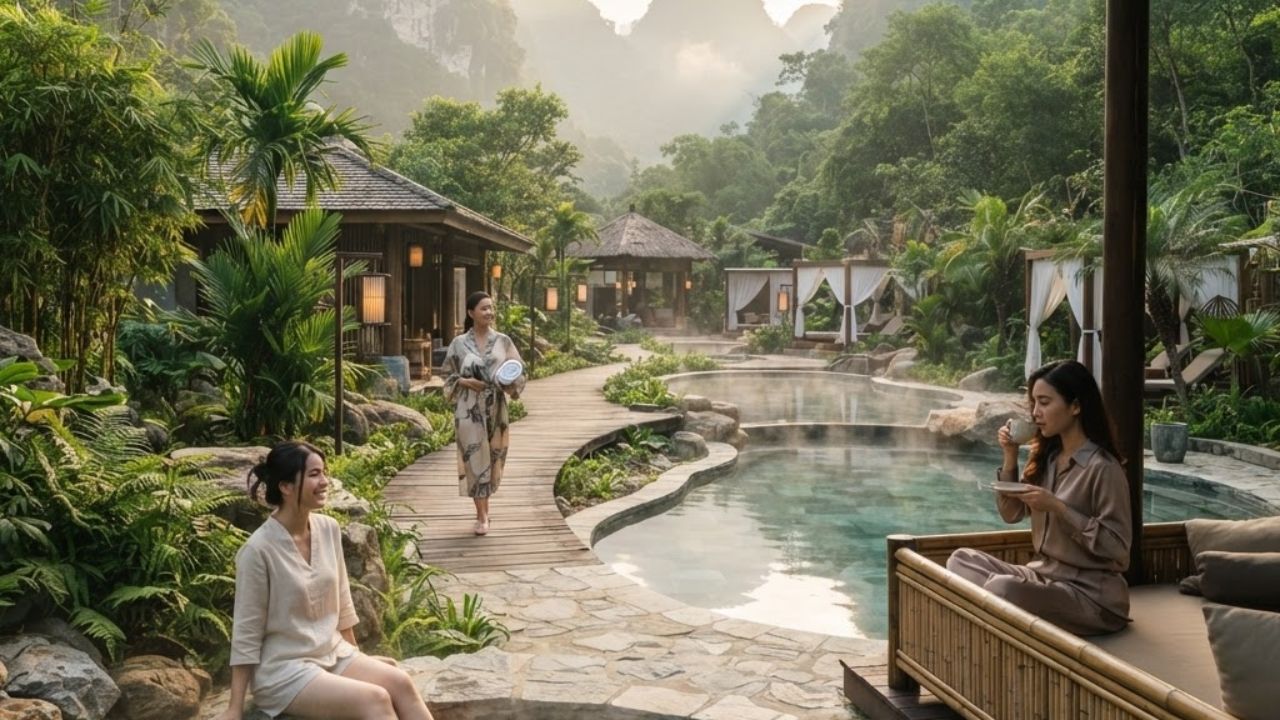
Image generated by AI
Capitalizing on nearly 21.2 million international arrivals and 137 million domestic trips in 2025, Vietnam is developing a national thermal hot springs and onsen circuit.
The Core Transit Update
Regional rail connections, municipal airport routes, and highway loops in Vietnam are preparing for a rise in wellness-oriented travel. The development of hot springs tourism creates a niche market for balneotherapy and Japanese-style onsen, helping disperse visitor density away from crowded coastal hotspots.
Official figures show that 2025 international arrivals rose 20.4 per cent year-on-year (exceeding 2019 baseline levels by 17.8 per cent), while total tourism receipts approached VND1 quadrillion. To capture this demand, destinations are investing in mineral resources. Thanh Thuy in Phu Tho attracted over 2.2 million visitors and VND7 trillion in investment over five years (drawing from the Ngoc Son mineral resource which flows at 704 cubic meters daily at Grade B and 366 cubic meters at Grade C1). Other developments include Yoko Onsen Quang Hanh in Quang Ninh (which initially capped capacity at 200 to 300 guests daily), Kim Boi, My Lam, Bang, and Binh Chau (featuring a 137-room resort).
Thermal Destinations & Global Wellness Markets
Planning a wellness trip to Vietnam requires comparing mineral assets and tracking global market sizes. The following tables outline Vietnam's leading hot-spring destinations and summarize global mineral-spring revenues.
| Stated Thermal Destination | Distinctive Natural / Mineral Asset | Stated Emerging Tourism & Wellness Proposition |
|---|---|---|
| Thanh Thuy, Phu Tho | Natural hot mineral water (Ngoc Son resource) | Japanese-inspired wellness and weekend retreats |
| Kim Boi, Phu Tho | Mineral hot springs & Muong culture | Nature, thermal relaxation, & cultural tourism |
| Quang Hanh, Quang Ninh | Mineral-rich thermal waters | Premium onsen-style wellness (near Ha Long) |
| My Lam, Tuyen Quang | Hot mineral spring | Resort and restorative wellness tourism |
| Binh Chau, Ba Ria-Vung Tau | Southern thermal resource (137-room resort) | Spa, resort, and coastal-wellness combination |
| Bang, Quang Binh | Extremely hot natural spring | Nature-led geothermal wilderness attraction |
Vietnam's emerging thermal hot spring destinations.
| Measured National Market | Stated Thermal / Mineral Revenue (2023) | Stated Industry Ecotourism Relevance |
|---|---|---|
| China | US$18.32 billion | Leading global market by volume and revenue |
| Japan | US$11.57 billion | Traditional onsen culture & ryokan economy |
| Germany | US$7.04 billion | European balneotherapy & medical spa hubs |
| Italy | US$1.71 billion | Historic thermal baths & thermal tourism |
| Iceland | US$0.72 billion | Geothermal energy lagoons & wellness resorts |
| South Korea | US$0.71 billion | Urban jjimjilbangs & family spa destinations |
Global thermal and mineral-spring revenues.
Traveler Logistics Guide
From a ground-level perspective, the best way to navigate this is to book your mineral bath and onsen sessions online prior to arriving at the resort, as capacity limits (such as Quang Hanh's 200 to 300 daily caps) are strictly enforced to protect water quality and maintain a tranquil environment. Checking booking slots is recommended.
To plan your thermal journey:
- Allow Safe Connecting Windows: When transiting from Hanoi's Noi Bai International Airport (HAN) to regional hot spring resorts in Phu Tho or Quang Ninh, allow at least a three-hour window to clear customs and manage local car transfers.
- Observe Onsen Etiquette: Premium facilities like Yoko Onsen Quang Hanh require guests to shower thoroughly before entering the mineral pools. Swimwear rules can vary, so verify guidelines at check-in.
- Verify Water Temperatures: Geothermal water in natural springs like Bang (Quang Binh) can be extremely hot. Test the water temperature before stepping in.
- Observe Health Limits: Limit your initial hot bath session to 15 or 20 minutes to prevent dehydration and dizziness, especially in high-humidity saunas.
Infrastructure Impact Assessment
The implementation of unified municipal sewage controls and the installation of scientific water extraction monitors protect fragile geothermal aquifers from over-extraction and environmental pollution.
By directing traveler spending to accredited wellness properties (supporting local Muong community tourism in Kim Boi and hospitality jobs in Quang Ninh), the hot springs sector funds geological monitoring, reduces the pressure on coastal beaches, and ensures that natural hot springs remain protected.
Related Travel Guides
Malaysia Domestic Tourism Expenditure Reaches RM34 Billion in Q1 2026
Shravani Mela 2026 Deoghar Travel Tips and Logistics Guide
10 Best Travel Tips for Visiting Vietnamese Hot Springs, Booking Yoko Onsen Quang Hanh, and Reserving Resorts in Thanh Thuy, According to Reddit
Disclaimer
This article is for informational and educational purposes only. It does not constitute legal, financial, or professional advice. While we strive to provide accurate and up-to-date information, travel policies, regulations, and conditions change rapidly. Always verify information with official sources before making travel decisions. Nomad Lawyer makes no representations about the accuracy, reliability, completeness, or suitability of the information provided. Readers should consult qualified professionals for advice specific to their circumstances. The views expressed in this article are those of the author and do not necessarily reflect the views of Nomad Lawyer.