
Vietnam’s Consumer Credit Surge Signals Major Boost for Travel and Tourism Spending
VietCredit loans surge 22.6% as Vietnam targets 25 million international visitors in 2026. Explore how consumer credit is unlocking tourism growth.

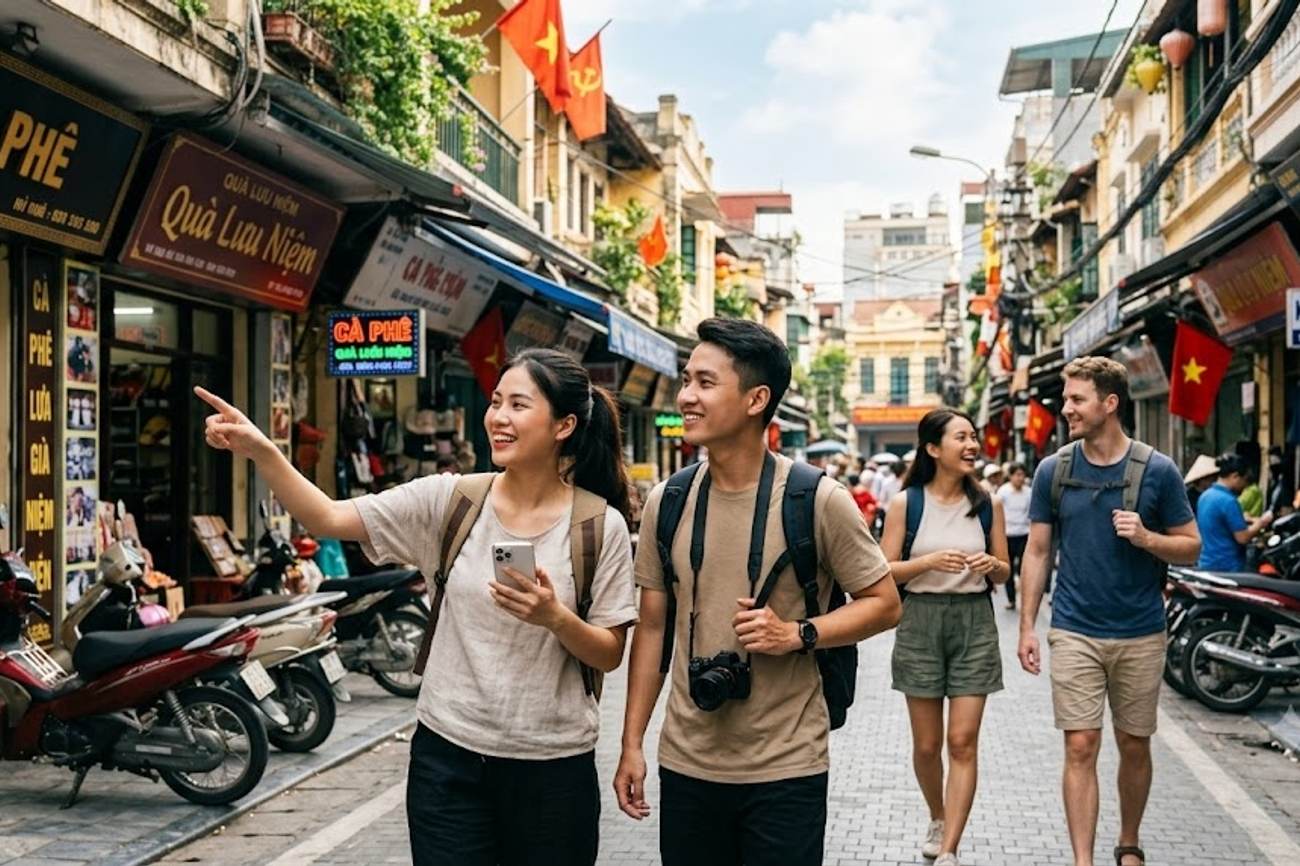
Image generated by AI
HANOI, September 7, 2026 —
Vietnam is witnessing a strategic convergence between the expansion of consumer finance and a rebounding tourism sector, creating a fertile environment for increased discretionary spending. Recent data reveals that VietCredit’s outstanding loan balance reached VND 18.221 trillion by the end of June 2026, while the country welcomed 12.3 million international visitors during the first half of the year. This dual growth in credit availability and visitor volume is expected to drive significant capital into the transport, hospitality, and consumer service industries.
VietCredit Lending Growth Signals Economic Shift
The consumer finance sector in Vietnam is providing a critical barometer for the nation's broader economic health. According to financial reports, VietCredit has seen its outstanding customer loans climb to over VND 18.221 trillion as of June 2026. This growth is being fueled largely by the integration of digital financial operations, which have streamlined the lending process for the general population.
A detailed analysis of the company's first-half results indicates that outstanding loans rose by 6.6% compared to the end of the first quarter. More strikingly, this represents a 180.5% increase when compared to the position on June 30, 2025. On the profitability front, the company posted a pre-tax profit exceeding VND 1.049 trillion for the first six months of 2026.
When viewed against the loan balance at the close of 2025, the lending book expanded by 22.6% during the first half of the year. While industry observers caution that these loans are not exclusively earmarked for vacations, the surge in available credit provides households with greater financial flexibility. This liquidity is a primary driver for discretionary spending, which directly impacts the travel economy through increased bookings for flights, hotels, and dining.
Macroeconomic Indicators Drive Travel Demand
The correlation between credit expansion and tourism becomes clearer when analyzed alongside official government statistics. Data from Vietnam’s National Statistics Office shows that final consumption grew by 8.15% year-on-year during the first half of 2026. Total revenue from consumer services and retail sales of goods hit an estimated VND 3,889.5 trillion, marking a nominal increase of 12.9% and a real-term increase of 7.3% after adjusting for price fluctuations.
The services sector, which acts as the backbone for the travel industry, showed robust growth across several key categories:
- Transport and Storage: Increased by 10.18%
- Accommodation and Food Services: Grew by 8.05%
- Finance, Banking, and Insurance: Rose by 7.97%
- Overall Service Value Added: Increased by 8.09%
Because travelers rely heavily on these specific sectors, the simultaneous rise in consumer credit and service sector value suggests a strengthening domestic economy capable of supporting higher volumes of both local and international tourism.
International Arrival Trends and Modal Shifts
Vietnam’s tourism recovery has transitioned from a stabilization phase into a period of aggressive growth. Between January and June 2026, the National Statistics Office recorded approximately 12.3 million international arrivals, a 14.9% increase over the previous year.
Air travel remains the primary gateway for visitors, with 10.1 million people arriving by plane—representing 82.6% of all international entries. This segment saw an 11.4% increase compared to the first half of 2025. However, other modes of transport are seeing even sharper percentage gains. Road arrivals surged by 37.5% to reach 1.9 million, while sea arrivals grew by 15.2% to approximately 209,000.
| H1 2026 Indicator | Official Result | Year-on-Year Change |
|---|---|---|
| International visitor arrivals | 12.3 million | +14.9% |
| International arrivals by air | 10.1 million | +11.4% |
| International arrivals by road | 1.9 million | +37.5% |
| International arrivals by sea | 209,000 | +15.2% |
| Retail sales and consumer-service revenue | VND 3,889.5 trillion | +12.9% nominal |
| Passenger movements | 3.403 billion | +18.8% |
| Accommodation and food-service value added | — | +8.05% |
Government Targets for 2026 Tourism
The Vietnamese government has established aggressive benchmarks for the remainder of the year. In April, the Ministry of Culture, Sports and Tourism announced that the 2026 socio-economic program aims to attract 25 million international visitors and 150 million domestic tourists.
Achieving these figures requires more than just marketing; it necessitates a scalable infrastructure. The expansion of transport capacity and digital tourism products is essential. For the domestic market, the ability of citizens to travel is closely tied to disposable income and the availability of legitimate credit. The growth in formal lending, as seen with VietCredit, reduces the barrier to entry for middle-class families seeking domestic travel experiences.
Aviation Capacity Supporting Visitor Influx
The aviation sector is providing the necessary throughput to meet these ambitious government targets. Reports from the Civil Aviation Authority of Vietnam indicate that the market handled 45.49 million passengers in the first half of 2026, a 9.8% increase over the same period in 2025.
The breakdown of this traffic shows a strong appetite for both international and domestic exploration:
- International Passenger Traffic: 26.2 million (up 15.4%)
- Domestic Passenger Traffic: 18.7 million
This increase in seat capacity ensures that the surge in consumer spending and credit availability can be converted into actual passenger movements.
Why This Matters (Information Gain & Experience)
For the average traveler and hospitality investor, this data signals a shift in Vietnam's economic profile. We are moving from a period of "recovery" to a period of "credit-fueled expansion." When consumer credit grows by 22.6% alongside a 15.4% rise in international air travel, it indicates that the market is not just returning to pre-pandemic levels but is expanding its ceiling.
From a logistical standpoint, the 37.5% jump in road arrivals suggests a growing trend in regional cross-border tourism (likely from neighboring Cambodia and Laos), which requires different infrastructure than air travel—specifically more boutique hotels and roadside services in border provinces. For the consumer, this means more competitive travel packages and a likely increase in "buy now, pay later" options for high-ticket vacations, making luxury travel accessible to a wider demographic of Vietnamese citizens.
Related Travel Guides
Disclaimer
This article is for informational and educational purposes only. It does not constitute legal, financial, or professional advice. While we strive to provide accurate and up-to-date information, travel policies, regulations, and conditions change rapidly. Always verify information with official sources before making travel decisions. Nomad Lawyer makes no representations about the accuracy, reliability, completeness, or suitability of the information provided. Readers should consult qualified professionals for advice specific to their circumstances. The views expressed in this article are those of the author and do not necessarily reflect the views of Nomad Lawyer.
Kunal K Choudhary
Co-Founder & Contributor
A passionate traveller and tech enthusiast. Kunal contributes to the vision and growth of Nomad Lawyer, bringing fresh perspectives and driving the community forward.
Learn more about our team →