
Vietnam Airlines Flight VN34 Returns to Munich After Technical Issue
Vietnam Airlines Flight VN34 made a precautionary return and landed safely at Munich Airport due to a technical issue on August 15, 2026.

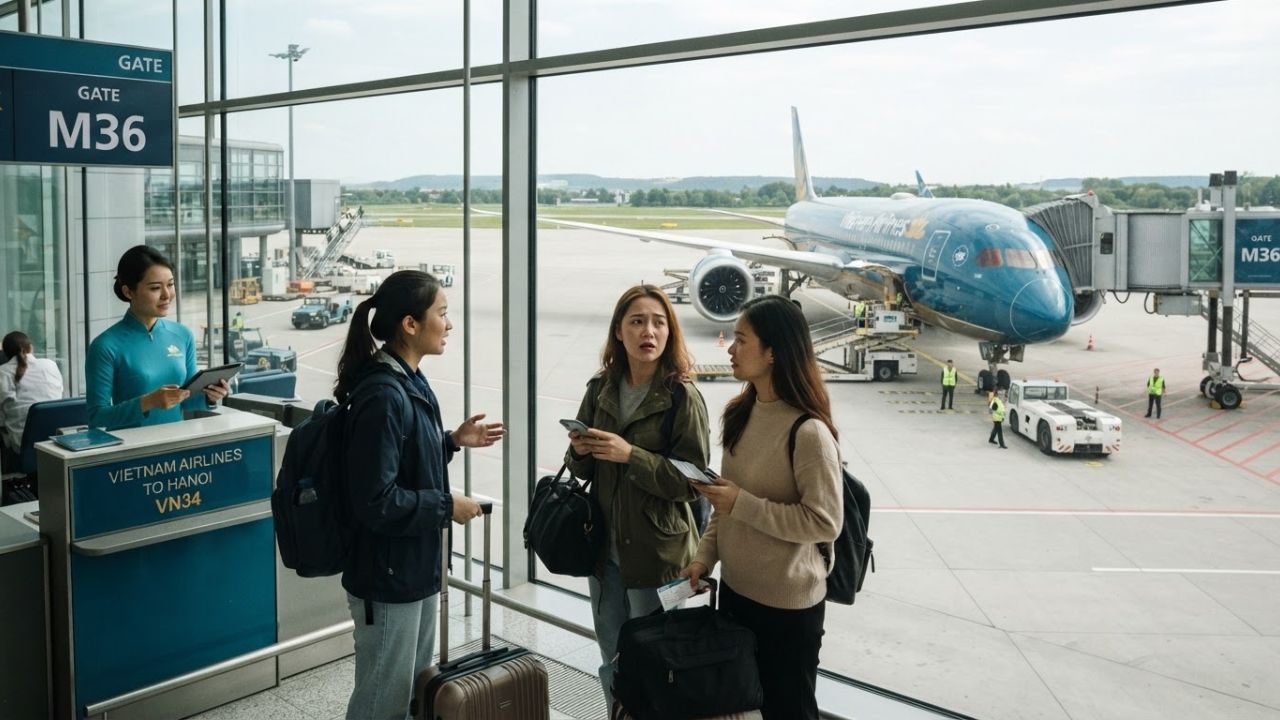
Image generated by AI
Vietnam Airlines Flight VN34, operated by a Boeing 787-9 Dreamliner, made a precautionary return and landed safely at Munich Airport following a technical issue shortly after departure on August 15, 2026. All passengers and crew returned safely to the terminal while the state-owned carrier began coordinating inspections and arranging onward travel.
Precautionary Return of Hanoi-Bound Service VN34
The intercontinental aviation link between Germany and Vietnam experienced a temporary disruption when Vietnam Airlines Flight VN34 returned to its departure airport. On 15 August 2026, the Boeing 787-9 aircraft departed Munich Airport for Hanoi but encountered an unspecified technical issue shortly after takeoff. Following standard safety protocols, the flight crew terminated the climb, coordinated with air traffic control, and turned the aircraft back to Munich, landing safely without incident or injury to the passengers and crew on board.
According to the official account published by the state-owned Vietnam News Agency, all travelers were transferred back to Terminal 1. Vietnam Airlines confirmed that its technical teams are collaborating with airport ground operations and aviation safety regulators to determine the cause of the technical issue. While precautionary landings are a routine safety measure in global commercial aviation, the return of a long-haul flight during a peak summer travel season presents logistical challenges for both the operating carrier and affected passengers.
The Strategic Importance of the Munich-Vietnam Route
The Munich-to-Hanoi service is a key route in Vietnam Airlines' European network, supporting both leisure tourism and corporate connectivity. The carrier launched direct flights connecting Munich with Hanoi and Ho Chi Minh City in October 2024, offering direct travel between the Bavarian economic region and Vietnam's major metropolitan hubs. To meet passenger demand, the airline subsequently increased the service to 5 weekly frequencies.
Direct flights are highly valuable because they eliminate the need for transfers at hubs in the Middle East or East Asia, reducing transit times. For the tourism sector, this direct capacity supports organized group tours, independent holidays, and business events. The route also serves a vital cultural role, connecting the Vietnamese community living in Germany with family and educational networks in Southeast Asia. Although the return of Flight VN34 created immediate disruption for its passengers, there is no official indication of a broader suspension of Munich-Vietnam services.
Operational Scale and Infrastructure at Munich Airport
The flight return occurred at one of Europe's largest aviation hubs, which possesses the emergency response and ground services capacity to manage unexpected operational disruptions. Munich Airport has reported strong passenger growth, with 43.4 million passengers using the gateway in 2025, representing an increase of 1.8 million passengers (or 4.4 per cent) compared with the 2024 results.
This traffic growth supported record financial performance for the airport operator. Munich Airport recorded more than 337,000 take-offs and landings in 2025, representing an annual increase of 3.1 per cent, which generated revenues of almost €1.8 billion. The Munich Airport Group recorded a net profit after tax of €169 million in 2025, representing an increase of €105 million over the preceding year. To support further intercontinental operations, the airport opened its new Terminal 1 Pier for regular operations on 21 April 2026, expanding its non-Schengen passenger capacity.
Passenger Rights under European Union Regulations
Because Flight VN34 departed from a German airport, European Union air passenger rights (commonly known as EU261) apply to the disruption, regardless of the airline's nationality. These regulations establish clear obligations for carriers to protect and assist travelers during flight cancellations or major delays.
Under EU guidelines, affected passengers are entitled to a choice between ticket reimbursement or rerouting to their final destination at the earliest opportunity. While waiting for a rescheduled flight, passengers must receive care, including complimentary meals, refreshments, and hotel accommodation if an overnight stay becomes necessary, along with airport transfers. In addition, passengers may be eligible for financial compensation depending on the exact cause of the delay and the airline's operational response. Travelers should request written confirmation of their rights from Vietnam Airlines representatives and keep all itemized receipts for out-of-pocket expenses incurred during the delay.
Global Safety Standards and the Role of the ICAO
The precautionary return of Flight VN34 reflects the safety-first priorities established by the International Civil Aviation Organization (ICAO). ICAO's strategic framework places the protection of passengers, flight crews, and aviation personnel at the center of its long-term goals, promoting safety management systems that identify risks before they lead to accidents.
Global aviation safety reports demonstrate the effectiveness of these safety protocols. ICAO's safety analysis reported that global fatal accidents declined from 10 in 2024 to 4 in 2025, while the fatal accident rate fell from 0.27 to 0.11 per million departures. In Germany, civil aviation safety is overseen by the Federal Bureau of Aircraft Accident Investigation (BFU - Bundesstelle für Flugunfalluntersuchung) based in Braunschweig, which investigates serious incidents to identify technical improvements and prevent recurrence.
Visitor Guide: Airport Dining, Lounge Access, and Disruption Checklist
Managing a flight disruption at Munich Airport involves understanding available terminal facilities, coordinating passenger rights, and preparing travel documentation. By utilizing airport resources, travelers can navigate delays comfortably.
If you experience a flight delay, visit the Airbräu restaurant located in the public Munich Airport Center (MAC) plaza between Terminals 1 and 2. As Europe's only airport-owned brewery, it offers traditional Bavarian Weisswurst sausage, freshly baked pretzels, and house-brewed beers in a spacious indoor beer garden. For passengers who have already cleared security, visit the Airport Lounge World in the non-Schengen departure gates of Terminal 1, where you can purchase day passes or use Priority Pass to access quiet seating, hot buffets, and shower facilities.
Maintain a structured checklist if your flight is disrupted. Contact Vietnam Airlines representatives at the transit desk or via their mobile application to confirm your rebooked flight number and departure time. Verify the status of your checked baggage—specifically whether it will be transferred automatically to the new flight or if you must collect it at the baggage hall. Request written confirmation of your revised itinerary and voucher details for meals or accommodation.
Inform your travel insurance provider immediately. Many policies cover trip delay, missed connections, and unused hotel bookings, provided you present supporting documents. Retain your original booking confirmation, boarding passes, the airline's official delay notice, and receipts for all necessary expenses.
Future Outlook: Sustainable Safety and Route Development
The long-term development of the Germany-Vietnam route relies on maintaining high safety standards and developing resilient fleet operations. As Vietnam Airlines continues to expand its Boeing 787-9 operations, regular maintenance inspections and technical compliance remain essential.
Aviation safety improvements are increasingly integrated with environmental sustainability goals. Aircraft manufacturers and airlines are adopting digital monitoring tools that optimize engine efficiency, reducing fuel burn and carbon emissions while predicting maintenance needs before they affect operations. By combining digital safety systems with public infrastructure upgrades like Munich's Terminal 1 Pier, the aviation industry aims to build a sustainable and reliable network, ensuring that direct travel between Europe and Asia remains safe and efficient for future generations of travelers.
Related Travel Guides
Disclaimer
This article is for informational and educational purposes only. It does not constitute legal, financial, or professional advice. While we strive to provide accurate and up-to-date information, travel policies, regulations, and conditions change rapidly. Always verify information with official sources before making travel decisions. Nomad Lawyer makes no representations about the accuracy, reliability, completeness, or suitability of the information provided. Readers should consult qualified professionals for advice specific to their circumstances. The views expressed in this article are those of the author and do not necessarily reflect the views of Nomad Lawyer.
Raushan Kumar
Founder & Lead Developer
Full-stack developer with 11+ years of experience and a passionate traveller. Raushan built Nomad Lawyer from the ground up with a vision to create the best travel and law experience on the web.
Learn more about our team →