
Vietnam Airlines Signs Paris Agreement for Five Airbus A350-900 Jets: Long-Haul Fleet Strategy and Traveler Guide

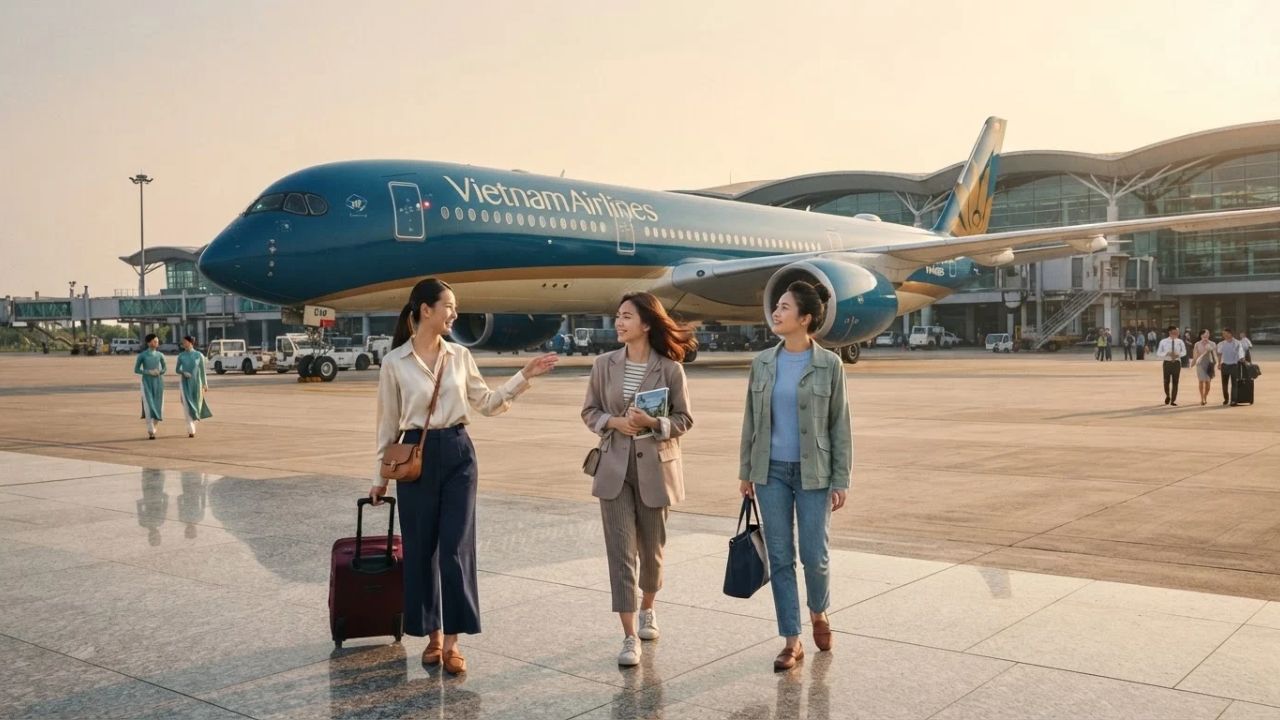
Formalized in Paris before Vietnamese General Secretary and President To Lam and French President Emmanuel Macron, Vietnam Airlines has signed a memorandum of understanding for five additional Airbus A350-900 wide-body jets, anchoring a strategic roadmap to integrate 30 new wide-body aircraft after 2030. The pact deepens a multi-decade aerospace alliance between Hanoi and Toulouse, setting the stage for expanded direct connectivity across Europe, North America, and Australia.
The Local Trend Revealed: Expanding Vietnam's Long-Haul Intercontinental Reach
As Southeast Asia solidifies its position as a global tourism magnet and manufacturing powerhouse, Vietnam’s national flag carrier is scaling its intercontinental operations. The newly signed memorandum of understanding (MoU) with Airbus covers five additional A350-900 wide-body airframes. While the document represents a cooperative framework rather than a finalized commercial purchase contract—requiring subsequent technical evaluations, delivery scheduling, financing agreements, and regulatory approvals—it defines the carrier's capital investment priorities.
The five-aircraft agreement forms the foundation of Vietnam Airlines' broader post-2030 strategy, which targets the acquisition of 30 additional wide-body aircraft. Operating twin-aisle jets is vital for sustaining high-demand intercontinental corridors linking Hanoi's Noi Bai International Airport (HAN) and Ho Chi Minh City's Tan Son Nhat International Airport (SGN) with primary gateways in Paris, Frankfurt, London, San Francisco, and Sydney.
Vietnam Airlines possesses deep institutional experience with the Airbus wide-body program. The flag carrier introduced the A350-900 into commercial service in 2015, making it the second airline in the world to operate the type. Today, the carrier operates 14 Airbus A350 aircraft alongside 67 narrow-body jets from the A320 family, bringing its total Airbus-built fleet to 81 aircraft. To preserve route agility while long-term purchases mature, the airline continues to employ short-term aircraft leases to bridge immediate passenger capacity spikes.
Vietnam Airlines Fleet Structure & A350 Global Footprint
| Operational Category | Current Figures & Milestones | Strategic Expansion Roadmap |
|---|---|---|
| Current A350 Fleet | 14 Airbus A350-900 aircraft in active service | Deployed on flagship European, Australian, and East Asian corridors |
| New Paris Agreement | 5 additional Airbus A350-900 jets under MoU | Signed in Paris before President To Lam and President Emmanuel Macron |
| Total Airbus Fleet | 81 aircraft (14 A350s + 67 A320 family jets) | Simplifies maintenance pooling, pilot type-ratings, and spare parts supply |
| Post-2030 Target | 30 additional wide-body aircraft prioritized | Designed to expand intercontinental frequencies and replace older airframes |
| Global A350 Context | 733 A350 aircraft in service globally (August 2026) | Benchmark twin-engine widebody for long-range fuel efficiency |
On a global scale, Airbus reported 733 A350 aircraft in active airline service by the end of August 2026. By choosing to expand an existing aircraft type rather than onboarding an entirely new wide-body platform, Vietnam Airlines leverages existing maintenance hangars at Noi Bai and Tan Son Nhat, existing flight simulator certifications, and established pilot type-ratings, minimizing fleet transition overhead.
Cultural & Environmental Value: Modern Wings and Heritage Preservation
Investing in modern composite airframes generates tangible environmental and cultural advantages for travelers and local host communities:
- Carbon Reduction & Noise Abatement: The Airbus A350-900 delivers a 25 per cent reduction in fuel consumption and carbon dioxide emissions compared to previous-generation widebodies, alongside a 50 per cent reduction in external noise footprint, mitigating aviation impacts over suburban communities near Hanoi and Ho Chi Minh City.
- Support for Community-Based Tourism: Streamlined international flights bring responsible travelers directly into Vietnam, where the Vietnam National Authority of Tourism (VNAT) actively channels visitor spending into rural heritage circuits—such as homestay networks in Mai Chau and handicraft cooperatives in Bat Trang ceramics village.
- Cultural Exchange and Preserved Traditions: The deepening diplomatic and aviation links between Vietnam and France mirror centuries of architectural and cultural dialogue, visible in Hanoi’s French Quarter, the Hanoi Opera House, and restored heritage colonial villas.
For the traveler, flying aboard modern long-haul aircraft means arriving refreshed, thanks to higher cabin humidity, lower cabin altitude pressurization (set at 6,000 feet), dynamic LED mood lighting, and whisper-quiet twin Rolls-Royce Trent XWB engines.
Visitor Insider Tips: Navigating Vietnam Like a Cultural Expert
International travelers planning a journey to Vietnam should consider these insider logistical and cultural guidelines:
- Optimal Regional Visit Windows: Vietnam spans distinct climatic zones:
- Northern Vietnam (Hanoi, Ha Long Bay, Sapa): October to April offers dry, mild weather ideal for trekking and bay cruises.
- Central Vietnam (Hue, Da Nang, Hoi An): February to July provides sunny, calm beach and exploration conditions.
- Southern Vietnam (Ho Chi Minh City, Mekong Delta): November to April represents the dry season with lower humidity.
- Transit and Rail Connections: When arriving via long-haul flights at Noi Bai (HAN) or Tan Son Nhat (SGN), utilize official airport taxi queues (Vinasun or Mai Linh) or ride-hailing apps like Grab to avoid unregistered private touts. For domestic journeys between Hanoi and Hue, consider the Reunification Express train to view dramatic coastal cliffs along the Hai Van Pass.
- Hidden Cultural Sanctuaries:
- Bai Tu Long Bay: An unspoiled northeastern neighbor to Ha Long Bay featuring identical limestone karst formations without heavy vessel congestion.
- Trang An Scenic Complex (Ninh Binh): Located 90 minutes south of Hanoi, explore UNESCO-listed karst river caves by traditional hand-rowed wooden sampan.
- Tho Ha Village (Bac Giang): An authentic village known for traditional terracotta architecture and drying rice paper sheets lining centuries-old brick alleys.
- Cultural Etiquette Guidelines: When visiting Buddhist pagodas and historical memorials (such as the Temple of Literature or Tran Quoc Pagoda), dress modestly with knees and shoulders covered. Always remove shoes before entering private homes or sacred halls, and present business cards or payments using both hands as a sign of respect.
- Local Culinary Specialties:
- Hanoi Old Quarter: Enjoy authentic Pho Bo (aromatic beef bone broth simmered for 12 hours with star anise and fresh rice noodles) or Bun Cha (grilled pork patties served over rice vermicelli and fresh herb platters).
- Cha Ca La Vong: Pan-seared turmeric-marinated catfish tossed table-side with fresh dill and scallions, paired with roasted peanuts and shrimp paste sauce.
- Authentic Beverage Tradition: Sip rich, slow-dripped Vietnamese iced coffee (Ca Phe Sua Da) sweetened with condensed milk, or sample Hanoi's iconic whipped egg coffee (Ca Phe Trung).
Tourism Outlook: Strengthening Vietnam as Southeast Asia's Aviation Hub
The expansion of Vietnam Airlines’ long-haul wide-body fleet signals a mature phase for the country's travel sector. As the carrier evaluates technical specifications for its five proposed A350-900s and plans for 30 additional wide-body acquisitions beyond 2030, Vietnam is building the aviation infrastructure necessary to compete directly with regional transit hubs like Bangkok and Singapore.
By connecting intercontinental travelers to Vietnam’s culinary heritage, UNESCO World Heritage sites, and coastal sanctuaries aboard next-generation aircraft, the nation reinforces sustainable tourism growth while preserving the authentic community traditions that define its cultural identity.
Related Travel Guides
Disclaimer
This article is for informational and educational purposes only. It does not constitute legal, financial, or professional advice. While we strive to provide accurate and up-to-date information, travel policies, regulations, and conditions change rapidly. Always verify information with official sources before making travel decisions. Nomad Lawyer makes no representations about the accuracy, reliability, completeness, or suitability of the information provided. Readers should consult qualified professionals for advice specific to their circumstances. The views expressed in this article are those of the author and do not necessarily reflect the views of Nomad Lawyer.
Kunal K Choudhary
Co-Founder & Contributor
A passionate traveller and tech enthusiast. Kunal contributes to the vision and growth of Nomad Lawyer, bringing fresh perspectives and driving the community forward.
Learn more about our team →