
Aviation Shift: Vietnam Overtakes Thailand in Scheduled Airline Capacity
Vietnam has overtaken Thailand in scheduled departing seats, recording 7.27 million seats in August 2026 to become the second-largest ASEAN aviation market.

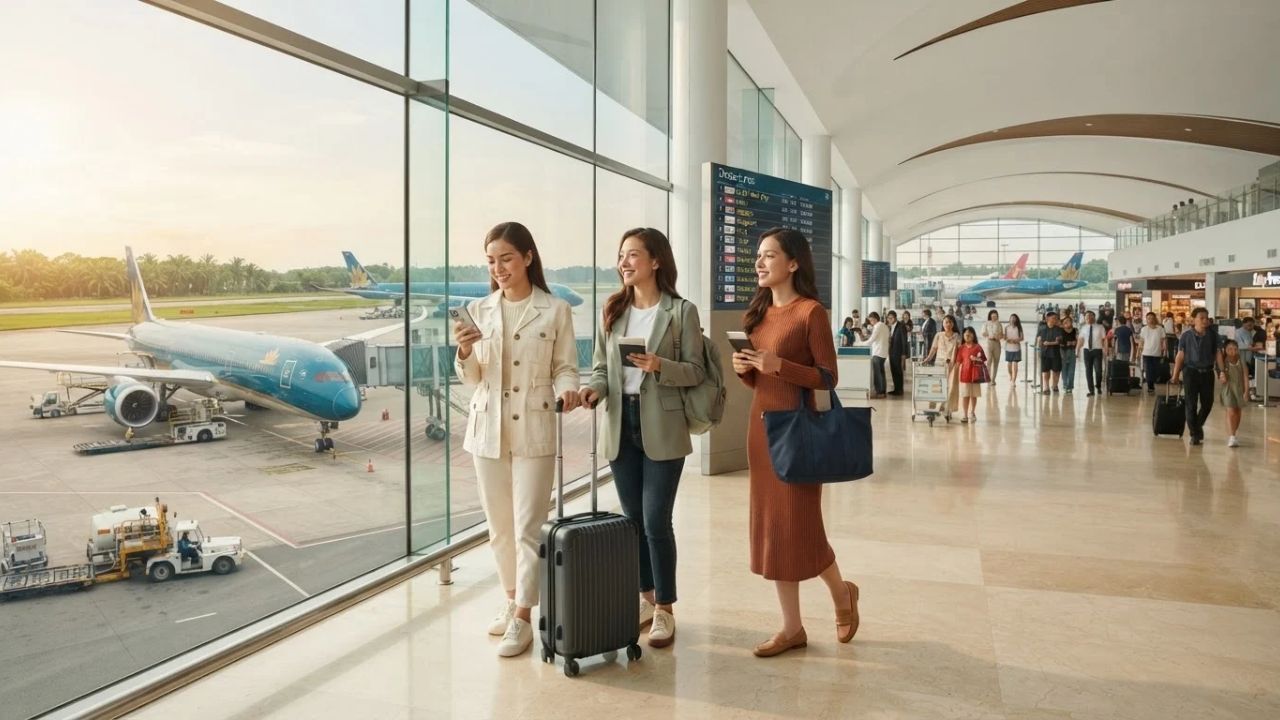
Image generated by AI
Vietnam has overtaken Thailand in scheduled departing seats, recording 7.27 million seats in August 2026 to become the second-largest aviation market in Southeast Asia. This growth of 10 percent year-on-year is driven by a domestic expansion of 13.8 percent and record-breaking tourism inflows.
The Shift to Emerging Hubs in Southeast Asia
A significant development in regional aviation is the relocation of airline capacity toward emerging markets. Historically, Thailand and Indonesia dominated scheduled departing seats, with Bangkok Suvarnabhumi functioning as the primary gateway for international transfers. In 2026, the ASEAN aviation map is being reshaped by Vietnam's rapid expansion of domestic routes and local carrier fleet upgrades.
While Thailand faces a slowdown in low-cost carrier seat volumes—declining by 4.9 percent across the region—Vietnam has capitalized on simplified visa rules and route networks. This capacity crossover is set to expand as Vietnam prepares to open its new Long Thanh International Airport.
Domestic and Fleet Expansion in Vietnam
Vietnam's domestic market is one of the strongest engines behind the capacity shift:
- Domestic Seat Growth: Scheduled domestic seat capacity jumped 13.8 percent year-on-year in August 2026, representing about 575,400 additional seats.
- Passenger Volumes: The Civil Aviation Authority of Vietnam (CAAV) reported that the country's aviation market handled 45.49 million passengers during the first six months of 2026, up 9.8 percent.
- Cargo Shipments: Cargo handled rose 16.4 percent to 813,200 tonnes.
- Operating Fleets: By the end of June, Vietnamese carriers operated 225 aircraft, an increase of 21 jets compared to the previous year.
- Weekly Flights: Airlines are operating 6,094 domestic flights each week during the summer season, representing 1,816 more weekly flights than in summer 2025.
These indicators demonstrate the structural growth of Vietnam's domestic aviation infrastructure.
International Route Networks and Tourism Drivers
Expanded international flights are attracting record visitor numbers:
- Carrier Count: Four domestic airlines and 77 foreign airlines operate regular international flights to Vietnam during the summer season.
- International Flights: Carriers operate 3,089 weekly international round trips, representing 273 more weekly services, up nearly 10 percent.
- Visitor Inflows: Vietnam welcomed 13.9 million international visitors between January and July 2026, a growth of 13.8 percent. July alone recorded 1.67 million international visitor arrivals.
Favorable visa policies and active tourism promotion programs support this ongoing international growth cycle.
Scheduled Airline Capacity Comparisons
Recent OAG data highlights the changes in regional rankings and carrier capacities:
- Vietnam Capacity: Offers 7.27 million scheduled departing seats in August 2026, up 10 percent year-on-year.
- Thailand Capacity: Offers 7.19 million scheduled seats, a decline of 1.7 percent. The capacity gap stands at approximately 80,000 seats.
- Indonesia Capacity: Remains the largest market with 11.01 million seats.
- Regional Total: Southeast Asia has about 51 million scheduled seats in August, up 0.8 percent.
- Mainline Carrier Growth: Mainline carriers account for 56 percent of regional capacity (28.5 million seats), while budget carrier capacity fell 4.9 percent to 22.5 million seats.
- Carrier Performance: Vietnam Airlines is the region's capacity leader with 2.80 million seats (up 8.2 percent), while Thai AirAsia declined 23.4 percent to 1.44 million seats, and AirAsia fell 17 percent.
- Thai Airports: Bangkok Don Mueang, heavily used by budget lines, fell 7.5 percent to 1.52 million seats, while Suvarnabhumi grew 1 percent to 3.22 million seats.
Despite the shift, Suvarnabhumi remains a major hub, capable of processing 190,000 daily passengers, with 70,000 arrivals and immigration flows of 5,000 to 6,000 travelers per hour. Airports of Thailand (AoT) reported 90.98 million passengers in the first eight months of fiscal 2026, up 2.76 percent.
Long Thanh International Airport Trial and Launch
Vietnam's new mega-airport is scheduled to begin operations:
- Trial Operations: Scheduled from September to November 2026.
- Commercial Launch: Target date is December 1, 2026.
- Design Capacity: Phase one is designed to handle 25 million passengers and 1.2 million tonnes of cargo annually.
- Route Transition: International flights will transfer from Tan Son Nhat to Long Thanh in stages during 2027, starting voluntarily before long-haul international flights transfer.
The opening of this facility is expected to accelerate Vietnam's capacity growth.
Vietnam and Thailand Aviation Performance Indicators
The table below breaks down the seat capacities, passenger volumes, and airport launch schedules for the two competing aviation markets:
| Aviation Indicator | Vietnam Performance (2026) | Thailand Performance (2026) | regional Context (ASEAN) |
|---|---|---|---|
| Scheduled Departing Seats | 7.27 million seats (Up 10% YoY) | 7.19 million seats (Down 1.7% YoY) | Total market: 51 million seats |
| National Capacity Leader | Vietnam Airlines (2.80M seats) | Thai AirAsia (1.44M seats; Down 23.4%) | Mainline carriers: 56% share |
| Aviation Authority Data | 45.49 million passengers (CAAV) | 90.98 million passengers (AoT) | Cargo: 813,200 tonnes (Vietnam) |
| Primary Hub Capacity | Tan Son Nhat & Long Thanh | Suvarnabhumi (190K daily passengers) | Suvarnabhumi: 3.22M seats (Up 1%) |
| Airport Launch Target | Long Thanh: Dec 1, 2026 (Trials Sep-Nov) | Suvarnabhumi expansion | Long Thanh phase 1: 25M capacity |
These metrics show the seat capacities, carrier statistics, and airport timelines established for both countries.
Resource Stewardship and Regional Transport Efficiency
For the traveler, the real benefit of choosing airlines that optimize seat capacity is the reduction in fuel consumption per passenger-mile. Modernizing airline fleets to include next-generation twin-engine aircraft helps lower the environmental impact of regional air travel.
Additionally, shifting international flights to the new Long Thanh International Airport allows operators to implement modern waste-treatment and energy-efficient building systems from day one. Supporting rail connections between airport terminals and metropolitan centers prevents city road congestion and lowers taxi emissions.
For example, you can explore the dynamics of Terminal Surge: Dubai Airport Prepares for 3.7 Million Returning Travelers to see how other airports manage passenger growth. For budget-conscious travelers, checking regional flight guides mirrors similar capacity shifts, such as the Vietjet Colombo Ho Chi Minh City Direct Flights updates. This trend is similar to the tourism growth seen in other destinations, as detailed in our guide on how Utica, New York Emerges as an Affordable Northeast Tourism Hub.
Visitor Insider Tips: Traveling in Southeast Asia
If you are planning to travel through the region during this transition period, keep these practical tips in mind:
- Track Ho Chi Minh City Terminals: When booking flights for late 2026 or 2027, verify whether your flight is scheduled for Tan Son Nhat or the new Long Thanh International Airport.
- Reserve Domestic Tickets Early: With domestic capacity rising, popular routes (like Hanoi to Ho Chi Minh City) fill quickly. Book with Vietnam Airlines in advance.
- Utilize Automated Smart Gates: Use the automated immigration gates at Bangkok Suvarnabhumi to avoid queues during peak arrival hours.
- Prepare for International Arrivals: Check tourist visa requirements for Vietnam in advance to take advantage of simplified entry procedures.
- Confirm Budget Connection Times: If booking flights with low-cost carriers, allow additional transfer buffers as budget airline capacities decline.
Long-Term Outlook for Southeast Asian Aviation
The long-term outlook for Southeast Asian aviation is focused on expanding regional airport infrastructure, implementing digital immigration screening, and transitioning to sustainable aviation fuel (SAF). As passenger traffic grows, civil aviation authorities will rely on hub coordination to manage airspace slots.
By building modern gateways and supporting regional carrier growth, the region aims to maintain a competitive travel network.
FAQ
When did Vietnam overtake Thailand in scheduled airline capacity?
Vietnam moved ahead of Thailand in scheduled departing seats in August 2026, recording 7.27 million seats compared to Thailand's 7.19 million.
When will Long Thanh International Airport open?
Long Thanh is scheduled to run trial operations from September to November 2026, with commercial operations targeted to start on December 1, 2026.
Which carrier is Southeast Asia's capacity leader?
Vietnam Airlines is the largest carrier by scheduled seat capacity, offering 2.80 million seats in August 2026.
How much did domestic capacity grow in Vietnam?
Scheduled domestic seat capacity rose 13.8 percent year-on-year, adding approximately 575,400 domestic seats.
Stay updated on the route networks and airport developments shaping Southeast Asian travel.
Related Travel Guides
Disclaimer
This article is for informational and educational purposes only. It does not constitute legal, financial, or professional advice. While we strive to provide accurate and up-to-date information, travel policies, regulations, and conditions change rapidly. Always verify information with official sources before making travel decisions. Nomad Lawyer makes no representations about the accuracy, reliability, completeness, or suitability of the information provided. Readers should consult qualified professionals for advice specific to their circumstances. The views expressed in this article are those of the author and do not necessarily reflect the views of Nomad Lawyer.
Raushan Kumar
Founder & Lead Developer
Full-stack developer with 11+ years of experience and a passionate traveller. Raushan built Nomad Lawyer from the ground up with a vision to create the best travel and law experience on the web.
Learn more about our team →