
Venezuela Declares State of Emergency After Massive 7.2 and 7.5 Magnitude Earthquakes
A catastrophic seismic event west of Caracas has left dozens dead, hundreds injured, and the nation's primary internatio

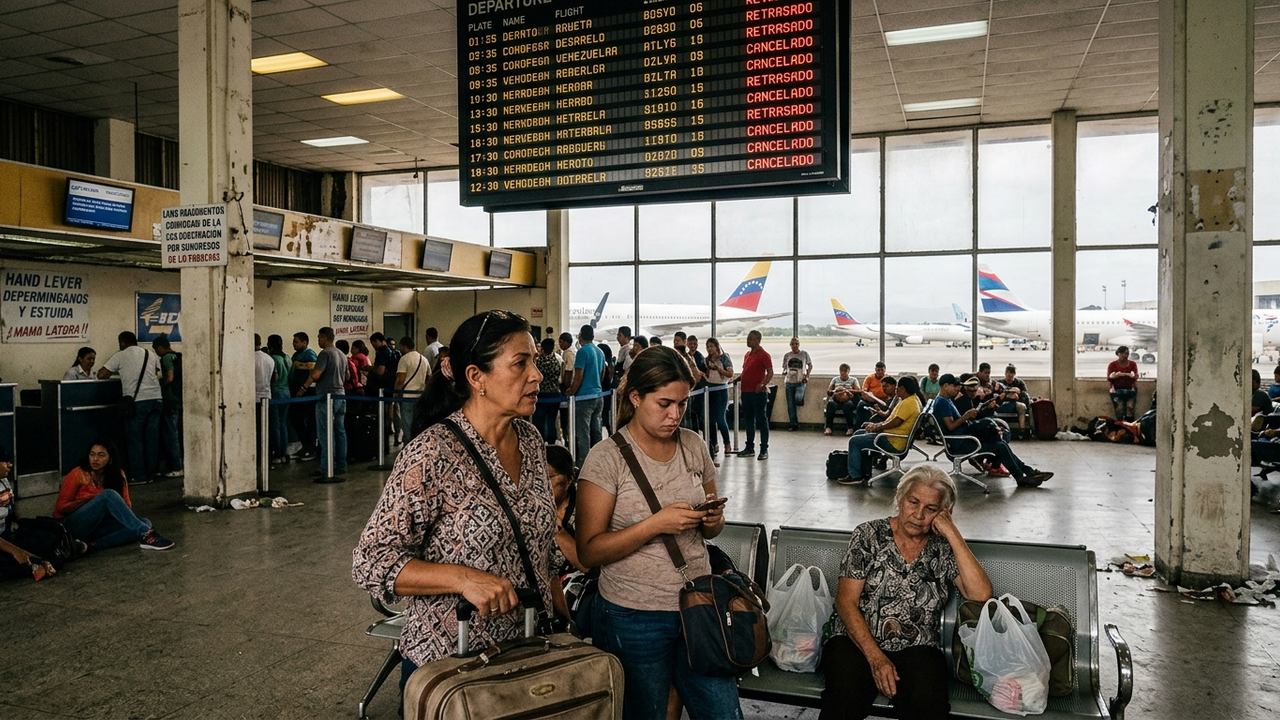
Image generated by AI
National Crisis Following Twin Seismic Shocks
Venezuela has entered a state of national emergency after being struck by two powerful earthquakes measuring 7.2 and 7.5 magnitude. The tremors, which occurred west of the capital, Caracas, caused extensive urban destruction, the collapse of residential and public buildings, and a significant loss of life.
The disaster began on Wednesday afternoon with an initial 7.2 magnitude shock, followed less than a minute later by a more powerful 7.5 magnitude tremor. The immediate aftermath was compounded by approximately 20 aftershocks, which continued to destabilize damaged structures and endanger both survivors and first responders.
Critical Infrastructure Failure and Aviation Disruptions
The earthquake has severely impacted Venezuela's transportation network, most notably the total shutdown of Maiquetía International Airport. As the country's primary gateway for international travel and cargo, the airport's closure due to structural damage has created a critical bottleneck.
This aviation blackout has resulted in:
- Flight Cancellations: All scheduled international arrivals and departures are halted.
- Humanitarian Delay: The inability to use the main airport complicates the rapid entry of foreign search-and-rescue teams and emergency medical supplies.
- Stranded Passengers: Foreign nationals and Venezuelans abroad are facing significant disruptions in their ability to enter or exit the country.
Regional Impact and Humanitarian Toll
The coastal state of La Guaira has been identified as one of the most devastated areas, with numerous buildings reduced to rubble. Emergency crews, including civil protection and firefighting units, are currently working through debris to locate survivors.
In Caracas, the tremors struck during a public holiday, meaning many residents were at home when the shaking began. This timing contributed to the widespread panic and the number of injuries reported as people attempted to evacuate high-rise buildings.
Casualty and Damage Summary
| Category | Detail |
|---|---|
| Primary Magnitude | 7.2 and 7.5 |
| Confirmed Fatalities | 32 |
| Reported Injuries | Approximately 700 |
| Worst Hit Region | La Guaira & Caracas |
| Critical Facility Closed | Maiquetía International Airport |
| Aftershocks | ~20 recorded |
International Response and Tsunami Alerts
The United States has mobilized disaster response teams and medical supplies, coordinating with Venezuelan authorities to provide urgent humanitarian aid. International efforts are currently focused on the "golden 72 hours," the critical window for locating survivors trapped in collapsed structures.
Initially, the seismic activity triggered tsunami warnings across the Caribbean, affecting Puerto Rico, the U.S. and British Virgin Islands, Aruba, Curaçao, and Bonaire. However, these alerts have since been lifted after Colombian and regional disaster management agencies confirmed there was no ongoing threat to coastal communities.
Long-Term Recovery Challenges
The road to recovery for Venezuela will be extensive. Beyond the immediate need for food, clean water, and temporary shelter, the government faces the monumental task of conducting structural integrity audits on thousands of buildings. The restoration of power, water, and communication networks remains a priority, as does the repair of Maiquetía International Airport to resume essential global connectivity.
Key Takeaways
- Twin Disasters: Two massive quakes (7.2 and 7.5 magnitude) struck west of Caracas in rapid succession.
- Aviation Halt: Maiquetía International Airport is closed due to structural damage, hindering aid and travel.
- Human Toll: 32 confirmed dead and roughly 700 injured, with La Guaira being the hardest-hit area.
- State of Emergency: A national emergency has been declared to accelerate the deployment of security and medical resources.
- Global Aid: The U.S. and other international partners are mobilizing search-and-rescue and medical support.
FAQ
Is Maiquetía International Airport still closed? Yes, the airport remains shut down due to structural damage. Travelers are advised to monitor their airlines for updates.
Was there a tsunami? While tsunami alerts were issued for Puerto Rico and several Caribbean islands, they were subsequently lifted after the risk was deemed negligible.
Which areas were most affected? The coastal state of La Guaira suffered the heaviest structural collapse, while the capital, Caracas, experienced widespread panic and infrastructure damage.
Related Travel Guides
Disclaimer
This article is for informational and educational purposes only. It does not constitute legal, financial, or professional advice. While we strive to provide accurate and up-to-date information, travel policies, regulations, and conditions change rapidly. Always verify information with official sources before making travel decisions. Nomad Lawyer makes no representations about the accuracy, reliability, completeness, or suitability of the information provided. Readers should consult qualified professionals for advice specific to their circumstances. The views expressed in this article are those of the author and do not necessarily reflect the views of Nomad Lawyer.
Raushan Kumar
Founder & Lead Developer
Full-stack developer with 11+ years of experience and a passionate traveller. Raushan built Nomad Lawyer from the ground up with a vision to create the best travel and law experience on the web.
Learn more about our team →