
Vande Bharat Sleeper Mumbai-Bengaluru Launch: Premium Overnight Rail 2026
Indian Railways approves its second Vande Bharat Sleeper service on the Mumbai-Bengaluru corridor in 2026, delivering faster overnight rail travel as a premium alternative to flights and conventional express trains.

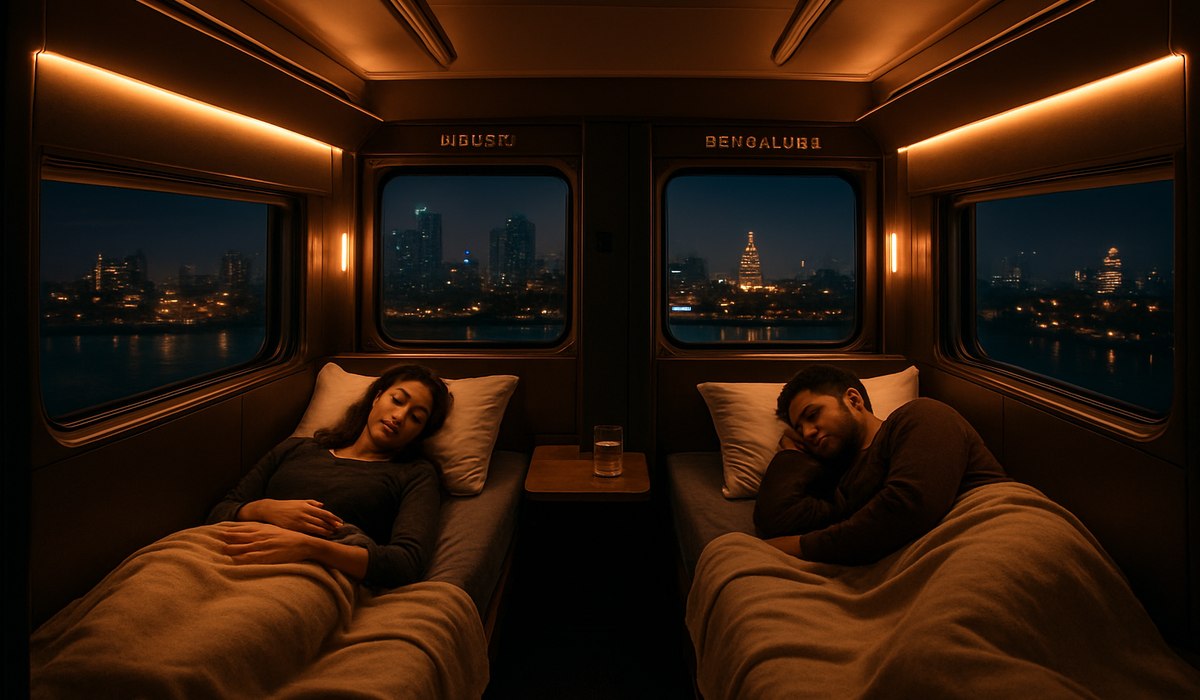
Image generated by AI
India's Second Vande Bharat Sleeper Redefines Premium Overnight Rail
Indian Railways has greenlit its second Vande Bharat Sleeper service, with the new route launching between Mumbai's Chhatrapati Shivaji Maharaj Terminus and Bengaluru City station. This milestone marks a significant expansion of India's semi high-speed sleeper network beyond initial pilot corridors into one of the country's most competitive and high-demand intercity markets. The approval signals Indian Railways' confidence in positioning premium overnight rail as a direct competitor to short-haul flights and conventional express trains on routes where time-conscious travelers dominate passenger flows.
Overnight Game-Changer on a High-Demand Corridor
The Mumbai-Bengaluru corridor ranks among India's busiest travel routes, connecting the nation's financial capital with its technology hub through a distance of approximately 1,200 kilometers. Currently, the Udyan Express serves as the primary direct overnight connection, typically requiring 20 hours or more to complete the journey. This lengthy travel time has increasingly pushed business travelers, IT professionals, and students toward early-morning flights or longer bus journeys, eroding rail's market share on a corridor where demand remains robust.
The Vande Bharat Sleeper arrives as a transformational response to this market dynamic. Unlike conventional overnight expresses, the new service combines modern semi high-speed capabilities with fully air-conditioned sleeper accommodation designed for premium comfort. Industry analysts describe this approach as Indian Railways' strategic move to recapture market segments that view overnight trains not as budget options but as time-efficient, comfortable alternatives to flying. The Howrah-Kamakhya Vande Bharat Sleeper in eastern India established the template; Mumbai-Bengaluru extends this success model to India's economically vital western and southern regions, where such connectivity commands substantial passenger premiums and operational efficiency gains.
Faster Timings and a Sharper Competitive Edge
Transport analysts tracking Indian Railways' modernization initiatives report that the Vande Bharat Sleeper on the Mumbai-Bengaluru corridor could reduce journey time to 17–18 hours, compared with the current 20+ hour baseline. While operational speeds on this route will remain below the 180 km/h maximum tested elsewhere due to track curves, gradients, and mixed traffic conditions, the combination of faster acceleration, higher cruising velocity, and limited station halts delivers measurable time savings. These operational improvements directly address the primary complaint about conventional overnight rail: excessive travel duration that compresses sleeping hours and arrival flexibility.
For price-sensitive travelers, the time advantage matters less; for premium passengers, it becomes decisive. A Vande Bharat Sleeper schedule enabling late-evening departure and mid-to-late morning arrival creates a compelling value proposition against red-eye aviation, where airport transfers and early check-in requirements consume productive morning hours. When combined with fully air-conditioned comfort and no baggage fees, this positioning targets the weekly commuter, project-based consultant, and family visitor segments that currently split their loyalty between flight and rail. The semi high-speed rail platform's punctuality record—critical for business travel—further strengthens competitive positioning against conventional expresses plagued by chronic delays and congestion-related slowdowns.
What the Vande Bharat Sleeper Offers Travelers
The Mumbai-Bengaluru Vande Bharat Sleeper represents a category upgrade in India's overnight rail experience. Technical specifications and design briefs indicate fully air-conditioned sleeper coaches with ergonomically engineered berths, enhanced suspension systems, advanced noise insulation, and modernized washroom facilities that rival premium hotel standards. The design philosophy targets what industry observers term a "Rajdhani-level experience at Vande Bharat speeds"—combining reduced passenger density, improved privacy, integrated safety features, and streamlined food service with pre-booked meal arrangements.
Upper berth access receives particular attention, with integrated ladders and handholds minimizing safety risks and accessibility challenges found on conventional sleeper stock. Lighting systems employ energy-efficient LED technology with adjustable intensity to support restful sleep. Vestibule redesigns reduce vibration transmission from the track, addressing a persistent passenger complaint about traditional sleeper coaches. These amenities position the service in the premium market segment, with fares reflecting the enhanced comfort, reliability, and operational efficiency. Indian Railways' intent to operate this train as a daily service ensures consistent availability for regular travelers, addressing another frustration with conventional expresses that may operate only 4–5 days weekly on secondary routes.
Market Implications and Industry Response
The Vande Bharat Sleeper's approval on the Mumbai-Bengaluru corridor signals Indian Railways' strategic confidence in scaling this platform across high-traffic metropolitan pairs. Sector analysts describe the move as recognition that overnight train travel—when combined with speed, comfort, and reliability—commands premium pricing and attracts affluent, time-conscious passengers previously written off as "aviation-locked" markets. This repositioning has broader implications for India's rail sector, shifting perception from budget-oriented long-distance rail toward a premium mobility segment competing directly with domestic airlines.
Competition regulators and aviation industry observers note that railway expansion into premium overnight markets could moderate pricing on short-haul flights, where unchecked growth has created affordability gaps for mid-market travelers. For airport operators and airlines, the Vande Bharat Sleeper represents a tangible competitive threat on trunk routes; for logistics and freight operators, it demonstrates Indian Railways' commitment to passenger revenue streams that finance network maintenance and expansion. Regional governments in Maharashtra and Karnataka have supported the initiative as a sustainable mobility solution reducing road congestion and associated environmental costs while strengthening intercity connectivity beyond flight-served cities.
Key Data: Vande Bharat Sleeper Mumbai-Bengaluru Service
| Metric | Current Udyan Express | Vande Bharat Sleeper (Projected) |
|---|---|---|
| Route Distance | ~1,200 km | ~1,200 km |
| Journey Duration | 20+ hours | 17–18 hours |
| Maximum Operating Speed | 110–120 km/h | Up to 160+ km/h |
| Accommodation Type | Conventional ICF/LHB sleeper | Modern air-conditioned sleeper |
| Daily Service Frequency | 1 daily | 1 daily (fully air-conditioned) |
| Departure Window | Evening (varies) | Late evening (optimized) |
| Arrival Window | Late afternoon/evening | Mid-to-late morning |
| Typical Travel Cost | ₹2,000–3,500 | ₹4,000–6,500+ (estimated) |
| Key Competitor | Early-morning flights | Red-eye/overnight aviation |
What This Means for Travelers
The Mumbai-Bengaluru Vande Bharat Sleeper launch reshapes overnight rail economics on one of India's highest-demand intercity corridors. Here are the key implications:
-
Time Savings for Premium Commuters: Three hours of journey-time reduction enables more productive sleep, reduced airport transfer fatigue, and arrival timing aligned with business hours rather than mid-afternoon chaos.
-
New Competitive Pricing Reality: Premium fares (estimated ₹4,000–6,500) position the service above conventional sleepers but at parity with or below bundled flight costs when factoring baggage, transfers, and arrival timing inefficiencies.
-
Improved Comfort Standards: Air-conditioning, modern berths, and hygiene facilities eliminate traditional overnight rail complaints, making the journey an asset rather than endurance test for business travelers.
-
Weekly Traveler Advantage: The daily frequency and stream
Disclaimer
This article is for informational and educational purposes only. It does not constitute legal, financial, or professional advice. While we strive to provide accurate and up-to-date information, travel policies, regulations, and conditions change rapidly. Always verify information with official sources before making travel decisions. Nomad Lawyer makes no representations about the accuracy, reliability, completeness, or suitability of the information provided. Readers should consult qualified professionals for advice specific to their circumstances. The views expressed in this article are those of the author and do not necessarily reflect the views of Nomad Lawyer.
Preeti Gunjan
Contributor & Community Manager
A passionate traveller and community builder. Preeti helps grow the Nomad Lawyer community, fostering engagement and bringing the reader experience to life.
Learn more about our team →