
Vande Bharat Express Transforms Delhi Tourism: High-Speed Rail Access to Jaipur, Varanasi and Dehradun in 2026
India's Vande Bharat Express is revolutionizing domestic tourism by providing semi-high-speed connectivity from Delhi to key spiritual and heritage hubs, enabling shorter, more frequent travel experiences.

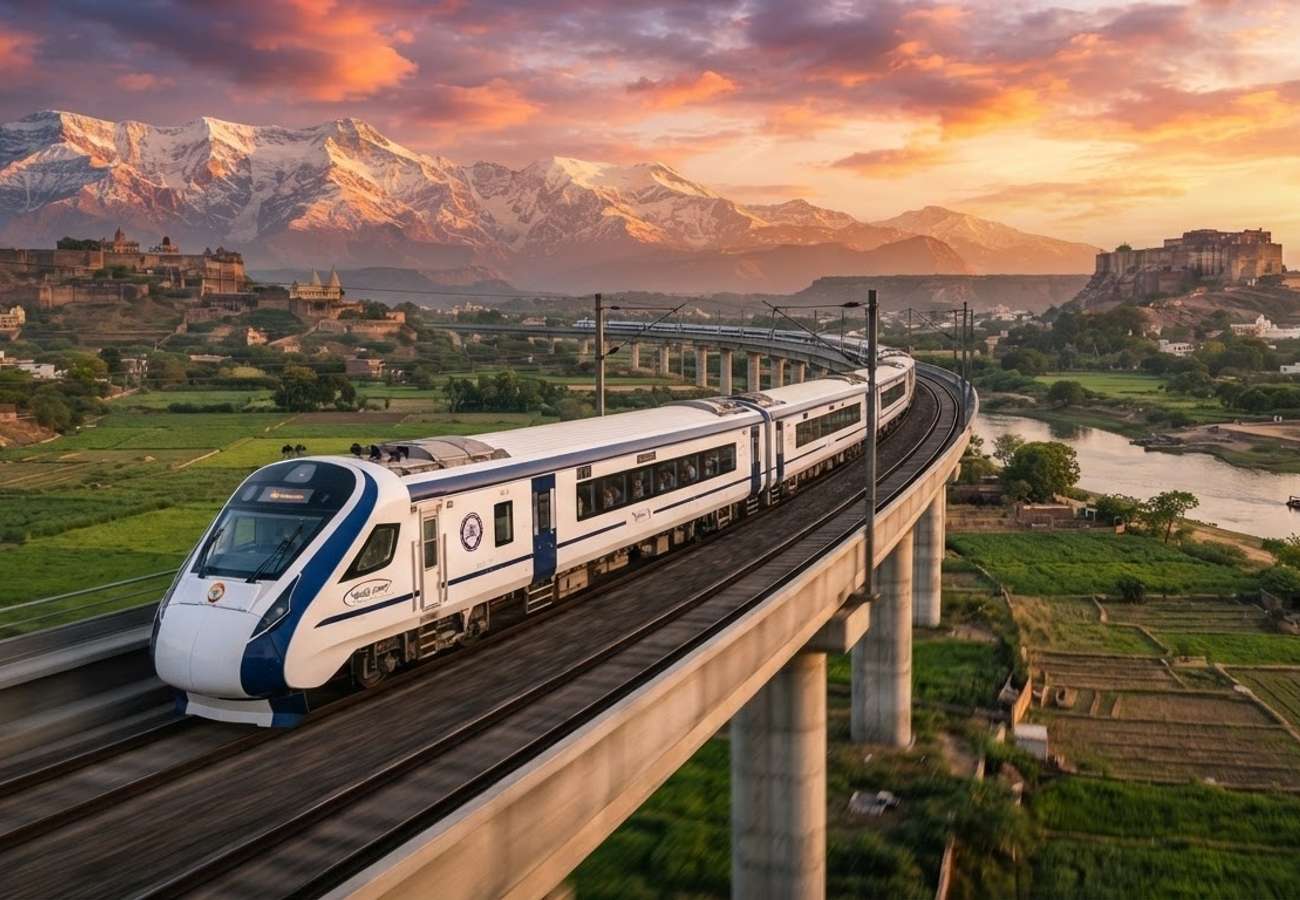
Image generated by AI
The expansion of the Vande Bharat Express network is fundamentally altering how residents of the national capital consume travel, turning multi-day excursions into manageable short-burst trips. By slashing transit times to heritage and spiritual hubs, these semi-high-speed trains are democratizing access to India's most iconic landmarks.
Redefining the Short-Break Travel Model
The Vande Bharat Express has shifted the domestic tourism paradigm in North India. For travelers unable to commit to lengthy vacations, the semi-high-speed network provides a viable alternative for visiting mountain gateways, royal cities, and cultural centers.
While the feasibility of a same-day return depends heavily on specific train schedules, the current infrastructure allows for early morning departures and evening returns to Delhi. This efficiency is driving a surge in "micro-tourism," where passengers utilize the rail network for targeted, high-impact visits to specific regional attractions.
Strategic Destinations Accessible via Vande Bharat
The connectivity from Delhi now spans a diverse array of geographical and cultural landscapes, ranging from the deserts of Rajasthan to the foothills of the Himalayas.
Royal Heritage in Jaipur and Ajmer
Rajasthan has become one of the most accessible regions for Delhi-based travelers. The Vande Bharat connection to Ajmer significantly eases entry into Jaipur, the "Pink City."
A condensed itinerary in Jaipur typically focuses on:
- Architectural Icons: Hawa Mahal and the City Palace.
- Fortifications: The grandeur of Amber Fort.
- Local Culture: Traditional Rajasthani cuisine and handicraft markets in the old city.
Ajmer serves as another critical node, offering spiritual access to the Ajmer Sharif shrine and scenic views at Ana Sagar Lake. While some travelers attempt to include Pushkar in their trip, the tight scheduling of semi-high-speed rail requires precise planning to avoid missing return departures.
Natural Retreats in Dehradun
For those seeking an escape from urban congestion, the Delhi–Dehradun route provides a rapid transition to the Uttarakhand foothills. This service allows for a relaxed city experience without the need for a full holiday itinerary.
Key highlights for short-duration visitors include:
- Nature Spots: Robber’s Cave and the scenic Sahastradhara.
- Urban Leisure: Regional cafes and local food hubs.
To maximize the experience, travelers are encouraged to focus on Dehradun's immediate surroundings rather than attempting to reach deeper hill stations within a single-day window.
Modernism and Planning in Chandigarh
Unlike the heritage-heavy routes, the Delhi–Chandigarh service caters to those interested in urban design and modernist architecture. The route makes the city's organized layout accessible for a quick exploration.
Visitors typically prioritize:
- The Rock Garden: A world-renowned example of recycled art.
- Sukhna Lake: A peaceful retreat for walking and relaxation.
- Architectural Tours: Exploring the city's unique planned grid and green spaces.
Spiritual Immersion in Varanasi
The connection to Varanasi is one of the most ambitious offerings in the network. While the Vande Bharat Express has reduced the friction of traveling to Uttar Pradesh, this route demands the most rigorous planning due to the distance.
Experienced travelers focusing on a short window typically target:
- The Ghats: A walk along the historic riverfront.
- Old City Lanes: Navigating the dense, spiritual heart of the city.
- Ganga Aarti: The famous evening prayer ceremony along the river.
Impact on Domestic Tourism Infrastructure
The growth of the Vande Bharat network is not merely about speed; it is about the creation of new tourism corridors. By reducing travel challenges, the Indian rail system is encouraging a higher frequency of trips, which in turn boosts local economies in the destination cities.
The transition to semi-high-speed rail has made luxury and efficiency accessible to a broader demographic, moving away from the slow-paced travel of the past toward a more dynamic, "on-demand" style of tourism.
Vande Bharat Connectivity Overview
| Destination | Primary Appeal | Key Attractions | Travel Profile |
|---|---|---|---|
| Jaipur | Royal Heritage | Hawa Mahal, Amber Fort, City Palace | High-Efficiency Heritage Trip |
| Dehradun | Nature/Himalayan | Robber's Cave, Sahastradhara | Relaxed Nature Escape |
| Chandigarh | Modern Architecture | Rock Garden, Sukhna Lake | Urban Exploration |
| Varanasi | Spirituality | Ganga Ghats, Evening Aarti | Ambitious Cultural Journey |
| Ajmer | Spiritual/History | Ajmer Sharif Shrine, Ana Sagar Lake | Focused Spiritual Visit |
Key Takeaways for Travelers
- Efficiency: Semi-high-speed rail makes same-day or overnight trips to major North Indian hubs feasible.
- Planning: Due to the fixed nature of Express schedules, itinerary precision is mandatory to ensure return transit.
- Diversity: The network allows for a variety of experiences—from the spiritual (Varanasi) to the architectural (Chandigarh)—within a few hours of Delhi.
- Sustainability: The shift toward rail reduces reliance on road travel for short-distance domestic tourism.
Frequently Asked Questions
Can I actually do a same-day return trip from Delhi? Yes, for destinations like Jaipur and Chandigarh, it is possible with early departures and evening returns, provided you book your tickets in advance and stick to a strict itinerary.
Which is the best Vande Bharat route for a nature escape? The Delhi–Dehradun route is the ideal choice for those seeking greenery and a break from the city.
Is the Varanasi trip recommended for a single day? It is possible but demanding. It is recommended only for experienced travelers who focus on a few specific highlights like the Ghats and the Aarti.
The evolution of India's rail network is turning the national capital into a launchpad for rapid cultural discovery.
Related Travel Guides
Disclaimer
This article is for informational and educational purposes only. It does not constitute legal, financial, or professional advice. While we strive to provide accurate and up-to-date information, travel policies, regulations, and conditions change rapidly. Always verify information with official sources before making travel decisions. Nomad Lawyer makes no representations about the accuracy, reliability, completeness, or suitability of the information provided. Readers should consult qualified professionals for advice specific to their circumstances. The views expressed in this article are those of the author and do not necessarily reflect the views of Nomad Lawyer.
Raushan Kumar
Founder & Lead Developer
Full-stack developer with 11+ years of experience and a passionate traveller. Raushan built Nomad Lawyer from the ground up with a vision to create the best travel and law experience on the web.
Learn more about our team →