
Uzbekistan Integrates Ayurvedic Principles with Vegan Uzbek Cuisine in Tashkent to Expand Regional Wellness Tourism Offerings
Uzbekistan adapts traditional dishes into vegan and Ayurvedic options to grow wellness tourism, targeting health-conscious Indian and global visitors.

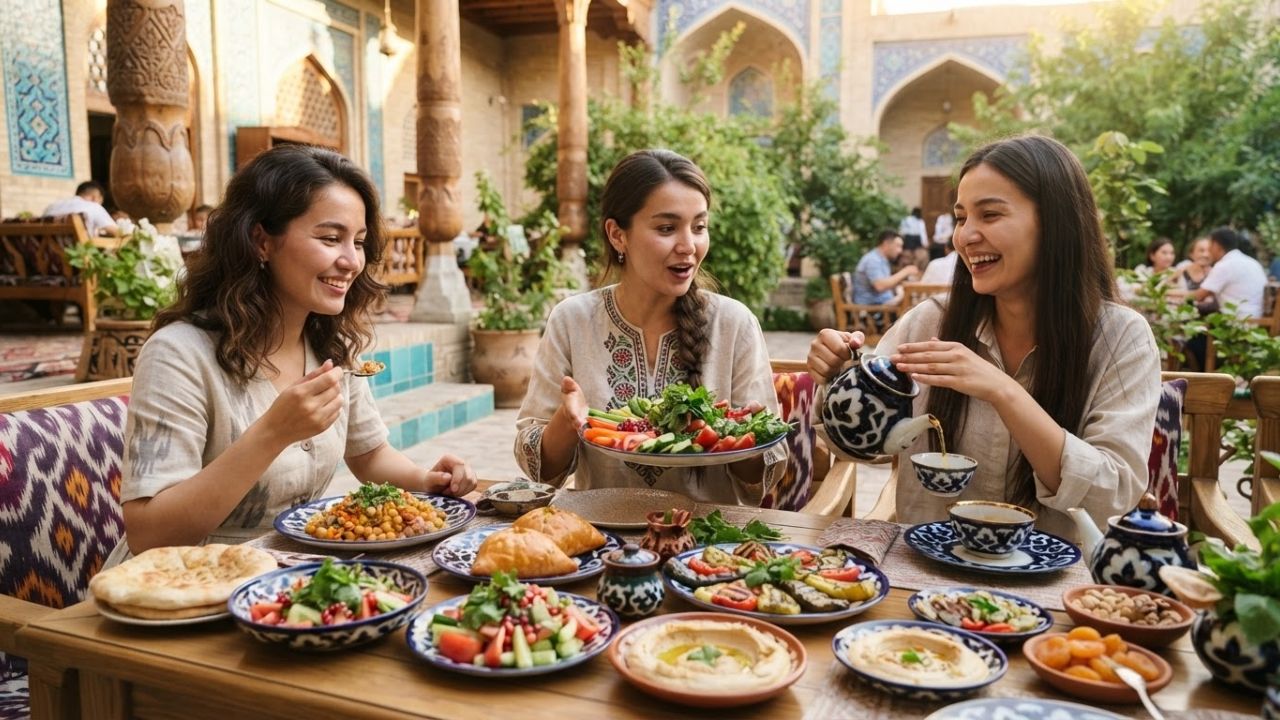
Image generated by AI
Uzbekistan Integrates Ayurvedic Principles with Vegan Uzbek Cuisine in Tashkent to Expand Regional Wellness Tourism Offerings
SEO Title: Uzbekistan Wellness Tourism: Vegan & Ayurvedic Menus Meta Description: Uzbekistan adapts traditional dishes into vegan and Ayurvedic options to grow wellness tourism, targeting health-conscious Indian and global visitors. Slug: uzbekistan-wellness-tourism-ayurveda-vegan-cuisine-2026 Standfirst: Uzbekistan has introduced a new hospitality initiative integrating Ayurvedic concepts with vegan Uzbek recipes to diversify its tourism sector. Unveiled at the Vegan Food Festival in Tashkent on July 30, 2026, the program aims to make regional dining more accessible to international travelers.
Article
As international visitor arrivals continue to climb, Uzbekistan wellness tourism expands through strategic culinary initiatives targeting health-conscious and plant-based travelers. At the International Vegan Food Festival held in Tashkent, hospitality operators collaborated with Indian cultural experts to adapt traditional Central Asian recipes using plant-based and Ayurvedic principles. By introducing dairy-free and animal-fat-free alternatives, regional restaurants can better accommodate diverse religious, cultural, and dietary needs while maintaining authentic local flavors.
Market Diversification: Aligning Hospitality Strategy with Rising Inbound Arrivals
Uzbekistan has focused on expanding its tourism sector beyond historic Silk Road sightseeing. Development plans emphasize pilgrim tourism, outdoor adventure, wellness retreats, and culinary travel to broaden the country's appeal.
Official tourist statistics indicate that over 6.56 million international travelers visited the nation during the first half of 2026, representing a growth of nearly 25 percent compared to the same period in 2025. June 2026 alone recorded more than 1.2 million arrivals, following a strong start in January and February when inbound arrivals reached nearly 1.77 million (representing a 33 percent year-over-year growth of 441,000 visitors). This expanding audience has driven regional efforts to improve dietary choices and simplify hospitality access for foreign guests.
Tashkent Program: Adapting Central Asian Recipes for Plant-Based Diets
The Vegan Food Festival, hosted in Tashkent on July 30, 2026, brought together hotel managers, restaurateurs, and dieticians to discuss menu adaptation. Supported by the state tourism committee and India's diplomatic representatives, the program explored ways to prepare traditional Uzbek pilaf, soups, and breads without animal fats or dairy.
Instead of replacing traditional options, chefs modified selected recipes to offer fully plant-based alternatives. This approach allows vegan and vegetarian travelers to experience regional dining traditions without compromising their dietary choices.
Culinary Principles: Integrating Ayurvedic Balanced Tastes with Local Produce
The program incorporated Ayurvedic principles as a framework for building balanced menus. Chefs focused on integrating six fundamental tastes into single dishes, using seasonal Uzbek vegetables and native grains:
- Sweet: Sourced from carrots, pumpkins, and local grains.
- Sour: Obtained from local pomegranates and natural vinegar.
- Salty: Utilizing mineral salt and sea salt.
- Pungent: Enhanced by red peppers and local garlic.
- Bitter: Provided by leafy greens and regional herbs.
- Astringent: Developed using local legumes and walnuts.
Restaurateurs were advised to introduce these vegan adaptations gradually, beginning with one or two dishes to evaluate customer demand and train kitchen staff before making significant capital investments.
Regional Distribution: Evaluating Visitor Source Markets and Inbound Ratios
Arrival statistics for January and February 2026 reveal that Uzbekistan's tourism base remains heavily dependent on neighboring Central Asian nations. Kyrgyzstan supplied over 521,000 visitors (29.4 percent of the winter total), followed by Tajikistan with 469,000 (26.5 percent), and Kazakhstan with 386,000 (21.8 percent).
Together, these three neighboring countries accounted for 77.7 percent (1.376 million visitors) of all recorded arrivals. Russia followed with 123,000 visitors, while Afghanistan generated 83,000. In comparison, India supplied approximately 9,000 visitors, representing 0.5 percent of the winter total. While India remains a smaller market, it ranks among the top ten source nations, making the development of vegetarian-friendly menus a strategic opportunity to encourage longer stays.
Implementation Path: Managing Kitchen Training and Accommodation Registration Rules
The menu integration initiative does not alter Uzbekistan's border, visa, or immigration rules. Travelers from India and other nations must continue to use the official electronic visa portal to secure their entry permits before departure.
- Accommodation Registration: All foreign visitors must register their temporary stay with local authorities within three days of arrival. Registered hotels usually complete this process for their guests.
- Independent Lodging: Travelers staying in private apartments should coordinate with their hosts immediately to complete the required registration.
- Kitchen Management: Because these vegan menus are voluntary, options may vary between cities. Travelers with severe food allergies should verify ingredients directly with restaurant staff, as cross-contact risks exist in shared kitchens.
Why This Matters (Information Gain & Experience)
For the traveler, the introduction of Ayurvedic and vegan menu options in Tashkent means that exploring Uzbekistan is much simpler for those following strict plant-based diets. Vegetarian visitors can sample adapted versions of famous local dishes without worrying about hidden animal fats, which are common in traditional Central Asian cooking.
From a planning perspective, the program allows tour operators to design customized culinary and wellness itineraries. By partnering with local farms, hotels can offer sustainable dining experiences that highlight fresh regional produce, enriching the overall travel experience while supporting local agricultural suppliers.
Data Table
| Statistical Indicator | Value or Scale | Travel Industry Significance |
|---|---|---|
| Tashkent Vegan Program Date | 30 July 2026 | Introduced menu-development methods for local businesses |
| First-Half Inbound Arrivals (2026) | More than 6.56 million | Reflects nearly 25% annual growth in capital and regional arrivals |
| June Peak Arrivals (2026) | More than 1.2 million | Accounts for 18.3% of half-year volume, indicating strong summer demand |
| January-February Arrivals | Nearly 1.77 million | Up 33% year-over-year, providing baseline source market comparison |
| Combined Neighboring Markets | 1.376 million | Represents 77.7% of winter total; confirms regional travel foundations |
| Indian Source Market Arrivals | Approximately 9,000 | Represents 0.5% of winter total; establishes India as a smaller market |
| Initial Culinary Integration | One or two dishes | Recommends gradual rollout to test staff capability and client demand |
| Visa & Border Regulations | Zero changes | Existing visa, passport, and entry controls remain fully active |
Key Takeaways
- Culinary Blend: The Tashkent Vegan Food Festival integrated Ayurvedic concepts with local Uzbek recipes to expand plant-based dining.
- Targeted Growth: The initiative aims to make Uzbekistan's food scene more accessible to vegetarian travelers, particularly from key markets like India.
- Rapid Recovery: Inbound arrivals to Uzbekistan reached 6.56 million in the first half of 2026, representing a 25 percent annual growth.
- Regional Core: Central Asian neighbors (Kyrgyzstan, Tajikistan, Kazakhstan) remain the foundation of the tourist market, representing 77.7 percent of winter arrivals.
- Voluntary Program: The vegan menu recommendations are voluntary, meaning travelers should check menu availability directly with individual restaurants.
FAQ
When was the vegan culinary festival held in Uzbekistan?
The International Vegan Food Festival took place in the capital city of Tashkent on July 30, 2026.
Does this wellness program change visa rules for Indian citizens?
No, the program is a hospitality development and does not change visa, passport, or immigration procedures.
How many tourists visited Uzbekistan in early 2026?
Uzbekistan welcomed 6.56 million international tourists during the first half of 2026, with over 1.2 million arriving in June alone.
What are the six tastes of Ayurveda used in the Tashkent menu program?
The culinary guidelines incorporate sweet, sour, salty, pungent, bitter, and astringent tastes using local seasonal ingredients.
What are the accommodation registration requirements in Uzbekistan?
Foreign visitors are required to register their temporary accommodation within three days of arrival, a service typically managed by registered hotels.
Related Travel Updates and Regional Guides
- Related: Porto Santo Complements Funchal With Luxair Luxembourg Flights, New Airport Terminal Tender and Integrated Buses to Support Sustainable Tourism
- Related: Ireland Tourism Growth Gathers Momentum as Spain, United States and Germany Drive Inbound Leisure Travel Across Five Months in 2026
- Related: Five Affordable Winter Sun Destinations Offering Competitive Travel Packages Outside of Europe for the 2026-2027 Season
Disclaimer
This article is for informational and educational purposes only. It does not constitute legal, financial, or professional advice. While we strive to provide accurate and up-to-date information, travel policies, regulations, and conditions change rapidly. Always verify information with official sources before making travel decisions. Nomad Lawyer makes no representations about the accuracy, reliability, completeness, or suitability of the information provided. Readers should consult qualified professionals for advice specific to their circumstances. The views expressed in this article are those of the author and do not necessarily reflect the views of Nomad Lawyer.
Kunal K Choudhary
Co-Founder & Contributor
A passionate traveller and tech enthusiast. Kunal contributes to the vision and growth of Nomad Lawyer, bringing fresh perspectives and driving the community forward.
Learn more about our team →