
Uzbekistan Targets Fifteen Percent GDP Contribution From Tourism by 2030 Powered by Major Uzbekistan Airways Fleet and Network Expansion
Uzbekistan targets significant tourism GDP growth by 2030, leveraging visa reforms and expanding Uzbekistan Airways' fleet to 45 aircraft.

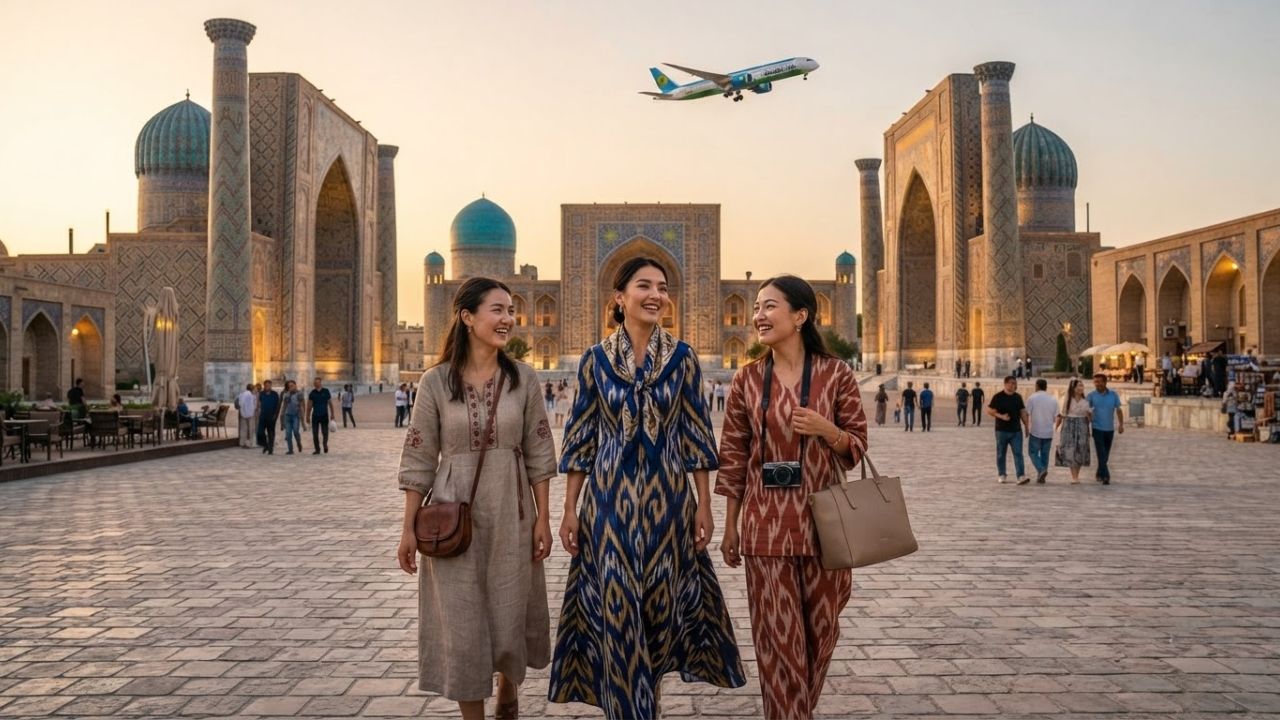
Image generated by AI
Central Asian travel corridors are undergoing structural changes to capture high-value tourism. Uzbekistan's tourism growth strategy aims to increase the sector's GDP contribution to 15% by 2030, backed by a fleet expansion at Uzbekistan Airways.
Record Arrivals Establish Tashkent as Key Silk Road Aviation Transit Corridor
According to reports, the national tourism statistics were reviewed on July 4, 2026.
Official statistics from the Uzbekistan Tourism Board indicate that international trips to the country reached 11.7 million in 2025.
Rather than acting solely as a brief stopover point, the country is being repositioned as a multi-day destination.
Tour operators are increasingly packaging cities like Samarkand, Bukhara, and Khiva with destinations in neighboring Kazakhstan, Kyrgyzstan, and Tajikistan.
This regional integration encourages long-haul travelers to spend more time exploring the broader Silk Road route.
Uzbekistan Airways Coordinates Fleet and International Route Network Buildout
The national carrier is expanding its operations to support this influx of international visitors.
Fleet updates released by Uzbekistan Airways show that the airline's active fleet will increase from 26 to 45 aircraft.
The carrier is deploying wide-body Boeing 787 Dreamliners on long-haul routes to secure direct connections with key European and Asian markets.
This capacity growth allows Tashkent's international airport to function as a transit hub connecting Europe, the Middle East, and Asia.
The tables below outline the country's key source markets and the airline's expansion parameters.
Source Market Corridors and Tourism Demand Outlook
| Source Country | Travel Segment Focus | Projected Demand Trend | GDP Contribution Impact |
|---|---|---|---|
| India | Cultural tourism, Silk Road itineraries | Strong Growth | Moderate revenue generator |
| China | Group heritage tours, transit itineraries | Strong Growth | High volume traffic |
| United Arab Emirates | Premium stopover tours, luxury travel | Stable Growth | High yield revenue |
| Germany | Long-stay heritage tours, independent travel | Moderate Growth | Long-duration holiday spender |
| United Kingdom | Independent heritage routes, eco-tourism | Rising | High-value explorer |
| South Korea | Cultural exploration, youth tours | Growing | Steady passenger flow |
Uzbekistan Airways Fleet Expansion and Network Targets
| Operational Parameter | Base Fleet (Prior Years) | Target Fleet Count (2026-2030) | Primary Long-Haul Fleet | Network Focus |
|---|---|---|---|---|
| Fleet Capacity | 26 aircraft | 45 active aircraft | Boeing 787 Dreamliner | Tashkent transit hub |
| Route Scope | Regional destinations | Continental routes | Boeing 787 / Airbus A320neo | Europe, Asia, Gulf |
Visa Liberalizations and Fiscal Incentives Transform Regional Travel Dynamics
The expansion is supported by regulatory reforms designed to lower the cost of travel operations.
The government has introduced visa-free entry for citizens of multiple target source countries.
Additionally, fiscal incentives include a 50% value-added tax (VAT) refund for selected tourism services.
Subsidies are also provided to airlines establishing new direct international routes to secondary regional airports.
These measures make the country's travel sector more competitive with established destinations in Europe and Asia.
Key International Market Corridors Shape Outbound Demand Trends
Different source markets show distinct travel preferences when visiting Central Asia.
German and British travelers prioritize long-stay cultural itineraries, spending more time in regional heritage cities.
Conversely, visitors from the UAE generate higher yields by booking premium hotels and luxury transport options.
Travelers from India and China are expanding their presence in both group tours and transit bookings.
Why This Matters
Our analysis of the flight data indicates that Central Asia is transforming from a seasonal destination into a year-round transit corridor. By expanding the fleet to 45 aircraft, the airline is capturing transit traffic between Western Europe and South-East Asia.
Operating long-range Boeing 787s allows the carrier to run nonstop flights that bypass congested Middle Eastern hubs.
For local operators, the government’s 50% VAT refund makes premium hotel packages more attractive to tour operators.
Furthermore, combining historical cities into single itineraries increases the average traveler stay from three days to over a week.
Ultimately, these combined efforts secure a reliable stream of foreign currency, helping the state achieve its 15% GDP tourism contribution target.
Industry Outlook
Market trends suggest that Eurasian aviation hubs will continue to expand point-to-point routes to secondary European cities. Airlines will invest in modern, fuel-efficient wide-body fleets to optimize long-haul route yields.
Expect the national carrier to announce further wide-body aircraft orders in late 2026 to support its expanded network. The Central Asian tourism market is projected to grow steadily.
Key Takeaways
- GDP Target: Uzbekistan's tourism growth strategy aims for the sector to contribute over 15% to GDP by 2030.
- Visitor Volume: The country recorded 11.7 million international arrivals in 2025.
- Fleet Expansion: Uzbekistan Airways is expanding its fleet from 26 to 45 aircraft.
- Transit Hub: The airline is positioning Tashkent as a transit gateway connecting Europe, Asia, and the Gulf.
- Fiscal Reforms: Incentives include visa liberalizations and a 50% VAT refund on tourism services.
FAQ
What is the primary goal of the Uzbekistan tourism strategy?
The strategy aims to expand the tourism sector so that it contributes more than 15% of the national GDP by 2030.
How many tourists visited Uzbekistan recently?
In 2025, the country recorded 11.7 million international trips, representing a major regional surge.
How is Uzbekistan Airways supporting this growth?
The carrier is expanding its active fleet from 26 to 45 aircraft, utilizing Boeing 787 Dreamliners for long-haul routes.
Which international markets are showing the strongest growth?
The fastest-growing markets include India, China, the UAE, and Germany, driven by heritage and stopover travel.
Disclaimer
This article is for informational and educational purposes only. It does not constitute legal, financial, or professional advice. While we strive to provide accurate and up-to-date information, travel policies, regulations, and conditions change rapidly. Always verify information with official sources before making travel decisions. Nomad Lawyer makes no representations about the accuracy, reliability, completeness, or suitability of the information provided. Readers should consult qualified professionals for advice specific to their circumstances. The views expressed in this article are those of the author and do not necessarily reflect the views of Nomad Lawyer.
Kunal K Choudhary
Co-Founder & Contributor
A passionate traveller and tech enthusiast. Kunal contributes to the vision and growth of Nomad Lawyer, bringing fresh perspectives and driving the community forward.
Learn more about our team →