
Uzbekistan Tourism Boom: Samarkand, Bukhara, Khiva Transform Into Silk Road Circuit Travel Hubs in 2026
Uzbekistan abandons single-city tourism for extended Silk Road circuits, leveraging heritage preservation, regional connectivity, and high-value travel strategies across Central Asia.

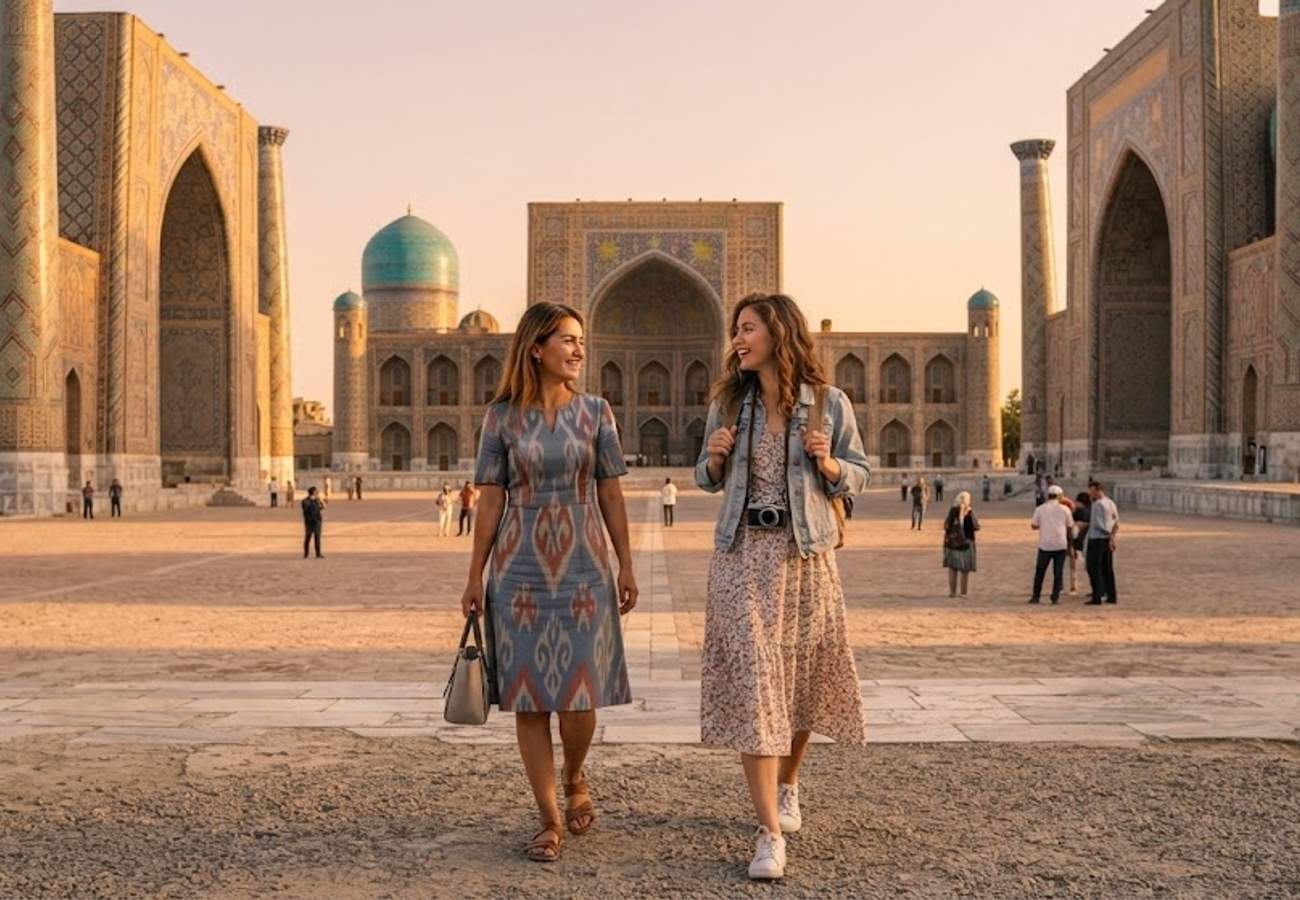
Image generated by AI
Uzbekistan Abandons Single-City Tourism for Silk Road Circuit Model
Uzbekistan is dismantling its traditional single-destination tourism playbook. The country's tourism authorities have pivoted decisively toward extended, multi-city travel circuits anchored on the legendary Silk Road identity. Rather than chasing visitor arrival numbers, state development frameworks now prioritize extended stays, regional interconnectivity, and high-value traveler expenditure across Samarkand, Bukhara, Khiva, and Tashkent.
This represents a fundamental restructuring of how Central Asia's most historically significant nation packages its tourism offering. The shift reflects sophisticated economic thinking: longer stays mean deeper spending, broader regional distribution of tourism revenue, and stronger positioning within the competitive global heritage tourism market.
Reddit: "I just completed the Uzbekistan circuit in 10 days. The coordinated transport between cities changed everything—I could actually experience all four major destinations without logistical chaos." — r/travel
The Silk Road Becomes a Structured Tourism System
Samarkand, Bukhara, Khiva, and Shahrisabz now function as integrated nodes within a unified tourism network rather than standalone attractions. Government tourism bodies have engineered interconnected routes supported by comprehensive transport infrastructure linking these cultural anchors into seamless travel narratives.
The framework operates on a clear principle: heritage destinations are packaged as components of a wider cultural corridor, not isolated stops. High-speed rail services between Tashkent and Samarkand to Bukhara dramatically reduce transit friction. Upgraded road networks enable fluid movement across the region. This infrastructure investment exists specifically to extend visitor itineraries and encourage tourists to explore multiple UNESCO-recognized historic centres within a single journey.
The Silk Road narrative functions as the organizing principle for this entire system. Rather than marketing individual cities, Uzbekistan now markets curated cultural experiences flowing through interconnected heritage zones.
Central Asia Creates Unified Cross-Border Tourism Corridors
Uzbekistan isn't pursuing tourism growth in isolation. Official regional agreements now coordinate joint development across Uzbekistan, Kazakhstan, Kyrgyzstan, Tajikistan, and Turkmenistan—creating a unified Silk Road tourism corridor spanning the entire region.
This multinational framework encourages travelers to transcend national boundaries and experience interconnected historical destinations across multiple countries. Tourism authorities are synchronizing marketing strategies, cultural heritage promotion, and transport logistics to support this integrated regional approach.
Simplified visa systems have become critical enablers. Uzbekistan's e-visa framework reduces administrative barriers for international travelers and facilitates easier cross-border movement. Combined with reciprocal visa arrangements across neighboring nations, these measures support extended multi-country itineraries that increase regional tourism spending and strengthen economic integration.
Aviation and Rail Transform Tourism Mobility Across Central Asia
Transport infrastructure forms the backbone of Uzbekistan's tourism transformation. Official aviation development programmes document steady international flight growth through Tashkent, Samarkand, Bukhara, and Urgench airports. National aviation authorities have expanded partnerships with international carriers, improving connectivity from Europe, Asia, and the Middle East.
High-speed rail remains equally critical. The modern rail links between Tashkent, Samarkand, and Bukhara have reduced travel times significantly, enabling tourists to visit multiple destinations within single trips. This connectivity directly supports government objectives to increase average visitor stay duration.
The combined aviation and rail expansion creates a tourism ecosystem engineered for circuit-based travel rather than short, single-city visits. This infrastructure development is explicitly designed to reinforce the long-stay tourism strategy.
UNESCO Heritage Preservation Becomes Tourism Engine
Samarkand, Bukhara, and Khiva—all recognized as UNESCO World Heritage Sites—anchor Uzbekistan's entire tourism identity. Government cultural agencies are aggressively investing in restoration projects, infrastructure upgrades around heritage zones, and enhanced visitor facilities designed to preserve historical authenticity while elevating the visitor experience.
Tourism product development has expanded far beyond monument observation. Traditional craft experiences, cultural festivals, and immersive heritage routes now encourage tourists to spend extended time in each destination. Simultaneously, adventure tourism is being developed in regions like the Nuratau Mountains and the Aral Sea area, distributing tourism flows across multiple regions and encouraging multi-destination travel within the country.
This diversification ensures tourism revenue reaches beyond the historic city cores into surrounding communities and rural areas.
Economic Strategy Prioritizes Value Over Volume
Uzbekistan's tourism policy has fundamentally shifted from chasing visitor numbers to maximizing visitor expenditure. Official economic frameworks identify tourism as a strategic services export sector critical for employment generation and foreign exchange earnings.
The long-stay tourism model is engineered to increase spending across accommodation, transport, cultural activities, and local services. By promoting multi-city itineraries, the government extends the economic footprint of each tourist visit. Investment incentives are attracting hospitality development—hotels, guesthouses, eco-tourism facilities—supporting the shift toward higher-quality tourism offerings aligned with international demand patterns.
Private sector participation is being actively encouraged to expand destination services, ensuring infrastructure growth matches the increasing complexity of multi-destination travel demand.
Uzbekistan Emerges as Central Asia's Silk Road Gateway
Uzbekistan is executing a structured transformation positioning itself as the central hub of the modern Silk Road tourism network. Through coordinated investment in transport infrastructure, heritage preservation, and regional cooperation frameworks, the country is building a tourism system designed for extended stays and deeper cultural experiences.
The integration of Samarkand, Bukhara, Khiva, and other historic destinations into connected travel circuits signals a strategic pivot toward experience-based tourism. Combined with improved aviation access and cross-border cooperation across Central Asia, Uzbekistan is strengthening its role as the gateway to one of the world's most historically significant travel corridors.
This evolving model reflects a clear transition from transient, short-visit tourism to extended, high-value travel experiences—fundamentally reshaping how Central Asia captures global heritage tourism demand.
Uzbekistan isn't building more hotels—it's designing entire travel ecosystems.
Related Travel Guides
Disclaimer
This article is for informational and educational purposes only. It does not constitute legal, financial, or professional advice. While we strive to provide accurate and up-to-date information, travel policies, regulations, and conditions change rapidly. Always verify information with official sources before making travel decisions. Nomad Lawyer makes no representations about the accuracy, reliability, completeness, or suitability of the information provided. Readers should consult qualified professionals for advice specific to their circumstances. The views expressed in this article are those of the author and do not necessarily reflect the views of Nomad Lawyer.
Preeti Gunjan
Contributor & Community Manager
A passionate traveller and community builder. Preeti helps grow the Nomad Lawyer community, fostering engagement and bringing the reader experience to life.
Learn more about our team →