
Retro Beach Mobility: Why Electric Mokes Dominate Coastal Travel from Florida to California 2026

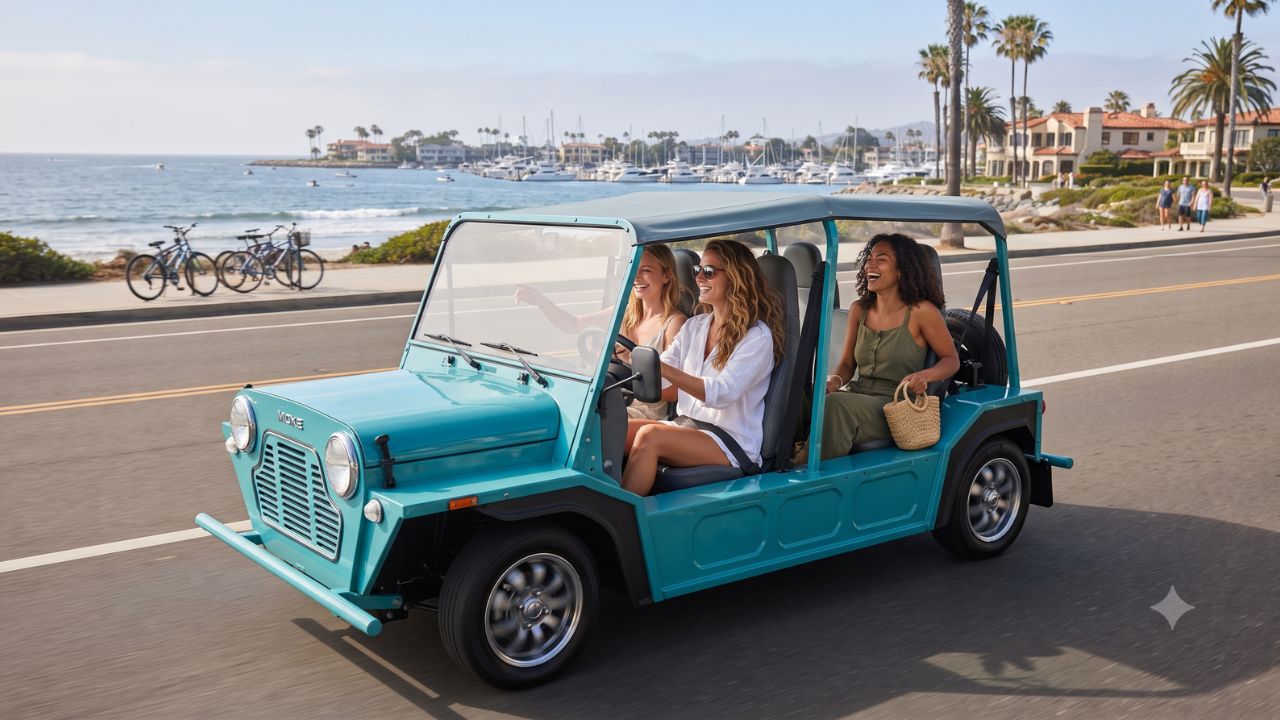
With more than 5,000 electric units operating across American coastal corridors—up from just 450 vehicles sold in 2018—the retro open-air electric Moke has become the defining leisure vehicle for beach towns from Key Largo to Newport Beach. Bridging the gap between cumbersome full-size rental SUVs and neighborhood golf carts, these four-passenger cruisers offer zero-emission transport engineered specifically for scenic barrier islands, historic districts, and waterfront promenades.
The Electric Moke Boom: From Siesta Key to Honolulu
The rapid growth of the electric beach vehicle market has been steered primarily by manufacturer Moke America, whose annual sales expanded from 1,100 units in 2020 to over 4,000 in 2022. Today, resort properties and independent rental fleets across the nation provide visitors with an open-air, low-impact alternative to petrol vehicles.
Key regional hubs for electric Moke travel include:
- Florida: Sarasota and Siesta Key (beach hops and dining), Miami Beach (South Beach cruising), Palm Beach (luxury resort transport), Clearwater Beach, Fort Lauderdale, and Key Largo.
- California and Hawaii: Newport Beach harbor drives, Coronado, San Diego, and coastal hotel corridors in Honolulu.
- The Gulf Coast: Barrier island exploration across Corpus Christi, Galveston, and Destin.
- The Northeast and Southeast: Seasonal beach getaways in The Hamptons, Cape Cod, Avalon (New Jersey), Lewes, Hilton Head, Isle of Palms, Savannah, and St. Simons Island.
Low-Speed Vehicle (LSV) Regulations and Performance Specs
Rental Mokes in the United States operate under Low-Speed Vehicle (LSV) standards enforced by the National Highway Traffic Safety Administration (NHTSA). Under state vehicle codes, including those in Florida and California, LSVs are street-legal on secondary public roads with posted speed limits of 35 mph or lower.
The modern market divides into two distinct manufacturing tiers:
- Moke America (Tourism Standard): Governed to a top speed of 25 mph with an operating range of approximately 40 miles per charge. Vehicles recharge via standard 110V or 120V household outlets in six to eight hours, with retail purchase prices between $23,000 and $25,000.
- Moke International Electric Californian: A higher-performance luxury model reaching speeds up to 50 mph with a 75-to-80-mile battery range, starting above $41,900 for private ownership.
Visitor Insider Tips: Renting an Electric Moke on Vacation
- Budget for Peak Rental Rates: Standard hourly rentals range between $85 and $150 per hour, while full-day rentals average $350 to $550. Rates increase during major holiday weekends such as Memorial Day, Fourth of July, and Labor Day.
- Plan Daily Charging Cycles: Because rental Mokes deliver a 40-mile range, plug the vehicle into your resort's designated outdoor 120V outlet overnight. A full recharge takes six to eight hours.
- Stick to Approved Secondary Corridors: Mokes are strictly banned from multilane highways, interstates, and roads posted above 35 mph. Chart your routes along coastal boulevards, beachfront lanes, and residential neighborhoods.
- Carry Mandatory Licensing and Follow Safety Rules: Drivers must hold a valid driver's license, wear seatbelts at all times, and adhere to standard traffic laws and zero-tolerance alcohol regulations.
Cultural and Environmental Context
The adoption of electric micro-mobility aligns directly with sustainability frameworks supported by state tourism boards, including Visit Florida and Visit California. Barrier island communities frequently suffer from severe vehicle gridlock and parking shortages during peak summer seasons.
By replacing gas-powered cars with compact electric cruisers, beach towns reduce tailpipe carbon emissions, preserve coastal air quality, and minimize noise pollution around fragile shoreline habitats. The lightweight footprint also reduces wear on historic brick and cobblestone streets in destinations like Savannah and Coronado.
FAQ: Renting Electric Mokes in the US 2026
What are the standard rental costs for an electric Moke?
Rental rates generally run from $85 to $150 per hour or $350 to $550 per full day, depending on location and seasonal demand.
Can you drive an electric rental Moke on highways?
No. Rental Mokes are classified as Low-Speed Vehicles (LSVs) with top speeds around 25 mph and are legal only on roads with posted limits of 35 mph or lower.
What driving range does a standard rental Moke have?
A fully charged Moke America rental vehicle provides approximately 40 miles of driving range and recharges overnight using a standard 110V/120V household wall outlet.
Do I need a special driver's license to operate a Moke?
No. A standard, valid state or international driver's license is sufficient to rent and operate an LSV-compliant electric Moke.
Combining vintage coastal aesthetics with zero-emission tech, electric Mokes prove that the journey along the shore can be as refreshing as the destination.
Related Travel Guides
- Sacramento's $40M Rock Tourism Boom: Aftershock Festival 2026 Lineup, Discovery Park, and Travel Guide
- US Visa Wait Times in India: B1/B2 Interview Delays Across Mumbai, Hyderabad, Kolkata, and Booking Guide 2026
- US Visa Processing Timelines Reshape Global Travel: ESTA Rules, Interview Wait Times, and Booking Guide 2026
Disclaimer
This article is for informational and educational purposes only. It does not constitute legal, financial, or professional advice. While we strive to provide accurate and up-to-date information, travel policies, regulations, and conditions change rapidly. Always verify information with official sources before making travel decisions. Nomad Lawyer makes no representations about the accuracy, reliability, completeness, or suitability of the information provided. Readers should consult qualified professionals for advice specific to their circumstances. The views expressed in this article are those of the author and do not necessarily reflect the views of Nomad Lawyer.
Preeti Gunjan
Contributor & Community Manager
A passionate traveller and community builder. Preeti helps grow the Nomad Lawyer community, fostering engagement and bringing the reader experience to life.
Learn more about our team →