
US Wildfire Crisis 2026: California and Western States Face Massive Tourism Losses as 3 Million Acres Burn
Nearly 100 wildfires across the US Western states have scorched over 3 million acres, triggering mass evacuations and threatening billions in tourism revenue across California, Oregon, and Washington.

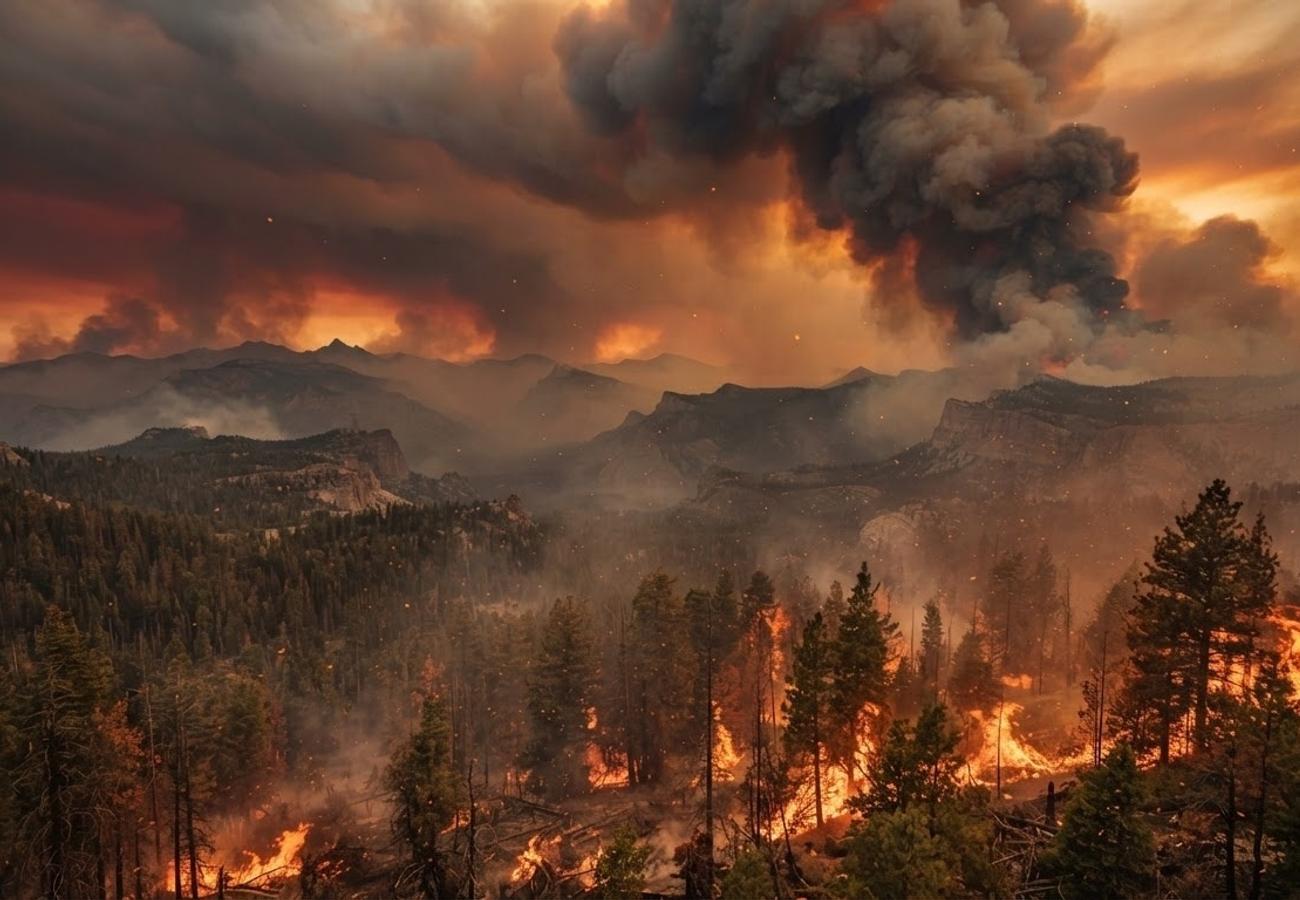
Image generated by AI
A catastrophic wildfire surge is currently ravaging the Western United States, with nearly 100 active blazes consuming more than 3 million acres of land and threatening billions of dollars in tourism revenue. From the coastal cliffs of California to the mountain peaks of Washington, millions of residents and travelers are facing mandatory evacuations as extreme heat and drought fuel the most destructive fire season in US history.
The crisis is concentrated across a corridor of western states, specifically California, Oregon, Washington, Idaho, Montana, Wyoming, Nevada, and Utah. A volatile combination of prolonged drought, desiccated vegetation, intense heatwaves, and high-velocity winds has created a "tinderbox" effect, allowing fires to leap boundaries and expand with unprecedented speed.
California’s Tourism Infrastructure Under Severe Pressure
California, a global tourism powerhouse, is currently battling fires that threaten its most iconic natural landmarks. While the state is accustomed to seasonal fires, the 2026 surge has placed critical tourism hubs at a crossroads. The vulnerability of the state's forests and wilderness areas has turned prime summer attractions into high-risk zones.
The Big Sur region, renowned for its luxury resorts and dramatic Pacific vistas, has become a focal point of concern. Because of its rugged terrain, firefighting efforts are exceptionally difficult, leading to widespread evacuation warnings. This disrupts not only the immediate local economy but also the thousands of travelers utilizing the Highway 1 corridor for scenic road trips.
California Tourism Impact Summary
| Destination | Tourism Importance | Wildfire Impact |
|---|---|---|
| Big Sur | Luxury travel, coastal tourism, scenic road trips | Evacuation concerns, visitor disruption and safety risks |
| Highway 1 Corridor | Iconic road-trip destination | Route uncertainty and possible travel delays |
| Sierra Nevada | Hiking, camping and mountain tourism | Smoke exposure and activity restrictions |
| Northern California Forests | Nature tourism and wildlife experiences | Increased fire danger |
Beyond the immediate flames, the "smoke plume effect" is degrading the visitor experience hundreds of miles away. Reduced visibility and hazardous air quality are forcing outdoor operators to scale back activities even in areas not directly threatened by fire.
Washington State Grapples with Spokane Evacuation Crisis
In the Pacific Northwest, Washington is facing a severe emergency, particularly in the eastern part of the state. The Spokane region has been hit by fast-moving blazes that have demolished structures and forced thousands of residents and tourists to flee their homes and hotels.
This crisis has paralyzed nature-based tourism in Eastern Washington, where visitors typically flock for fishing, camping, and hiking. The disruption extends deep into the rural forest regions and outdoor recreation zones, creating a logistical nightmare for travel providers.
Washington State Regional Disruptions
| Destination | Tourism Attraction | Current Challenge |
|---|---|---|
| Spokane Region | Urban tourism and regional travel | Evacuations and infrastructure disruption |
| North Cascades | Mountain adventures and hiking | Smoke and access restrictions |
| Lake Chelan | Lakeside holidays and outdoor recreation | Fire concerns and visitor uncertainty |
| Colville National Forest | Camping and wildlife tourism | Fire restrictions |
Oregon's Outdoor Economy Faces Critical Downturn
Oregon has emerged as one of the most intense wildfire hotspots in the country. The state's economic reliance on "adventure tourism"—centered around its waterfalls and national forests—makes it uniquely vulnerable to these disasters.
As fires encroach upon Mount Hood and the Columbia River Gorge, local businesses including boutique hotels, guide services, and transport providers are reporting a sharp increase in cancellations. For an industry that depends on a narrow summer window, these disruptions can result in permanent financial losses.
Oregon High-Risk Tourism Zones
| Destination | Tourism Value | Impact From Wildfires |
|---|---|---|
| Mount Hood | Hiking, skiing and mountain tourism | Fire danger and access restrictions |
| Bend | Adventure travel, cycling and outdoor activities | Smoke affecting visitor experiences |
| Columbia River Gorge | Scenic landscapes and photography tourism | Air quality concerns |
| Crater Lake | National park tourism | Visibility and travel uncertainty |
| Deschutes National Forest | Camping and wilderness travel | Restrictions and closures |
Wilderness Tourism Threatened in Idaho, Montana, and Wyoming
The interior West is not faring any better. Idaho's remote landscapes, including the Sawtooth Mountains and the Salmon-Challis National Forest, are seeing a drop in visitor confidence due to heavy smoke and strict fire restrictions. For rafting and backcountry camping operators, the loss of a single season can be devastating.
Further east, Montana and Wyoming are fighting to protect the "crown jewels" of American wilderness. Glacier National Park in Montana and the Yellowstone region in Wyoming are facing threats to their trail systems and wildlife viewing corridors. In these states, where the economy is almost entirely built upon the preservation of nature, the destruction of the landscape is an existential economic threat.
Desert and Mountain Risks in Nevada and Utah
The crisis has also penetrated the arid landscapes of Nevada and Utah. While often viewed as "fire-proof" due to their desert status, the Great Basin and various mountain recreation zones have proven highly susceptible. Visitors to these regions are reporting smoke-filled skies and sudden trail closures, proving that no landscape in the West is immune to the 2026 fire season.
Why This Matters: The New Reality for Travelers
For the modern traveler, these events signal a fundamental shift in how trips to the American West must be planned. The "seasonality" of travel is being rewritten; the traditional summer peak is now the highest-risk period for environmental disruption.
From a logistical standpoint, this creates a "cascading failure" in travel itineraries. A closure in Big Sur doesn't just affect one hotel; it disrupts the entire Highway 1 corridor, forcing thousands of cars onto secondary roads not equipped for high volume. For international tourists who book national park excursions months in advance, the lack of flexibility in the face of sudden evacuation orders can lead to massive financial losses and stranded travelers.
Furthermore, the air quality index (AQI) has become as important as the weather forecast. Travelers are now forced to monitor smoke maps to avoid "smoke-outs" that render scenic vistas invisible and make outdoor physical activity dangerous.
The Western US is witnessing a collision between a thriving tourism economy and an increasingly volatile climate.
Related Travel Guides
Disclaimer
This article is for informational and educational purposes only. It does not constitute legal, financial, or professional advice. While we strive to provide accurate and up-to-date information, travel policies, regulations, and conditions change rapidly. Always verify information with official sources before making travel decisions. Nomad Lawyer makes no representations about the accuracy, reliability, completeness, or suitability of the information provided. Readers should consult qualified professionals for advice specific to their circumstances. The views expressed in this article are those of the author and do not necessarily reflect the views of Nomad Lawyer.
Preeti Gunjan
Contributor & Community Manager
A passionate traveller and community builder. Preeti helps grow the Nomad Lawyer community, fostering engagement and bringing the reader experience to life.
Learn more about our team →