
US Travel Faces Cannabis Warning as Federal Restrictions Clash with State Legalization

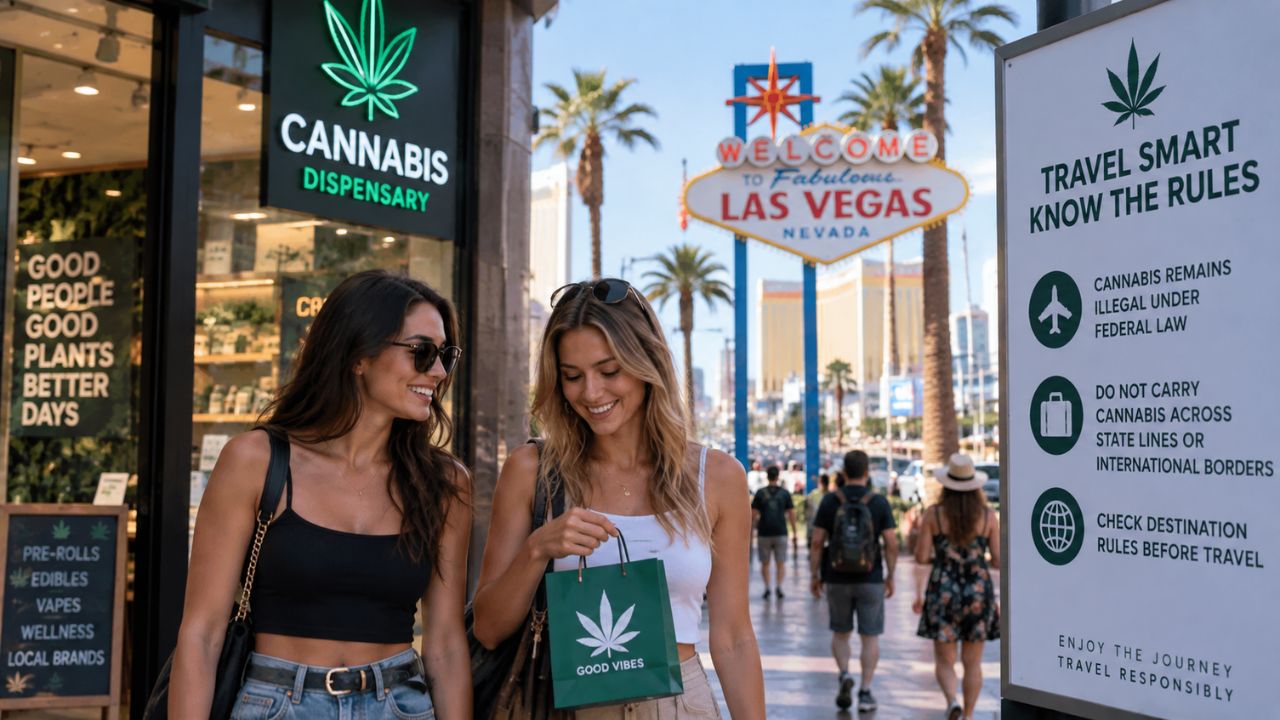
Despite the rapid expansion of regulated recreational and medical cannabis markets across states like Nevada, California, and Colorado, federal authorities are issuing renewed warnings to domestic and international travelers navigating American airspace and border crossings. While millions flock annually to cannabis-friendly hubs including Las Vegas, Los Angeles, and Denver, purchasing products legally under state jurisdiction provides zero legal immunity once stepping into federally regulated airports, national parks, or international checkpoints.
The growing gap between state legalization and federal drug enforcement has introduced severe legal complexities for modern tourists. In destinations where licensed retail dispensaries, specialized tasting lounges, and infused culinary tours operate openly, visitors frequently assume that products purchased over the counter can be transported home or carried on onward journeys. However, under federal statute, cannabis remains classified as a controlled substance, creating substantial friction across domestic transit hubs, international border entry stations, and connecting flight networks.
For international travelers and cross-border drivers moving between the United States and Canada, misunderstanding this jurisdictional divide can lead to entry revocations, civil asset seizures, heavy fines, and permanent immigration bans.
The Local Trend Revealed: State-Level Acceptance vs. Federal Jurisdiction
The United States presents a deeply bifurcated regulatory environment. Over the past decade, recreational adult-use cannabis has gained legislative approval across nearly two dozen states, giving rise to a multi-billion-dollar tourism niche centered around wellness, gastronomy, and lifestyle recreation:
- State-Level Commerce: Destinations like Las Vegas (Nevada), Los Angeles (California), and Denver (Colorado) have pioneered licensed retail dispensaries, specialized consumption venues, and cannabis hospitality concepts. Within state boundaries, adults aged 21 and older can legally purchase and possess regulated quantities.
- Federal Supremacy: Under the federal Controlled Substances Act, cannabis remains prohibited. Because interstate transit, civil aviation, maritime waters, and international borders fall exclusively under federal jurisdiction, state-level permissions end the moment a traveler enters federal property.
- The Transit Vulnerability: Crossing state lines with cannabis—even between two neighboring states that have both legalized recreational possession, such as California and Nevada—constitutes a federal offense.
| Regulatory Domain | State Legalized Jurisdictions | Federal & Interstate Transit Zones |
|---|---|---|
| Retail Purchase & Possession | Lawful for adults 21+ at licensed dispensaries | Strictly prohibited under federal law |
| Airports & Commercial Aircraft | Local terminal areas often defer to municipal code | Federal screening checkpoints prohibit carriage |
| Border Crossings (US–Canada) | State-level access available on both sides | Strict felony offense to cross international boundaries |
| National Parks & Federal Lands | Adjacent to state territory (e.g., Red Rock, Yosemite) | Subject to federal rangers; state licenses invalid |
| Medical Cannabis Cards | Valid within issuing state | Zero interstate reciprocity or federal recognition |
Aviation Checkpoints: Understanding TSA Protocols and Airport Realities
Commercial air travel represents the primary flashpoint for traveler confusion. Aviation facilities operate under federal aviation administration rules, placing terminal security under the direct oversight of the Transportation Security Administration (TSA).
The TSA outlines a distinct protocol regarding passenger screening:
- Primary Security Mandate: TSA officers focus on detecting aviation security threats, including explosives, weapons, and flammable items. Security officers do not conduct proactive searches specifically for marijuana or illegal narcotics.
- Mandatory Law Enforcement Referrals: When TSA screening officers discover cannabis flowers, vape cartridges, concentrated oils, or edibles in carry-on baggage or checked luggage during routine screening, agency policy requires them to notify local airport law enforcement.
- Varying Airport Dispositions: The legal outcome depends entirely on the jurisdiction governing the airport. At Los Angeles International Airport (LAX), local airport police permit passengers of legal age to possess state-authorized quantities within terminal common areas, though federal airspace prohibitions remain. Conversely, at Harry Reid International Airport (LAS) in Las Vegas, county ordinances enforce a complete ban across airport property, requiring passengers to dispose of products in dedicated green "amnesty disposal boxes" before entering security checkpoints.
International Border Perils: Crossings with Canada and Visa Revocations
The most severe consequences fall upon international travelers and motorists crossing external borders:
- The US–Canada Border Fallacy: Both Canada and northern border states (such as Washington, New York, and Vermont) permit recreational cannabis use. Despite this alignment, carrying cannabis across the international border in either direction remains illegal under both Canadian and US federal law. U.S. Customs and Border Protection (CBP) officers enforce zero-tolerance border checks.
- Immigration Repercussions for Non-Citizens: Foreign travelers visiting the United States who admit to consuming or possessing cannabis—even in states where it is fully legal—risk being deemed inadmissible by immigration authorities. CBP officers possess the authority to cancel tourist visas, issue expedited removals, and impose lifetime re-entry bans for controlled substance violations.
- Overseas Return Hazards: Transporting cannabis oils, medical supplies, or CBD gummies purchased during an American vacation back to countries with strict drug laws (such as Singapore, Japan, or the UAE) can result in immediate arrest, prolonged detention, and severe criminal penalties upon arrival.
Medical Cannabis Vulnerabilities: The Absence of Interstate Reciprocity
Patients who rely on medical cannabis face unique vulnerabilities when journeying across state borders:
- No Universal Reciprocity: A medical marijuana registry card issued by California or Colorado carries no automatic legal protection when traveling through states that do not maintain medical reciprocity agreements or that prohibit cannabis entirely.
- Prescription Transport Bans: Because cannabis lacks federal pharmaceutical approval, medical authorization does not permit patients to carry supplies on commercial flights or across state borders.
- Alternative Therapy Planning: Healthcare professionals advise medical cannabis patients to consult their physicians prior to cross-country travel to arrange alternative non-cannabinoid therapies during their itinerary.
Cultural and Community Stewardship: Responsible Practices in Cannabis Tourism
As cannabis tourism matures, destination marketing organizations, municipal hospitality leaders, and dispensary operators are prioritizing responsible consumer education and environmental sustainability:
- Social Equity Support: Conscious travelers are encouraged to patronize licensed social equity dispensaries that direct tax revenues back into minority and community-based business owners impacted by historical drug policies.
- Packaging Waste Reduction: Regulated dispensaries generate considerable child-resistant plastic packaging. Progressive dispensaries in Denver and Northern California now provide specialized recycling return programs for containers and exit bags.
- Respecting Public Consumption Laws: Consuming cannabis in public parks, sidewalks, casino floors, or non-smoking hotel rooms remains illegal in almost every jurisdiction. Visitors must utilize private residences or licensed social consumption lounges (such as those permitted in West Hollywood and Las Vegas) to avoid hefty municipal citations.
Visitor Insider Tips: Navigating US Cannabis Rules Without Legal Peril
Travelers exploring cannabis-friendly US regions can safeguard their vacations with these field-tested guidelines:
- Use Airport Amnesty Disposal Boxes: If you find yourself approaching airport security in Las Vegas, Denver, or Chicago with unused cannabis products, immediately locate the green metal "amnesty boxes" situated outside terminal entrances. These secure, one-way drop boxes allow travelers to discard cannabis without legal penalty or questioning.
- Verify Hotel Smoking Policies: The overwhelming majority of resort properties and major hotel chains in Las Vegas and California strictly prohibit smoking or vaping of any kind in guest rooms. Cleaning fees for smoke odor routinely exceed $250 to $500 per incident. Book accommodations that explicitly offer private patios or check into verified 420-friendly boutique stays.
- Never Bring Cannabis into National Parks: Iconic natural landmarks—such as Red Rock Canyon National Conservation Area near Las Vegas, Rocky Mountain National Park in Colorado, and Yosemite in California—are federal lands. State legalization does not apply. Federal park rangers issue federal misdemeanor citations for possession within park borders.
- Inspect CBD and Hemp Formulations: Not all over-the-counter wellness products are legal for transit. The federal farm bill permits hemp-derived CBD products containing less than 0.3% THC on a dry weight basis. Verify that any topical balms or tinctures carry third-party lab test certificates (COAs) accessible via QR code on the packaging.
- Consume Locally, Discard Completely: The simplest, safest rule for visitors is straightforward: purchase and consume only what you need during your stay within the legal state, and leave absolutely nothing in your luggage before proceeding to an airport, train station, or highway state border.
Tourism Outlook: Education Drives the Future of Cannabis Travel
The continued expansion of the regulated cannabis industry offers powerful economic stimulus for cities across the United States. However, its long-term viability as an international tourism asset relies on transparent communication between visitors, hospitality providers, and federal transport agencies.
Until legislative harmony is achieved between state legislatures and Capitol Hill, the burden of compliance falls upon the individual traveler. By recognizing that state-level dispensaries do not grant federal safe passage, tourists can enjoy the cultural, culinary, and wellness offerings of American destinations while remaining entirely protected from legal peril.
Related Travel Guides
Disclaimer
This article is for informational and educational purposes only. It does not constitute legal, financial, or professional advice. While we strive to provide accurate and up-to-date information, travel policies, regulations, and conditions change rapidly. Always verify information with official sources before making travel decisions. Nomad Lawyer makes no representations about the accuracy, reliability, completeness, or suitability of the information provided. Readers should consult qualified professionals for advice specific to their circumstances. The views expressed in this article are those of the author and do not necessarily reflect the views of Nomad Lawyer.
Raushan Kumar
Founder & Lead Developer
Full-stack developer with 11+ years of experience and a passionate traveller. Raushan built Nomad Lawyer from the ground up with a vision to create the best travel and law experience on the web.
Learn more about our team →