
US Tourism Booms in 2026: How Mega Events, Festivals, and Billion-Dollar Investments are Transforming Travel
From the FIFA World Cup to major music festivals, states like North Carolina, California, and Texas are driving a nationwide travel boom in 2026 through massive infrastructure investments and mega events.

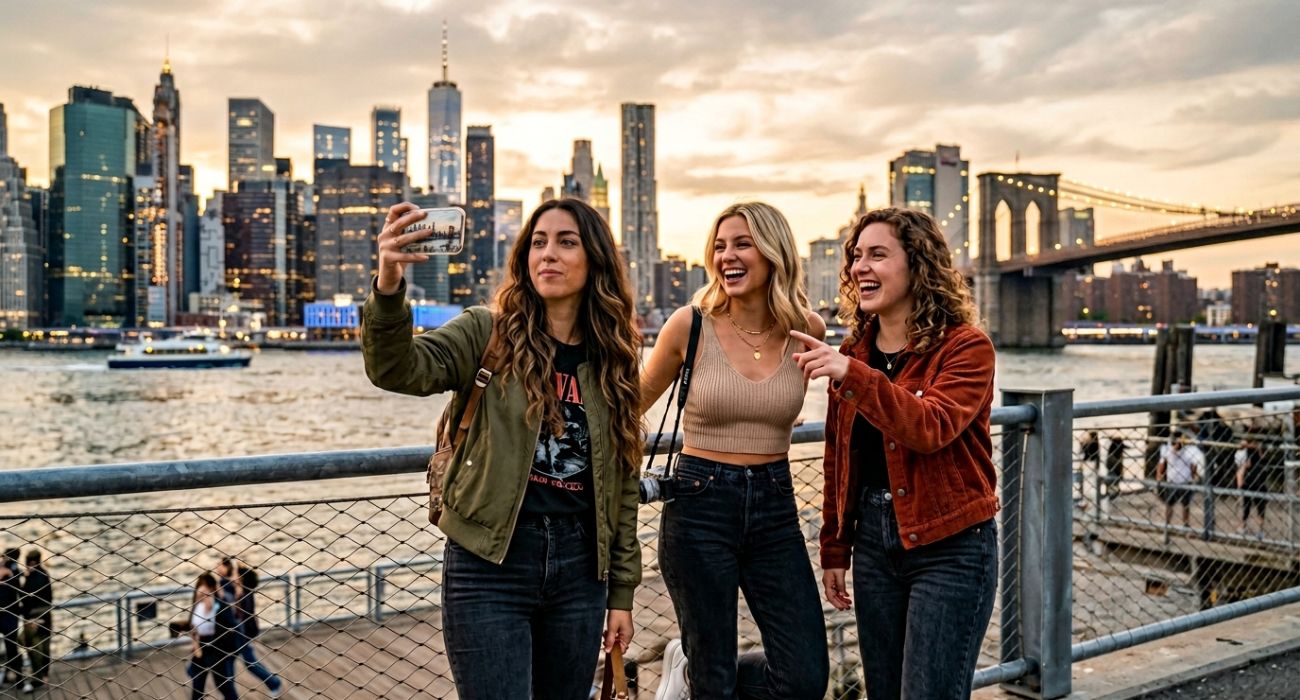
Image generated by AI
A Golden Era for US Travel: Mega Events, Festivals, and Multi-Billion Dollar Investments Drive the 2026 Tourism Boom
Across the United States, destinations from North Carolina to California are aggressively scaling their travel economies in 2026, leveraging global events like the FIFA World Cup, historic celebrations like America 250, and massive infrastructure upgrades to draw record-breaking visitor numbers.
Quick Summary
- The US tourism landscape is experiencing a massive shift in 2026, driven by global events like the FIFA World Cup, the Super Bowl, and America 250.
- California leads with a staggering forecast of 276.6 million visitors and $164.8 billion in expected travel spending.
- North Carolina is leveraging a recovery-led strategy in Asheville with major sporting events (NAIA Championships) and new infrastructure (Hellbender venue).
- States like Texas, Georgia, Tennessee, and Virginia are using multi-million-dollar state grants to push tourist spending outside major metropolitan hubs into local communities.
Destinations across the United States are aggressively deploying demand-driven strategies this year, transitioning tourism from a seasonal industry into a continuous economic powerhouse. Nine key states—North Carolina, Tennessee, Virginia, South Carolina, Georgia, Texas, Louisiana, Colorado, and California—are leading this charge, pouring billions into travel infrastructure and event calendars.
The goal is clear: capture the massive wave of domestic and international travelers driven by global mega-events, extend their stays, and distribute their spending deeply into regional and rural communities.
THE MEGA EVENTS DRIVING THE 2026 SURGE
The sheer scale of events hitting the US in 2026 is unprecedented.
In California, the convergence of the FIFA World Cup and the Super Bowl is expected to drive historic numbers, with the state forecasting $164.8 billion in spending from an estimated 276.6 million visitors. California's strategy heavily relies on combining these massive global events with aggressive, large-scale infrastructure expansion in entertainment districts to sustain long-term growth.
Similarly, Texas and Georgia are capitalizing on their host-city status for the FIFA World Cup. However, both states are heavily promoting fan zones, live music, and cultural programming far beyond the immediate stadiums of Dallas, Houston, and Atlanta to ensure that regional towns also benefit from the influx of international spending.
On the East Coast, Virginia is leaning heavily into heritage tourism. Driven by the America 250 celebrations, the state is preparing for Sail250, a massive maritime event featuring 60 tall ships from 20 nations. To handle the capacity, Virginia is actively expanding resort infrastructure and introducing new venues like CarMax Park.
FESTIVAL ECONOMIES: TENNESSEE, LOUISIANA, AND SOUTH CAROLINA
While mega-events draw global headlines, robust "festival economies" are proving just as effective at sustaining year-round demand.
Louisiana continues to master continuous event tourism, hosting over 400 festivals annually, including the Peach Festival and massive jazz events. This constant cultural output ensures a steady, reliable stream of tourism revenue without relying on single-point sporting events.
Tennessee is doubling down on its global music identity. Major anchors like CMA Fest and Bonnaroo are being supported by fresh infrastructure, including the new Songteller Hotel and Grind City Amp. Backed by $1.5 million in state marketing grants, Tennessee's music-led expansion is drawing massive crowds beyond Nashville and Memphis.
In South Carolina, the focus is on a mix of culture and sport. Events like the Spoleto Festival USA and the Colonial Life Charity Classic are driving serious visitor volume, supplemented by $750,000 in tourism grants aimed at community-level infrastructure expansion.
NORTH CAROLINA AND COLORADO: RECOVERY AND SUSTAINABILITY
Tourism isn't just about expansion; for some states, it is a tool for recovery and sustainable management.
North Carolina is executing a powerful recovery-led strategy focused heavily on Asheville and Buncombe County following recent disruptions. Early indicators are highly positive, showing a +20% increase in hotel revenue. This growth is driven by:
- Major Events: NAIA Outdoor Championships (generating $1.3M) and the Biltmore Championship ($10–15M).
- Infrastructure Investment: The new 6,000-capacity Hellbender outdoor music venue and the Beacon Bike Park.
- Funding: $11 million from the LIFT program plus an additional $4.5 million in strategic investments.
Meanwhile, Colorado is focusing heavily on sustainability. Utilizing the America 250 program and the Colorado Music Festival to attract visitors, the state is deploying targeted tourism management grants. This strategy ensures the state reaps the economic benefits of tourism without overcrowding or degrading its famous natural landscapes.
CONCLUSION: A NEW ERA FOR US TRAVEL
States are no longer relying on summer vacations to drive their tourism boards. By building year-round demand through continuous cultural programming, integrating global sporting events, and funding local infrastructure, these states are proving that travel is a premier economic growth engine. The result is a highly competitive, incredibly resilient US tourism sector that distributes economic benefits evenly across major hubs and small-town communities alike.
KEY TAKEAWAYS
- California forecasts $164.8 billion in spending driven by the World Cup, Super Bowl, and massive infrastructure upgrades.
- North Carolina is utilizing a $15.5M funding push, new venues (Hellbender), and sports championships to drive recovery in Buncombe County.
- Virginia and Colorado are capitalizing on America 250 celebrations to boost heritage and sustainable tourism.
- Texas and Georgia are using FIFA World Cup fan zones to spread tourist spending into regional economies.
- Tennessee and Louisiana are leveraging their massive music and festival ecosystems to guarantee year-round visitor demand.
Disclaimer
This article is for informational and educational purposes only. It does not constitute legal, financial, or professional advice. While we strive to provide accurate and up-to-date information, travel policies, regulations, and conditions change rapidly. Always verify information with official sources before making travel decisions. Nomad Lawyer makes no representations about the accuracy, reliability, completeness, or suitability of the information provided. Readers should consult qualified professionals for advice specific to their circumstances. The views expressed in this article are those of the author and do not necessarily reflect the views of Nomad Lawyer.
Kunal K Choudhary
Co-Founder & Contributor
A passionate traveller and tech enthusiast. Kunal contributes to the vision and growth of Nomad Lawyer, bringing fresh perspectives and driving the community forward.
Learn more about our team →