
The Surge of US Shark Tourism: Oahu, Jupiter, and Cape Cod Redefine Apex Predator Encounters
Shark tourism is growing rapidly across the US, offering visitors structured cage diving, freediving, and conservation-focused educational charters.

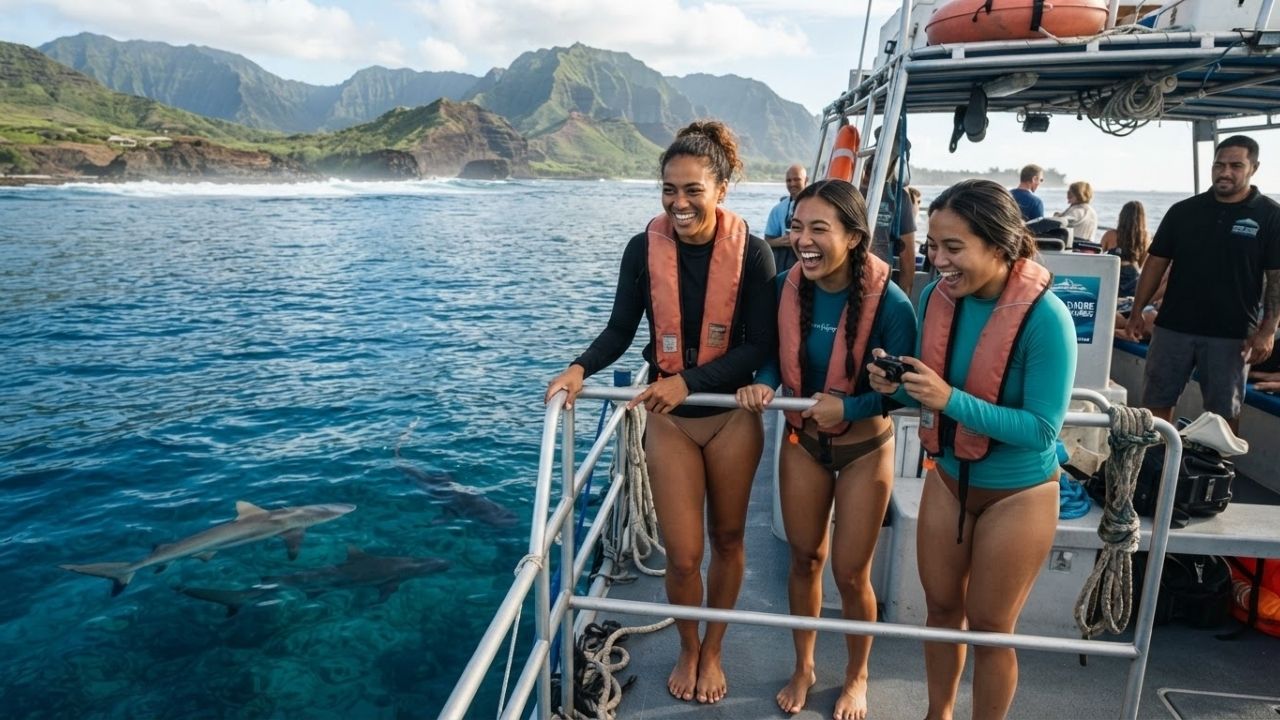
Image generated by AI
Generating millions in local revenue and shifting public perception, structured shark tourism has emerged as one of the fastest-growing sectors in the United States adventure travel industry.
Across the United States, coastal communities are transforming historical fears of marine apex predators into opportunities for conservation-led travel. Marine wildlife disclosures highlight a dramatic rise in travelers seeking safe, educational encounters with sharks. From the deep offshore trenches of Oahu to the warm Gulf Stream waters off Jupiter, Florida, and the seal-populated coast of Massachusetts, the variety of available shark experiences has never been greater. This shift represents a transition from consumptive recreational activities to non-consumptive viewing tours. This growth supports local charter captains, marine researchers, and hospitality providers while generating vital funding for ocean conservation.
Commercial Cage Diving on Oahu's North Shore
Oahu represents the commercial core of structured shark encounters in the United States, with operations centered around the historic harbor of Haleʻiwa. Rather than leaving sightings to chance, dedicated operators offer daily offshore cage-diving excursions that guarantee safe viewing in the open ocean. Travelers can view pelagic species, primarily Galapagos and sandbar sharks, in water hundreds of feet deep. This provides a clear window into their natural behavior without requiring diving certifications.
Haleiwa Shark Tours currently offers North Shore shark-diving excursions lasting approximately 1.5 to 2 hours, with prices starting from around $95. The tour is accessible to all ages, making it highly popular for families visiting Hawaii. The commercial strength of Oahu's model lies in its accessibility. Because the harbor is located near major infrastructure, tourists can easily combine a morning shark tour with sightseeing in Honolulu, surfing at Waikīkī, or visiting historical landmarks like Pearl Harbor. This prevents the activity from becoming a niche excursion, integrating it into broader Hawaiian travel itineraries.
Florida's Pelagic Highway: Specialized Diving in Jupiter
Further east, Jupiter and the Palm Beaches have developed into the premier destination for specialized shark diving in the continental United States. Visit Florida identifies the Palm Beaches as a major hub for pelagic encounters due to their proximity to the warm Gulf Stream current. This current flows close to the shoreline, bringing nutrient-rich waters and a diverse array of species near the coast. Unlike the single-species focus of other regions, South Florida offers encounters with tiger, great hammerhead, bull, lemon, reef, and sandbar sharks.
Diving operators in Jupiter offer cage diving, open-water freediving, and boat-based viewing trips. This infrastructure caters to experienced scuba divers who want to observe these predators without a cage. The local economy benefits significantly from this specialized travel market. Divers visiting the region spend multiple days booking local charters, renting gear, dining in coastal restaurants, and booking accommodations. This makes shark tourism a key economic driver for Palm Beach County, extending the tourism season through the winter months when migratory species like lemon sharks gather in large numbers.
Cape Cod's Conservation Shift: Seasonal Great White Charters
In Massachusetts, Cape Cod has pioneered a completely different model of shark tourism, built around the seasonal migration of great white sharks and public education. The Atlantic White Shark Conservancy operates white shark charters, shared and private viewing cruises, and educational exhibits at the Shark Center in Chatham. This program turns scientific research into an engaging visitor experience that funds ongoing research.
The Cape Cod model is unique because visitors do not enter the water. Instead, boat-based charters allow travelers to observe great whites, harbor seals, and seabirds from the safety of the vessel. The Atlantic White Shark Conservancy's 2026 program includes specialized white shark charters and educational cruises. The Shark Center provides interactive exhibits detailing shark behavior, public safety, and marine biology. This educational focus allows the region to capture tourism spending while supporting public safety initiatives along popular beaches.
Islamorada and the Reef-Tourism Advantage
Islamorada and the Florida Keys offer another integrated model where shark encounters are combined with traditional reef recreation. Visit Florida Keys promotes Islamorada as a major diving destination, highlighting its coral reefs, shipwrecks, and diverse tropical marine life. Here, species such as nurse sharks, reef sharks, bull sharks, and seasonal hammerheads are encountered as part of standard scuba diving and snorkeling trips.
This model appeals to general marine travelers who want to see sharks alongside coral reefs and historical wrecks. For local charter operators, the presence of sharks adds premium value to standard dive packages. It also allows families and novice snorkelers to experience smaller, bottom-dwelling species like nurse sharks in shallow, calm waters, spreading the economic benefits across a wider range of local businesses.
Regulatory Frameworks in California's Marine Sanctuaries
In Northern California, the Greater Farallones National Marine Sanctuary represents the most strictly regulated shark-watching environment in the country. The National Oceanic and Atmospheric Administration (NOAA) describes the sanctuary as supporting one of the world's most significant populations of adult white sharks. These sharks gather seasonally to feed on marine mammals near the Farallon Islands.
Because conservation is the highest priority, NOAA regulations strictly prohibit attracting white sharks in the sanctuary. Approaching white sharks within designated protection zones is also restricted to ensure human activities do not disrupt feeding or breeding behaviors. Permitted operators offer boat-based viewing and cage diving subject to strict sanctuary guidelines. This science-led approach appeals to eco-conscious travelers who prioritize research, ecosystem interpretation, and photography over guaranteed close-up encounters.
Monterey Bay and the Central California Coast
Adjacent to the Farallones, Monterey Bay and the Central California Coast provide a broader wildlife experience. The region's nutrient-rich deep waters support a complex ecosystem where seasonal white shark activity is part of a larger wildlife viewing package. Travelers can observe sharks alongside sea lions, harbor seals, seabirds, and migrating whales.
This model demonstrates that shark tourism can remain commercially viable without the use of bait or artificial attractants. Local operators focus on interpretation and photography, linking shark conservation to the health of the entire kelp forest ecosystem. This education-first approach attracts families and wildlife enthusiasts, helping to support local research institutions and coastal economies.
Outer Banks Aquariums and New Smyrna Surf Recreation
On the East Coast, the Outer Banks of North Carolina and New Smyrna Beach in Florida represent two different relationships with shark tourism. The Outer Banks focuses on family-friendly education. The North Carolina Aquarium on Roanoke Island features nurse, sand tiger, and sandbar sharks in its Graveyard of the Atlantic exhibit. This allows families to learn about local marine life in a safe, controlled environment. Official state tourism guidance stresses that the chance of encountering a shark in the wild is very low, emphasizing beach safety.
In contrast, New Smyrna Beach has a reputation built around surf tourism and high shark visibility. Visit Florida describes New Smyrna Beach as a premier surfing location, with 17 miles of sandy beaches and a strong eco-tourism draw. While sharks are frequently seen in the surf due to the nearby inlet, the destination does not offer organized shark-diving tours. Instead, local officials focus on beach safety, advising surfers and swimmers to follow lifeguard instructions and beach warning flags to manage co-existence in shared coastal waters.
Insider Visitor Guidelines for Responsible Shark Encounters
Diving with sharks requires careful preparation and respect for the marine environment. Local conservation departments and experienced dive masters recommend following these practical guidelines to ensure a safe and sustainable experience:
- Book with Eco-Certified Operators: Select operators that contribute a portion of their booking fees to marine research or are affiliated with organizations like the Atlantic White Shark Conservancy.
- Choose the Right Season: In Cape Cod, great white charters run from July through October. For Jupiter's lemon shark migrations, visit between December and March.
- Observe Early Morning Windows: On Oahu's North Shore, book the earliest morning charter (typically 6:00 AM or 7:00 AM) when winds are light and water visibility is highest.
- Respect Hawaiian Cultural Etiquette: When visiting Hawaii, understand that sharks (manō) are historically revered as ʻAumakua (ancestral guardians). Avoid treating them as mere photo opportunities.
- Support Local Seafood Markets: Dine at restaurants that serve sustainably sourced local seafood, ensuring that your travel spending directly supports sustainable fishing practices and the coastal community.
Comparative Analysis of US Shark Tourism Models
| Destination Location | Key Shark Species Encountered | Primary Tour Type / Experience | Verified Pricing / Duration |
|---|---|---|---|
| Oahu (North Shore) | Galapagos, Sandbar sharks | Commercial cage diving | Prices from ~$95 / 1.5 to 2 hours |
| Jupiter (Florida) | Tiger, Great Hammerhead, Bull, Lemon, Reef, Sandbar | Cage diving, freediving, viewing | Varies by operator / Seasonal peaks |
| Cape Cod (Chatham) | Great White sharks | Boat-based viewing & education | Charter-based / Seasonal excursions |
| Islamorada (Keys) | Nurse, Reef, Bull, Hammerhead (seasonal) | Wreck & reef diving, snorkeling | Multi-activity marine itineraries |
| Greater Farallones | Great White sharks | Permit-regulated viewing & science | No-attraction zone / Restricted access |
Frequently Asked Questions
What is the best time of day for shark cage diving in Oahu?
Early morning trips are best. The winds are light, the ocean is calmest, and shark activity on the North Shore is typically at its peak, providing clear visibility.
What shark species can you see diving in Jupiter, Florida?
Jupiter offers encounters with tiger, great hammerhead, bull, lemon, reef, and sandbar sharks. The species vary depending on seasonal migration patterns, water temperatures, and oceanic currents.
How do NOAA regulations protect great whites in California?
The Greater Farallones National Marine Sanctuary restricts approaching white sharks within designated protection zones. NOAA regulations strictly prohibit baiting or attracting sharks to ensure natural behavior is not disrupted.
Are there age restrictions for shark tours in Hawaii?
Haleiwa Shark Tours offers excursions that are available to all ages. However, other operators may enforce age limits for open-water freediving or cage tours, so checking guidelines is recommended.
The Long-Term Outlook for Sustainable Apex Predator Encounters
The growth of shark tourism in the United States represents a shift toward sustainable marine travel. By demonstrating that live sharks are far more valuable to local economies than fished ones, tourism provides a powerful incentive for conservation. As marine sanctuaries expand and regulations evolve, the sector is likely to focus increasingly on science-led education, research partnerships, and minimal wildlife disruption. For travelers, this means richer, more educational experiences that support the survival of these vital marine predators.
For those planning a marine excursion, selecting operators that actively support local conservation remains the most effective way to ensure these apex predators are protected for generations to come.
Related Travel Guides
Disclaimer
This article is for informational and educational purposes only. It does not constitute legal, financial, or professional advice. While we strive to provide accurate and up-to-date information, travel policies, regulations, and conditions change rapidly. Always verify information with official sources before making travel decisions. Nomad Lawyer makes no representations about the accuracy, reliability, completeness, or suitability of the information provided. Readers should consult qualified professionals for advice specific to their circumstances. The views expressed in this article are those of the author and do not necessarily reflect the views of Nomad Lawyer.
Raushan Kumar
Founder & Lead Developer
Full-stack developer with 11+ years of experience and a passionate traveller. Raushan built Nomad Lawyer from the ground up with a vision to create the best travel and law experience on the web.
Learn more about our team →