
US Robotaxi Travel Guide 2026: Airport Routes, Autonomous Safety, and Passenger Liability

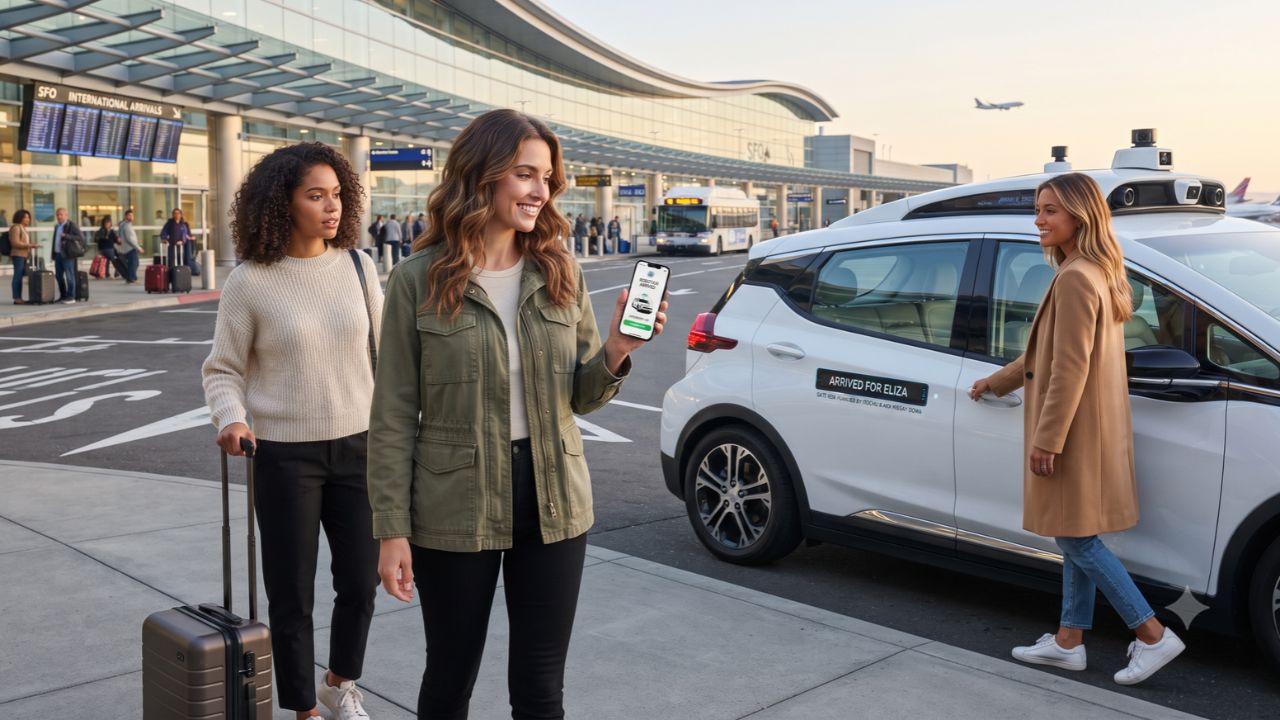
While 34.6 percent of the 34.3 million overseas travelers visiting the United States rely on vehicular road transport during their journeys, the rapid expansion of driverless taxi fleets to major gateways like San Francisco International Airport (SFO) is fundamentally transforming urban ground mobility. Backed by cutting-edge insurance software partnerships between Japanese trading powerhouse ITOCHU Corporation and Aioi Nissay Dowa’s US subsidiary MOTER Technologies, international visitors navigating American cities now encounter a transportation ecosystem where artificial intelligence occupies the driver’s seat.
Yet, stepping into an autonomous vehicle with no human operator behind the steering wheel introduces vital practical questions regarding passenger safety, unexpected ride stoppages, airport connections, and insurance liability.
The Autonomous Transit Shift: From City Streets to Airport Terminals
Autonomous passenger mobility moved from experimental testing into daily commercial aviation connections when Waymo launched commercial driverless passenger operations to San Francisco International Airport in January 2026.
However, booking an autonomous airport transfer requires careful logistical planning:
- Designated Airport Transit Access Points: At SFO, driverless pickups and drop-offs operate exclusively from the airport's Rental Car Center. Arriving air passengers must board the automated AirTrain light rail from international and domestic terminals to reach their vehicle, rather than walking straight to curbside departures.
- Service Boundary Restrictions: Autonomous commercial fleets operate within strictly geofenced municipal zones regulated by state transport authorities. A robotaxi may navigate central downtown avenues seamlessly but cannot cross into unauthorized neighboring counties or unmapped rural roadways.
- Real-Time Safety and Regulatory Oversight: Operating permits issued by the California Public Utilities Commission (CPUC) mandate that autonomous vehicle operators report operational incidents and maintain strict liability coverage. Concurrently, the National Highway Traffic Safety Administration (NHTSA) enforces mandatory crash reporting protocols across all automated driving systems nationwide.
Understanding Passenger Coverage and Fleet Liability
A common misconception among international travelers is assuming that an operator's fleet insurance acts as a replacement for personal travel insurance.
Commercial vehicle policies cover vehicular damage and basic third-party bodily injury under standard carrier regulations. However, if a robotaxi experiences a sensor glitch, pulls over unexpectedly on a freeway shoulder, or causes a passenger to miss an international flight departure or non-refundable concert booking, the operator’s basic insurance does not compensate for missed itineraries.
Economic data from the National Travel and Tourism Office (NTTO) shows that international visitors spent over US$250.2 billion on travel goods and services across the United States in 2025 (a minor 0.6% adjustment from 2024). Protecting these substantial travel investments requires travelers to carry comprehensive travel disruption insurance that explicitly covers ground transit delays and missed departures.
What Makes Driverless Travel Experientially Distinct
Riding in an autonomous vehicle presents a serene, futuristic travel experience unmatched by conventional ride-hailing.
Without a human driver, passengers enjoy complete conversational privacy inside sound-insulated cabins equipped with personalized climate controls and integrated touchscreen displays that visualize real-time lidar, radar, and camera sensor feeds. The vehicle detects pedestrians, cyclists, construction cones, and emergency vehicles with millimeter precision, executing smooth lane changes and adhering strictly to posted speed limits.
For international travelers navigating language barriers, robotaxis eliminate conversational misunderstandings. All destination routing, intermediate stops, and payment processing occur entirely within mobile smartphone interfaces.
Visitor Insider Tips for Riding US Robotaxis in 2026
To ensure a seamless driverless journey during your American travels, follow these essential operational recommendations:
- Allow a 45-Minute Buffer for Airport Connections: Because airport robotaxi stops often utilize off-terminal parking centers requiring automated monorail or shuttle transfers, add at least 45 minutes to your transit schedule when heading to catch a departing flight.
- Verify In-App Live Support Channels Before Departure: Familiarize yourself with the ride-hailing app’s emergency button. Every vehicle connects directly to remote specialist teams via two-way overhead speaker systems if the car encounters blocked roadways or unexpected route pauses.
- Confirm Accessibility Options for Wheelchair Users: Travelers with limited mobility, visual impairments, or oversized luggage must request accessible wheelchair-adapted vehicles or verified companion-assisted fleets through specialized operator accessibility portals prior to booking.
- Keep Seatbelts Fastened at All Times: Autonomous vehicles will not disengage park or initiate motion until all passenger seatbelts are securely buckled. Sensor arrays actively monitor cabin compliance throughout the trip.
- Review Strict Geofence Maps: Ensure your desired hotel, conference center, or tourist attraction falls completely within the active commercial service zone before relying on driverless cars for late-night transit.
Cultural and Technological Context: The Future of Urban Tourism
The integration of autonomous fleets into American travel infrastructure marks a pivotal evolutionary step for sustainable urban tourism.
Fleet electrification drastically reduces localized tailpipe emissions around dense hotel districts and airport corridors. By replacing private automobile congestion with shared, efficient electric robotaxis, cities can reclaim valuable street space for pedestrian promenades, outdoor dining plazas, and public green parks.
Simultaneously, insurance technology innovations led by ITOCHU and MOTER Technologies are establishing predictive risk-scoring algorithms that analyze real-time driving telemetry to make autonomous travel statistically safer than human-operated transit. As global travelers embrace driverless technology, understanding the practical interface between artificial intelligence and human travel needs ensures a safe, efficient journey into the future of transportation.
FAQ: Riding Autonomous Robotaxis in the US 2026
Can international tourists book robotaxis in the United States?
Yes. International travelers with a valid smartphone, local data connectivity, and a recognized international credit card can download approved operator apps and hail rides in active service cities.
Do robotaxis pick up directly at airport departure curbs?
At many airports, including San Francisco International (SFO), pickups are situated at designated ground transit centers—such as the SFO Rental Car Center accessible via the AirTrain.
What happens if a robotaxi gets stuck in traffic or stops unexpectedly?
Vehicles are monitored by remote assistance centers. Passengers can push the overhead help button or use the in-app support function to speak directly with a live operations specialist.
Does my robotaxi fare cover compensation for missed flights?
No. Operator liability covers vehicle accidents but does not reimburse consequential travel losses; travelers must rely on comprehensive personal travel insurance for trip interruption claims.
Gliding quietly beneath the neon glow of city skylines with an empty driver's seat, the robotaxi journey reveals that the future of travel has already arrived.
Related Travel Guides
Disclaimer
This article is for informational and educational purposes only. It does not constitute legal, financial, or professional advice. While we strive to provide accurate and up-to-date information, travel policies, regulations, and conditions change rapidly. Always verify information with official sources before making travel decisions. Nomad Lawyer makes no representations about the accuracy, reliability, completeness, or suitability of the information provided. Readers should consult qualified professionals for advice specific to their circumstances. The views expressed in this article are those of the author and do not necessarily reflect the views of Nomad Lawyer.
Kunal K Choudhary
Co-Founder & Contributor
A passionate traveller and tech enthusiast. Kunal contributes to the vision and growth of Nomad Lawyer, bringing fresh perspectives and driving the community forward.
Learn more about our team →