
Aurora Economy: Northern Lights Electrify Tourism Across Ten US States
Driven by solar wind activity, the US Northern Lights tourism market is projected to reach $159.6 million in 2026, with ten states preparing for viewing.

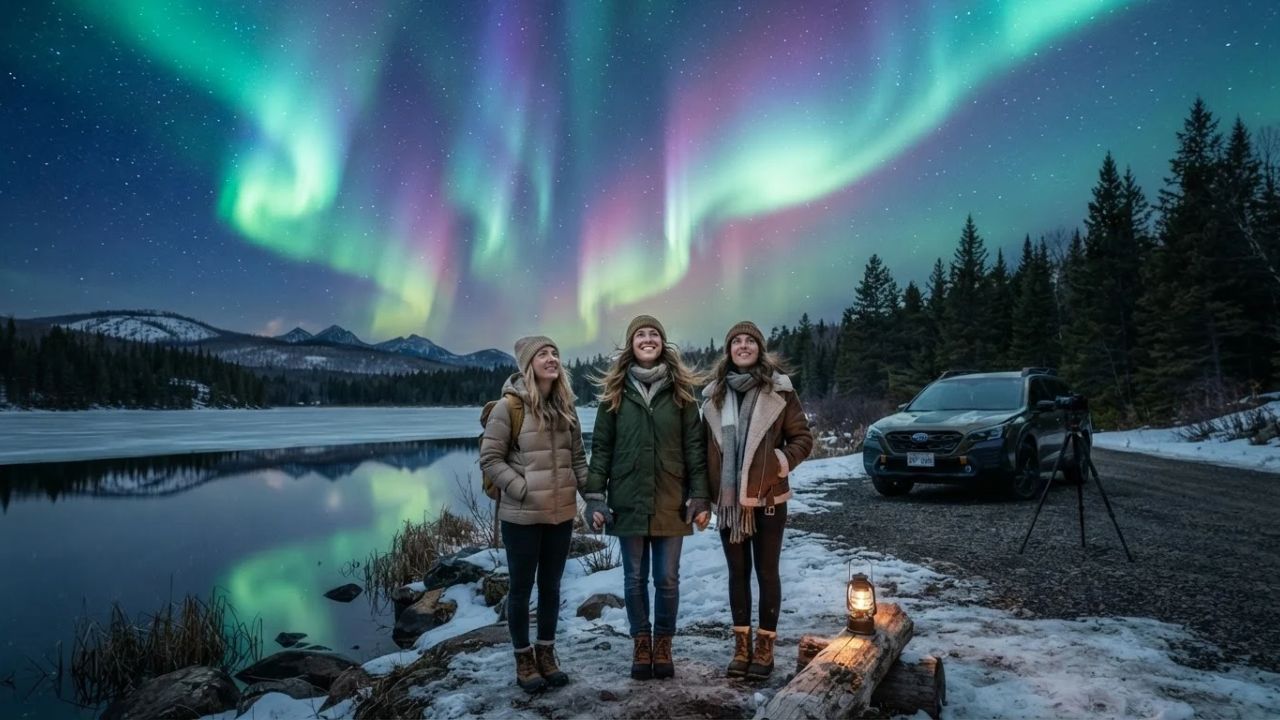
Image generated by AI
Driven by elevated solar wind activity, the US Northern Lights tourism market is projected to reach approximately $159.6 million in 2026. Ten states from Alaska to Maine are preparing for aurora viewing opportunities on Saturday, August 22, 2026.
The Rise of the Dark-Sky Aurora Economy
A major trend in nature-based tourism is the expansion of the "aurora economy" into lower latitudes. Historically, Northern Lights viewing was seen as a luxury Arctic excursion, requiring long-haul transit to northern Scandinavia or Canada. Today, solar maximum cycles are pushing the auroral oval farther south, allowing border states in the continental United States to offer viewing opportunities.
This geographical expansion supports rural hospitality economies by encouraging overnight stays in dark-sky parks, forest preserves, and mountain communities.
Geomagnetic Activity and the Ten U.S. States
The aurora borealis begins with solar activity, where charged particles interact with Earth's magnetic field:
- Geomagnetic Measurement: The NOAA Space Weather Prediction Center measures this activity using the Kp index. Higher values indicate that the aurora oval is moving farther from the poles.
- Solar Wind Stream: A coronal-hole high-speed solar-wind stream is helping keep conditions active through Saturday, August 22, 2026.
- Target States: The viewing opportunity focuses on 10 northern states: Alaska, Washington, Idaho, Montana, North Dakota, South Dakota, Minnesota, Wisconsin, Michigan, and Maine.
- Regional Gateways: Alaska (especially Fairbanks) remains a primary base, though summer daylight can limit visibility. Lower-48 regions—such as Michigan's Upper Peninsula and northern Minnesota—offer latitude combined with dark skies.
Because space weather changes rapidly, travelers require dark horizons and real-time solar tracking to capture the display.
The Rising Northern Lights Tourism Market
The global interest in auroral displays is driving market expansion:
- Global Market Value: Estimated to reach US$1.143 billion in 2026, up from US$941.9 million in 2024.
- Global Projected Growth: Forecast to reach US$1.648 billion by 2030, representing a Compound Annual Growth Rate (CAGR) of 9.7 percent.
- U.S. Market Value: Estimated at approximately US$159.6 million for 2026, rising from US$133.6 million in 2024.
- U.S. Projected Growth: Forecast to reach US$229.5 million by 2030, representing a CAGR of 9.3 percent.
This growth reflects the rising demand for night-sky photography and wilderness exploration.
Northern Lights Tourism Market Indicators
The table below summarizes the key financial indicators and growth projections shaping the aurora economy:
| Market Metric | 2024 Baseline Value | 2026 Projected Value | 2030 Forecast Value | Compound Annual Growth Rate |
|---|---|---|---|---|
| Global Aurora Tourism | US$941.9 million | US$1.143 billion | US$1.648 billion | 9.7% (2025–2030) |
| U.S. Aurora Tourism | US$133.6 million | US$159.6 million | US$229.5 million | 9.3% (2025–2030) |
These indicators show the financial expansion of the night-sky tourism sector.
Resource Stewardship and Night-Sky Conservation
For the visitor, the real impact of dark-sky tourism is the preservation of nocturnal environments. Seeking out designated dark-sky parks encourages local municipalities to restrict light pollution and implement shielded lighting systems, which protects regional bird migrations and insect populations.
Additionally, traveling to rural state parks distributes tourist spending to family-owned guesthouses, cabins, and local dining spots. Choosing low-impact observation areas prevents foot-traffic damage to fragile wilderness undergrowth during nighttime hikes.
For example, you can explore the changing dynamics of Western Heritage: Ellensburg Emerges as Washington's Outdoor Escape to see how other destinations manage outdoor transit. For budget-conscious travelers, aligning slow city travel with municipal transit options mirrors similar regional initiatives, such as the Free Admission at Select US State Parks programs. This trend is similar to the tourism growth seen in other destinations, as detailed in our guide on how Utica, New York Emerges as an Affordable Northeast Tourism Hub.
Visitor Insider Tips: Chasing the Aurora Borealis
If you are planning an aurora-watching excursion, keep these practical tips in mind:
- Monitor NOAA Space Forecasts: Check short-term Kp index forecasts on the NOAA Space Weather Prediction Center portal before departure.
- Track Local Cloud Cover: Use local weather radars to find clear, cloud-free patches, as even strong auroras can be blocked by clouds.
- Observe During Prime Hours: Plan your viewing between 10 p.m. and 2 a.m. local time, as the strongest displays typically occur around midnight.
- Find an Open Northern Horizon: Position yourself on a north-facing shoreline or elevated viewpoint to see faint auroras low on the horizon.
- Use Smartphone Night Mode: Mount your phone on a tripod and use Night Mode to capture color tones that may appear faint to the naked eye.
Long-Term Outlook for Night-Sky Tourism
The long-term outlook for the U.S. aurora tourism sector is focused on expanding designated dark-sky reserves, developing regional astronomy festivals, and improving transit access to northern forest trails. As interest in astronomical travel grows, northern communities will rely on environmental guidelines to protect their low-light assets.
By reducing light pollution and supporting local businesses, states aim to build a sustainable model for nighttime outdoor recreation.
FAQ
Which U.S. states are positioned to see the Northern Lights?
The 2026 opportunities focus on 10 northern states: Alaska, Washington, Idaho, Montana, North Dakota, South Dakota, Minnesota, Wisconsin, Michigan, and Maine.
How much is the U.S. Northern Lights tourism market worth?
The U.S. aurora tourism market is estimated to reach approximately US$159.6 million in 2026 and is projected to grow to US$229.5 million by 2030.
What is the best time of night to look for the aurora?
The strongest auroral activity typically occurs around midnight, within the broad window of 10 p.m. to 2 a.m. local time.
How does the Kp index help travelers?
The Kp index measures geomagnetic activity, serving as a guide to determine how far south the auroral display may be visible.
Stay updated on the space weather forecasts and dark-sky destinations shaping U.S. nature tourism.
Related Travel Guides
Disclaimer
This article is for informational and educational purposes only. It does not constitute legal, financial, or professional advice. While we strive to provide accurate and up-to-date information, travel policies, regulations, and conditions change rapidly. Always verify information with official sources before making travel decisions. Nomad Lawyer makes no representations about the accuracy, reliability, completeness, or suitability of the information provided. Readers should consult qualified professionals for advice specific to their circumstances. The views expressed in this article are those of the author and do not necessarily reflect the views of Nomad Lawyer.
Raushan Kumar
Founder & Lead Developer
Full-stack developer with 11+ years of experience and a passionate traveller. Raushan built Nomad Lawyer from the ground up with a vision to create the best travel and law experience on the web.
Learn more about our team →