
US Navy Launches Historic Unmanned Naval Aviation Era With First Boeing MQ-25A Stingray Flight
Breaking airline news and aviation industry updates for 2026.

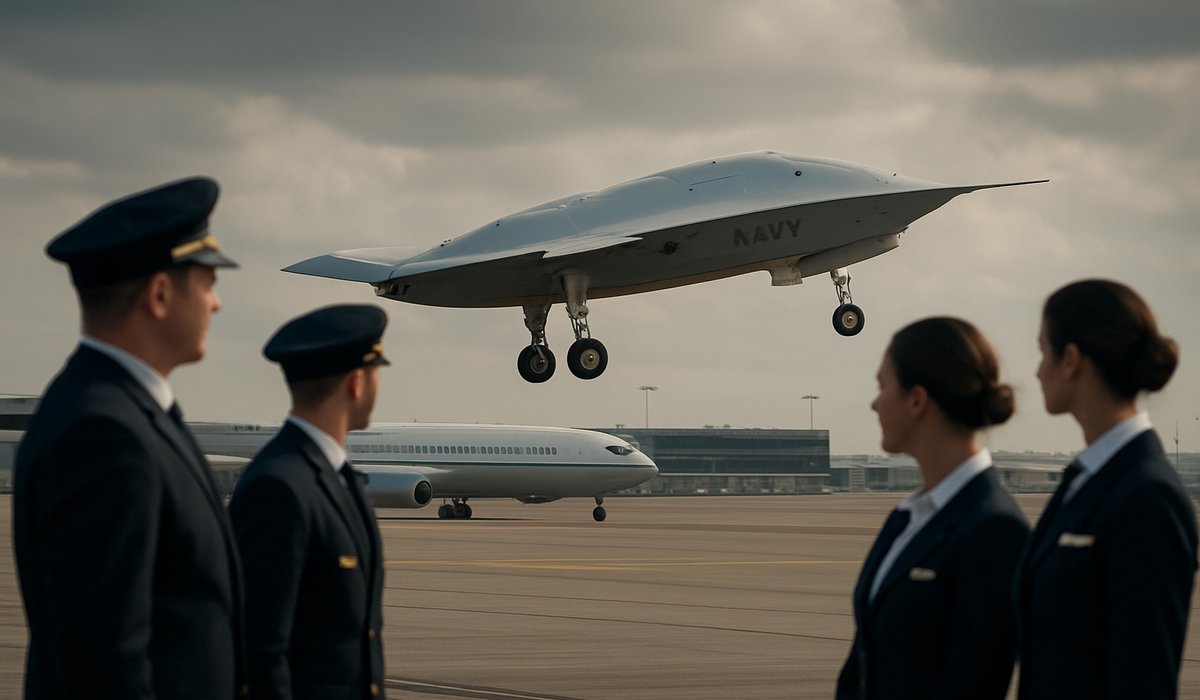
Image generated by AI
US Navy Launches Historic Unmanned Naval Aviation Era With First Boeing MQ-25A Stingray Flight
After technical setback, carrier-based drone achieves maiden flight in watershed moment for military aviation
Breaking Through Technical Barriers
The United States Navy has crossed a critical threshold in military aviation history. Following an aborted launch attempt on April 22, the Boeing MQ-25A Stingray successfully completed its inaugural flight on April 25, marking the Navy's official transition into operational unmanned carrier-based aviation. The achievement represents years of development and billions in investment as the Pentagon accelerates its pivot toward autonomous systems for naval warfare and logistics.
The twin-engine drone lifted off under the command of Navy and Boeing pilots operating remotely from the Unmanned Carrier Aviation Mission Control System MD-5 ground control station—a sophisticated command center designed to manage operations thousands of miles from active flight zones. The aircraft remained aloft for two hours, executing baseline performance assessments and validating critical flight systems during what defense analysts describe as one of the most consequential maiden flights in recent military history.
Reshaping Naval Power Projection
The Stingray's successful deployment marks a seismic shift in how the US Navy approaches carrier operations and regional deterrence. Unlike traditional manned aircraft, the MQ-25A is engineered primarily as an autonomous refueling platform—capable of extending the operational range of legacy fighter jets while simultaneously gathering intelligence across contested maritime zones. This dual-purpose design addresses a mounting strategic vulnerability: aging carrier air wings increasingly constrained by fuel limitations and pilot fatigue cycles.
Boeing, alongside Navy leadership, hailed the breakthrough as validation of the platform's engineering architecture after the previous day's technical complications forced mission postponement. The successful two-hour test flight demonstrates the aircraft's fundamental airworthiness and the maturity of ground control protocols—prerequisites for eventual carrier deck integration and operational deployment in the Indo-Pacific and Middle Eastern waters where great power competition is intensifying.
Strategic Implications for Naval Modernization
Military analysts suggest the Stingray's operational arrival could fundamentally reshape carrier strike group tactics, enabling sustained operations across broader geographic areas while reducing strain on pilot resources. The unmanned refueler concept addresses a critical operational gap: manned fighters currently abort missions earlier due to fuel constraints, limiting naval strike persistence.
As geopolitical tensions escalate in contested waters and rival powers accelerate their own unmanned systems development, the Navy's achievement underscores Washington's commitment to maintaining technological superiority in domains increasingly dominated by autonomous platforms. The success also positions Boeing as a cornerstone player in the Pentagon's broader unmanned systems industrial base—a market segment expected to attract hundreds of billions in defense spending over the coming decade.
FAQ: Understanding Naval Unmanned Aviation
What is the Boeing MQ-25A Stingray's primary mission? The Stingray functions as an autonomous aerial refueling platform designed to extend the operational range of manned carrier-based fighter jets while conducting intelligence gathering missions across maritime zones.
Why did the Navy delay the first flight attempt? Technical complications emerged during the April 22 launch sequence, prompting mission postponement. Boeing and Navy engineers resolved the issues within 72 hours, enabling successful flight on April 25.
How does this drone change carrier operations? Unmanned refueling platforms extend strike group endurance, reduce pilot fatigue cycles, and enable persistent operations across greater distances—fundamentally altering tactical doctrine for naval aviation.
When will the MQ-25A be deployed operationally? Following successful testing phases, the Navy expects phased carrier integration beginning in the mid-2020s, with full operational deployment contingent on additional test and evaluation milestones.
What does this mean for the future of naval aviation? The Stingray signals the Navy's strategic pivot toward autonomous systems, anticipating a future carrier air wing combining manned and unmanned platforms in integrated strike packages.
Related Travel Guides
Flight Delay Compensation Guide 2026
Understanding Airline Route Changes
Airport Security Process Updated (2026)
External Resources
Disclaimer
This article is for informational and educational purposes only. It does not constitute legal, financial, or professional advice. While we strive to provide accurate and up-to-date information, travel policies, regulations, and conditions change rapidly. Always verify information with official sources before making travel decisions. Nomad Lawyer makes no representations about the accuracy, reliability, completeness, or suitability of the information provided. Readers should consult qualified professionals for advice specific to their circumstances. The views expressed in this article are those of the author and do not necessarily reflect the views of Nomad Lawyer.
Preeti Gunjan
Contributor & Community Manager
A passionate traveller and community builder. Preeti helps grow the Nomad Lawyer community, fostering engagement and bringing the reader experience to life.
Learn more about our team →