
US Healthcare Jobs Face AI Revolution: EMTs and Paramedics Among 10 Professions With Near-Zero Replacement Risk
US Healthcare Jobs Face AI Revolution: EMTs and Paramedics Among 10 Professions With Near-Zero Replacement Risk

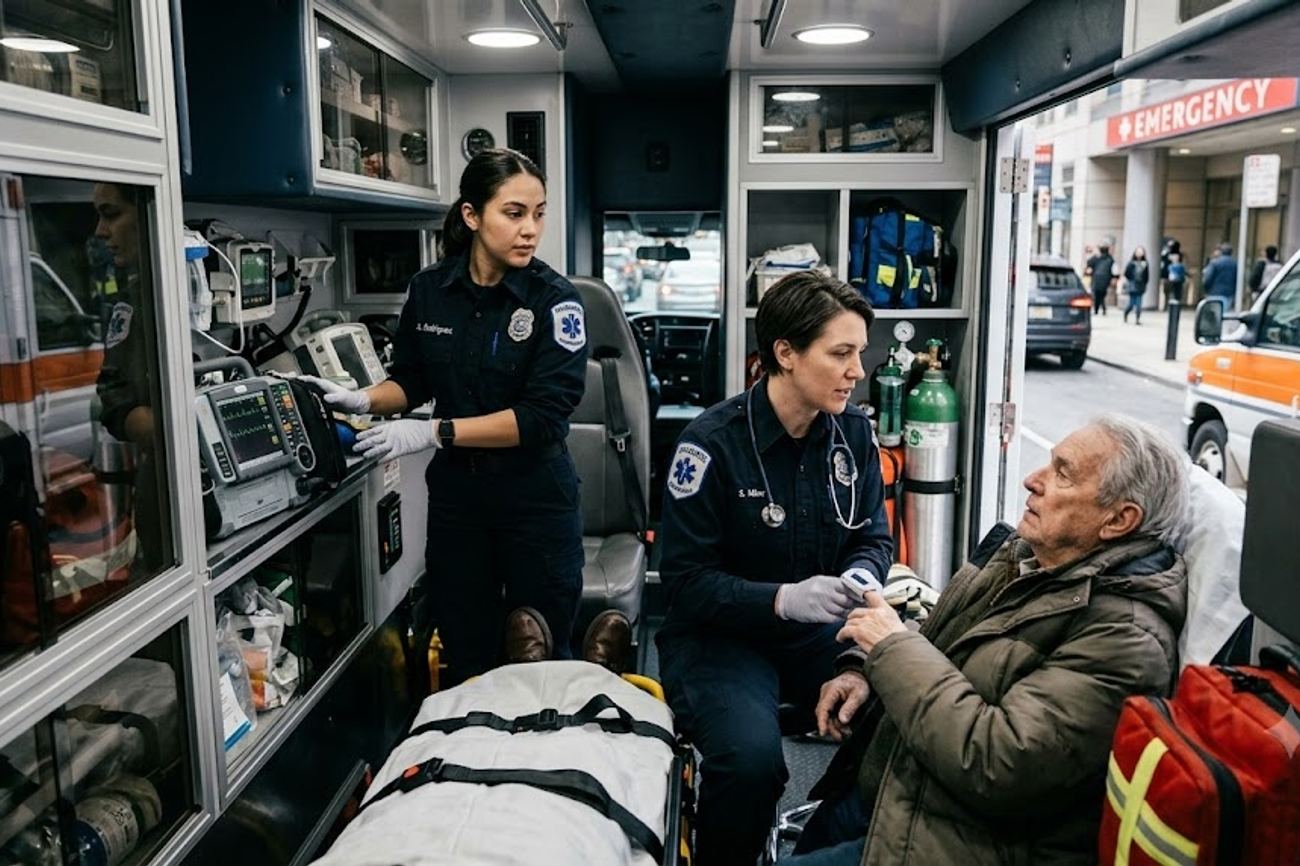
Image generated by AI
The most critical roles in the American healthcare system—specifically emergency medical technicians and paramedics—currently face a 0% risk of being replaced by artificial intelligence. While the world focuses on the disruption of white-collar office work, the frontline of emergency medicine remains an impenetrable fortress for automation due to the sheer unpredictability of a 911 call and the necessity of physical intervention.
The Shift Toward Human-Centric Professionalism
As we move through 2026, the conversation surrounding AI has pivoted from a fear of total replacement to a strategy of augmentation. A September 2026 report by the Hamilton Group, which analyzed 60 different occupations with automation risks under 45%, reveals a stark divide between roles that can be simulated and roles that require a physical, empathetic presence. By cross-referencing the Anthropic Economic Index with 2025 employment and wage data, the study highlights that the most secure jobs are those where the "human factor" is not a luxury, but a requirement for the job to function.
For the 181,000 EMTs working across the US, the risk of automation is non-existent. This is not because the technology isn't advanced, but because the environment of an emergency is inherently chaotic. AI cannot navigate a cluttered living room to reach a patient, nor can it provide the tactile, manual intervention required to stabilize a trauma victim in the back of a moving ambulance. The same applies to the 101,000 paramedics in the US workforce; their role demands a level of rapid, high-pressure judgment and physical dexterity that silicon and code cannot replicate.
However, there is a nuance here: while the risk of replacement is 0%, the rate of augmentation for healthcare practitioners sits at 58.4%. This means that while a robot isn't taking the paramedic's place at the scene, AI is increasingly handling the grueling administrative aftermath—such as automating the detailed reports that follow a shift—allowing the human professional to focus on patient care.
What Makes Frontline Care Irreplaceable
The resilience of these professions against AI stems from three specific pillars: physical presence, emotional intelligence, and contextual judgment. In the realm of social services, for example, the human connection is the primary tool of the trade. Mental health and substance abuse social workers, a group of 133,000 professionals, face only a 4.5% automation risk. Similarly, child, family, and school social workers—the largest group in the study's top 10 with 393,000 workers—face a 6.7% risk.
These roles require a deep, sustained understanding of individual human circumstances and the ability to build trust over time. You cannot automate empathy or the subtle reading of a child's body language in a school setting. The broader community and social service sector sees a 60% augmentation rate, suggesting that while AI might help organize case files or track data, the actual intervention remains a human-to-human endeavor.
Even at the highest levels of medicine, the human element remains the final authority. Physicians (classified as "all other" in the study) carry a meager 4.5% automation risk. Despite being the highest-paid group in the analysis with a median annual wage of $266,000 and a workforce of 343,000, they are not immune to AI—they are supported by it. For these professionals, AI acts as a sophisticated filter for patient profiles and clinical information, but the final, critical decision remains with the doctor.
Healthcare professionals traveling for specialized training or international conferences often rely on streamlined entry processes to maintain their schedules. Travelers should consult the U.S. Customs and Border Protection website to ensure all visa requirements and customs declarations are handled efficiently upon arrival.
Visitor Insider Tips for Navigating the US Healthcare System
For those relocating to or visiting the US, understanding the hierarchy and function of these "low-risk" roles is essential for navigating the medical system efficiently.
Knowing Where to Go Do not treat the Emergency Room (ER) as a primary care clinic. If you have a non-life-threatening issue, look for "Urgent Care" centers. If you are in a true crisis, the EMTs and paramedics—those 0% risk professionals—are your first point of contact via 911.
Understanding the Provider Roles You will often encounter Nurse Practitioners (NP) or Physician Assistants (PA) before you see a physician. With 323,000 Nurse Practitioners in the US (who face a 9.9% automation risk and earn a median wage of $132,000), these professionals are often the primary point of care in rural areas. They are highly skilled and authorized to prescribe medication.
Insurance and Documentation The "augmentation" mentioned in the reports often manifests as digital portals. Most US healthcare providers now use integrated systems for billing and records. Always ensure you have your insurance digital card ready, as the administrative side of US medicine is where AI is most prevalent.
Regional Variations Healthcare access varies wildly by state. In densely populated cities, response times for EMTs are rapid, but in rural areas, you may rely more heavily on General Internal Medicine Physicians (a group of 67,000 with a 9.9% automation risk and a median wage of $257,000) who act as the sole medical authority for entire counties.
For medical practitioners relocating or visiting the U.S., coordinating transport through major hubs is essential for seamless logistics. Utilizing the official Federal Aviation Administration resources helps travelers understand current airspace regulations and safety standards governing domestic and international flights.
Cultural and Environmental Context
The findings of the Hamilton Group report reveal a poignant socio-economic contradiction in the US. The jobs that are most "future-proof" because they require the highest level of human empathy and physical risk are often the lowest paid. EMTs, for instance, earn a median annual wage of $44,000—significantly lower than the physicians who oversee their work.
This creates a cultural tension where the "human factor" is highly valued in theory but under-compensated in practice. As AI takes over analytical and administrative tasks, there is a growing movement to re-evaluate how society compensates "high-touch" roles. The preservation of these roles is not just an economic necessity but a social one; the stability of the US healthcare system depends on the willingness of people to enter professions that require immense emotional labor and physical presence.
Furthermore, the integration of AI into these fields is being watched closely by ethics boards. While the World Health Organization and other global bodies emphasize the importance of human oversight in medicine, the push for efficiency through augmentation can sometimes clash with the need for personalized, slow, and empathetic care. The challenge for the next decade will be ensuring that AI reduces the burnout of the 3.4 million Registered Nurses (who face a 6.9% automation risk and earn $98,000) without distancing them from their patients.
FAQ: Visiting the US Healthcare System 2026
What is the fastest way to get emergency medical help? Dial 911. This triggers the dispatch of EMTs and paramedics, who provide immediate stabilization and transport to the nearest hospital.
How do I find a primary care physician? Use your insurance provider's online directory to find "In-Network" doctors to avoid massive out-of-pocket costs.
Are Nurse Practitioners as qualified as Doctors? They have different training but are qualified to diagnose and treat most common ailments and prescribe medications.
Is medical care expensive for non-residents? Yes, it is among the most expensive in the world. Always carry comprehensive travel insurance that covers emergency medical evacuation.
The future of work may be digital, but the future of survival remains stubbornly, beautifully human.
Related Travel Guides
- Qatar Airways Overtakes Emirates And Gulf Rivals With Award-Winning Premium Experience, Strong Connectivity And Advanced Onboard Services
- British Columbia Aligns With Quebec And More Canadian Destinations Accelerate 6% Digital Tourism Growth Through New Technology
- IBTM World Unveils Dr Eliza Filby Keynote on AI, Society and the Future of Human Behaviour
Disclaimer
This article is for informational and educational purposes only. It does not constitute legal, financial, or professional advice. While we strive to provide accurate and up-to-date information, travel policies, regulations, and conditions change rapidly. Always verify information with official sources before making travel decisions. Nomad Lawyer makes no representations about the accuracy, reliability, completeness, or suitability of the information provided. Readers should consult qualified professionals for advice specific to their circumstances. The views expressed in this article are those of the author and do not necessarily reflect the views of Nomad Lawyer.
Preeti Gunjan
Contributor & Community Manager
A passionate traveller and community builder. Preeti helps grow the Nomad Lawyer community, fostering engagement and bringing the reader experience to life.
Learn more about our team →