
U.S.-Mexico Border Named World's Deadliest Land Crossing Amid Record Low Migration in 2026
The U.S.-Mexico border remains the deadliest land crossing globally, with thousands of migrant fatalities recorded over the last decade despite a sharp drop in illegal entries in 2026.

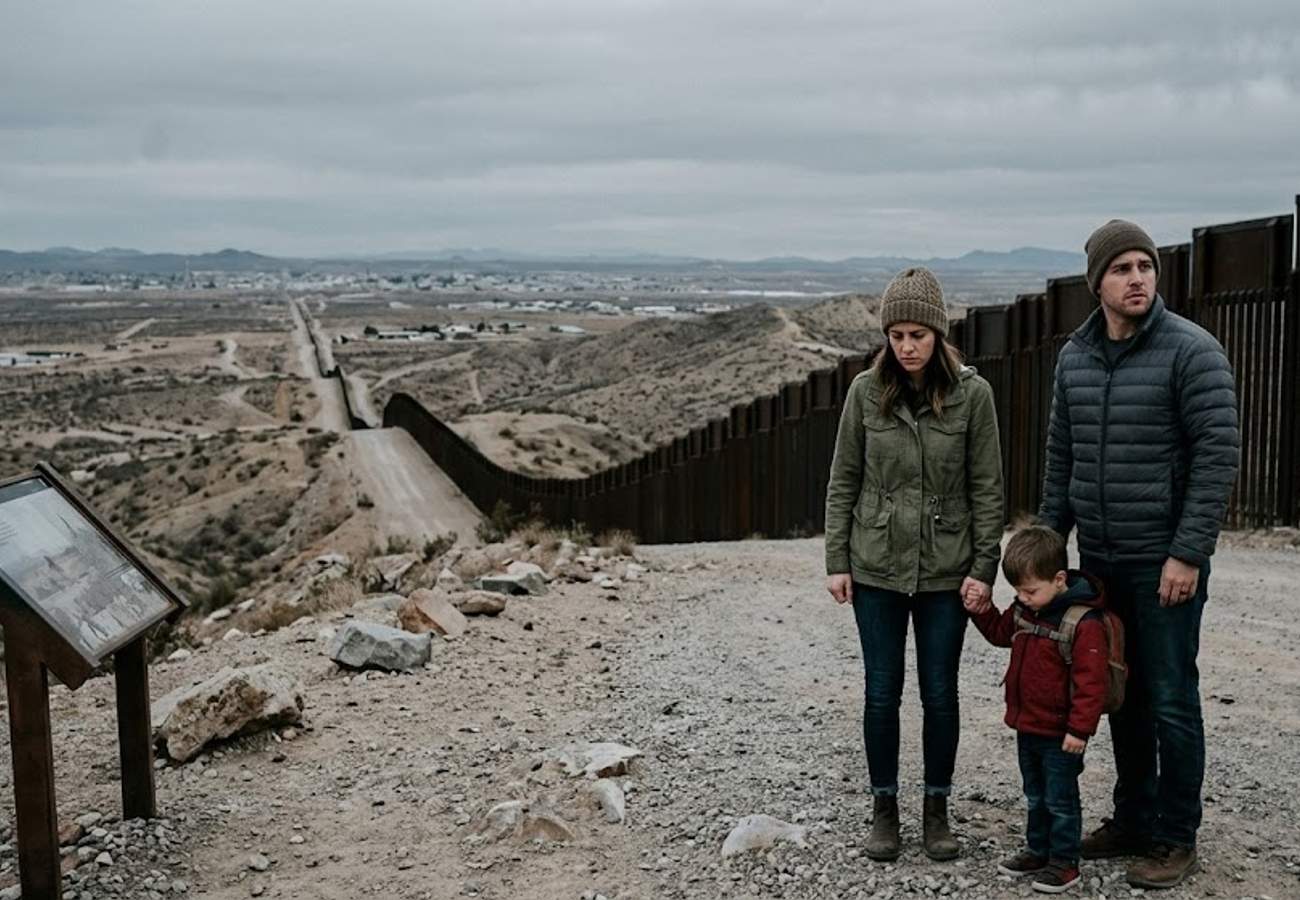
Image generated by AI
[City, Date] — The U.S.-Mexico border currently holds the grim distinction of being the most lethal land border crossing on Earth for migrants. Despite recent data indicating a historic decline in illegal entries, the region continues to see staggering numbers of fatalities driven by extreme geography, systemic violence, and hazardous transit routes.
The border spans four major U.S. states—California, Arizona, New Mexico, and Texas—creating a vast corridor where natural hazards and strict enforcement policies intersect. For those attempting to enter the United States, the journey involves navigating the Sonoran Desert's lethal temperatures and the volatile currents of the Rio Grande, often while avoiding exploitation by human smugglers.
Fatalities and the U.S. Border Patrol Data Gap
The reputation of the U.S.-Mexico border as a global hotspot for migrant deaths is supported by official government figures, though these numbers are frequently contested by humanitarian organizations. In 2022, the U.S. Border Patrol (USBP) recorded a peak of 895 deaths, the highest annual toll on record. While 2023 saw a 21.4% decrease in fatalities, it remained the second-highest documented year for deaths along the Southwest border.
The following data outlines the official death counts provided by the USBP over the last several fiscal years:
| Fiscal Year | Death Count |
|---|---|
| 2020 | 254 |
| 2021 | 568 |
| 2022 | 895 |
| 2023 | 704 |
| 2024 | 108 (First eight months) |
Industry observers and academic researchers argue that these figures represent a significant undercount. Since 1998, the USBP has officially logged 8,000 deaths, averaging 364 per year. However, the IOM Missing Migrants Project suggests a much higher toll, reporting an average of 457 deaths and disappearances annually between 2014 and 2021.
This discrepancy is often attributed to "data entry and recording issues." A 2022 report from the Government Accountability Office (GAO) confirmed that the Customs and Border Protection (CBP) failed to provide Congress with complete data on migrant deaths. The report noted that the agency often omitted remains discovered by local sheriffs, coroners, or state officials. Further academic research into three South Texas counties between 2009 and 2017 revealed that 139 cases—approximately 19% of the total death toll—were missing from official records.
Primary Drivers of Migrant Mortality in the Southwest
Research conducted by Marni LaFleur, an anthropology professor at the University of San Diego, identifies three primary causes of death: environmental exposure, drowning, and blunt force trauma.
Environmental exposure is most prevalent in the Sonoran Desert, where migrants frequently succumb to dehydration and heatstroke. Many travelers set up makeshift camps without access to potable water or adequate food, leaving them vulnerable to the region's extreme temperature swings.
Drownings are concentrated along the Rio Grande, with a particularly high incidence of fatalities near Eagle Pass, Texas. The river is characterized by deceptively shifting depths, powerful currents, and hazardous wildlife, including alligators and snakes.
Blunt force trauma accounts for roughly 20% of fatalities. These deaths result from vehicle accidents or falls from heights, including the border wall. Data suggests these specific tragedies have increased since 2020 as the physical border wall was expanded. Additionally, many migrants utilize "La Bestia" (The Beast), a dangerous freight train moving through Mexico toward the U.S. border. Passengers riding atop these carriages face the constant risk of falling or being forcibly removed by immigration officers.
Migration Trends and the 2026 Record Lows
Current data from the Department of Homeland Security (DHS) shows a dramatic shift in migration patterns. Illegal crossings dropped significantly in fiscal year 2025 and have reached record lows in 2026—levels not seen since the 1970s. Total apprehensions of migrants crossing the southern border have fallen to 237,565.
The contrast between administrations is stark. From February 2021 to December 2024, the Biden administration recorded a daily average of 5,110 migrant apprehensions. By September 2025, that number plummeted to just 279 per day. Former DHS Secretary Kristi Noem has characterized this era as the "most secure border in American history."
The impact is most visible in border towns like Eagle Pass. In 2023, the town witnessed approximately 2,000 migrants crossing daily; today, that number has dwindled to roughly 20 per day. Former U.S. Border Patrol head Mike Banks indicated that active apprehensions and the threat of deportation by Immigration and Customs Enforcement (ICE) serve as a powerful deterrent.
Why This Matters: The Human and Legal Cost
For the traveler or legal observer, these statistics highlight a critical tension between national security and human rights. The "record low" in apprehensions does not necessarily equate to a safer border. As Ariel Ruiz Soto of the Migration Policy Institute suggests, the drop in numbers may simply mean that migrants are disappearing or utilizing routes where they are not being counted.
From a logistical standpoint, the high cost of accessing public records—with autopsy records costing between $4,000 and $100,000—creates a transparency vacuum. This makes it nearly impossible for independent monitors to verify the true scale of the humanitarian crisis. For those moving through these regions, the combination of extreme environmental hazards and aggressive enforcement transforms a geographic boundary into a lethal obstacle.
The shift in 2026 suggests a new era of border management, but the underlying geography remains just as deadly. The "deadliest land border" label persists not because of the volume of people, but because of the lethal nature of the journey itself.
The intersection of policy and geography continues to make the U.S.-Mexico border a high-risk zone for those without legal passage.
Related Travel Guides
Disclaimer
This article is for informational and educational purposes only. It does not constitute legal, financial, or professional advice. While we strive to provide accurate and up-to-date information, travel policies, regulations, and conditions change rapidly. Always verify information with official sources before making travel decisions. Nomad Lawyer makes no representations about the accuracy, reliability, completeness, or suitability of the information provided. Readers should consult qualified professionals for advice specific to their circumstances. The views expressed in this article are those of the author and do not necessarily reflect the views of Nomad Lawyer.
Raushan Kumar
Founder & Lead Developer
Full-stack developer with 11+ years of experience and a passionate traveller. Raushan built Nomad Lawyer from the ground up with a vision to create the best travel and law experience on the web.
Learn more about our team →