
US Fourth of July Travel Chaos Erupts as Millions Abandon Airport Disruptions to Gridlock Major Highways Across New York, Los Angeles, and Miami: Tourism News
As rolling flight cancellations paralyze the aviation network, over 70% of Americans pivot to highway travel for July 4th, triggering massive gridlock across I-95, I-5, and I-10.

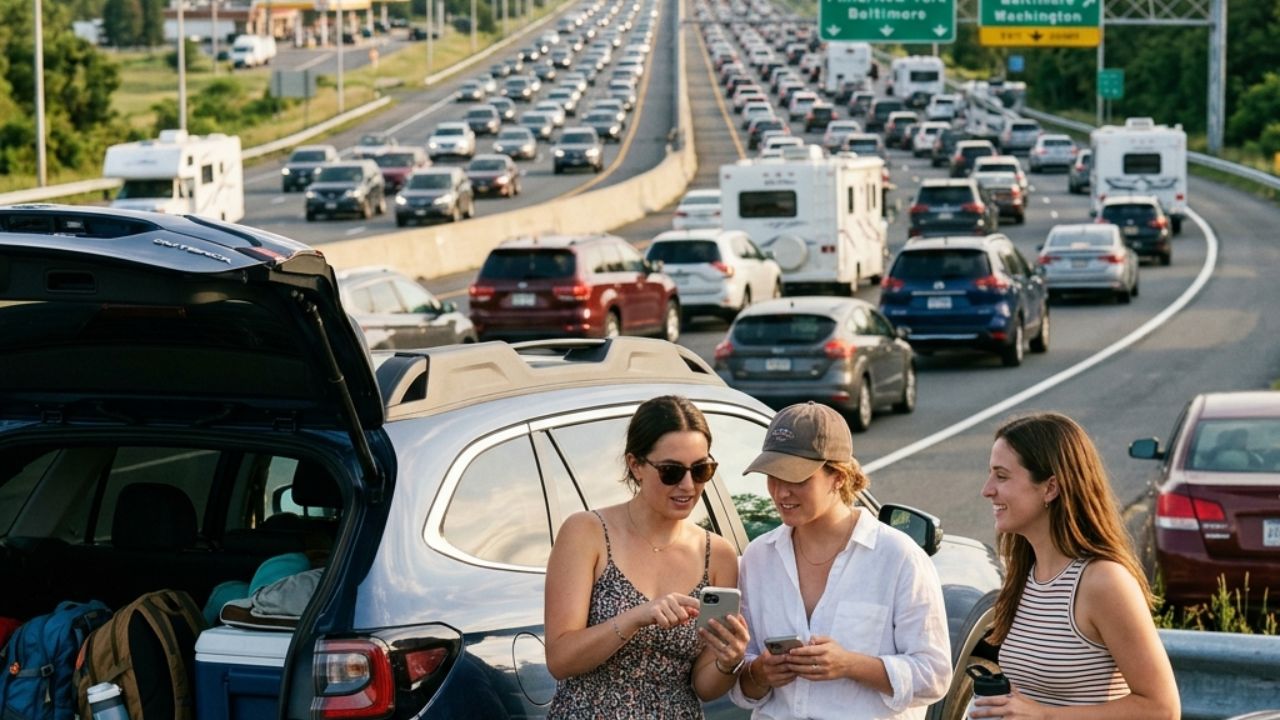
Image generated by AI
In a massive, systemic collapse of nationwide mobility driven directly by the failures of the aviation network, the United States is officially bracing for unprecedented highway travel chaos over the Fourth of July weekend. Reported on June 20, 2026, as travelers desperately monitor the latest airline news regarding widespread airport disruptions and the rising threat of catastrophic flight cancellations, over 70% of Americans have elected to abandon the skies entirely, defaulting to personal vehicles. This massive pivot away from commercial aviation is guaranteed to inflict severe, paralyzing gridlock across the nation's most vital interstate corridors, severely impacting major metropolitan hubs including New York, Los Angeles, Chicago, Atlanta, Dallas, and Miami. As millions of terrified vacationers simultaneously flood the highway system to escape terminal gridlock, transportation experts are issuing desperate warnings regarding exact departure timings, dominating today's most crucial headline in breaking aviation updates and surface mobility analysis.
By introducing direct passenger coordination and dynamic scheduling backups, the regional aviation hubs target growing passenger demand across vital commerce sectors. The choice to coordinate flight departures in phases helps to manage gate capacity, supporting the country's broader regional transportation network.
Context: Escaping the Terminal Only to Find Gridlock
For the American traveler, the Fourth of July weekend has devolved into a brutal logistical ultimatum: risk your vacation on a highly volatile airline network, or subject yourself to grueling interstate highway congestion.
Historically, the Independence Day holiday consistently ranks as one of the absolute highest-volume travel events in the United States. According to official travel demand data referenced by the American Automobile Association (AAA) and the US National Travel and Tourism Office, more than 70% of Americans typically travel by car during major summer holidays. However, in 2026, the intense fear of sudden airport disruptions has solidified this highway reliance. Because travelers refuse to have their long weekend destroyed by a sudden flight cancellation triggered by localized thunderstorms or air traffic control shortages, they are aggressively pushing their family vehicles onto the interstates. This creates highly concentrated, synchronized pressure on highway infrastructure. Millions of travelers are attempting to reach their destinations within an incredibly narrow, highly predictable timeframe, effectively transforming major corridors like I-95 and I-10 into massive, slow-moving parking lots.
To view live flight schedules, verify the active departure status of your specific domestic itinerary, or to track potential route restorations prior to embarking on a massive road trip, travelers must consult official aviation directories. For direct updates regarding how massive operational failures might impact your current flight into congested hubs like Chicago or Atlanta, travelers should aggressively utilize the official digital portals of major US carriers. To explore live flight tracking and monitor the exact severity of the cascading bottlenecks paralyzing the broader US airspace, passengers can consult the official FlightAware tracking service.
Section-Wise Breakdown: The Geography of Congestion
The East Coast Gridlock (I-95 & I-75)
Transportation data and US Department of Transportation (DOT) traffic monitoring frameworks highlight that the East Coast will suffer some of the most brutal delays. The absolute worst congestion will manifest along I-95, a vital corridor connecting Boston, New York City, Washington DC, and Miami. Simultaneously, travelers pushing down from the Midwest into Florida will completely overwhelm I-75. Drivers navigating these corridors will face an agonizing blend of long-distance vacationers and heavy, lingering commercial freight traffic.
The Western Bottlenecks (I-5 & I-10)
On the West Coast, the logistical failure is equally severe. Interstate 5, which covers the entire West Coast, will absorb massive surges of traffic departing Los Angeles and Seattle. Meanwhile, the critical I-10 corridor spanning from California entirely across to the Gulf Coast and into Houston will face catastrophic bottlenecks as drivers attempt to reach southern coastal beaches.
The Peak Danger Windows
Traffic analysts explicitly warn that timing is the only defense against this travel chaos. The absolute worst congestion is mathematically projected to occur on the Wednesday afternoon before Independence Day, specifically between 2:00 PM and 8:00 PM. During this window, daily commuters leaving work violently merge with long-distance holiday travelers beginning their trips. A secondary, massive congestion spike will occur on the morning of July 4 itself, driven by last-minute departures heading toward national parks and beaches, followed by a massive, grueling return window on Sunday afternoon.
Technical Roster: US Independence Day Mobility Matrix
To ensure absolute factual accuracy regarding the exact congestion windows, heavily impacted routes, and the overarching metrics defining this nationwide surface disruption, the following matrix details the verified DOT and AAA data:
US Fourth of July Travel Disruption Matrix
| Mobility Parameter | Verified Congestion Metric |
|---|---|
| Primary Travel Mode | Car (Over 70% of Americans, US National Travel Data) |
| Absolute Worst Departure Window | Wednesday prior to July 4 (2:00 PM - 8:00 PM) |
| Recommended Safe Departure Windows | Strictly before 6:00 AM or after 9:00 PM |
| Heavily Impacted Interstate Corridors | I-95, I-10, I-5, I-75, I-70 |
| Major Congestion Urban Centers | New York, Los Angeles, Chicago, Atlanta, Dallas, Houston, Miami |
| Secondary Congestion Spikes | Morning of July 4, Sunday return window |
Data strictly reflects the verified mobility insights published on June 20, 2026, by AAA and the US Department of Transportation.
Passenger Impact: The Exhaustion of the American Road Trip
For the millions of families attempting to execute a classic American road trip to avoid the airport, the immediate impact is severe mental exhaustion and dramatically extended travel times.
Because travelers are abandoning air travel to avoid missed connections and expensive delays, they are trading one form of travel chaos for another. A drive from New York to Washington DC on the Wednesday before July 4, which normally takes four hours, is projected to easily exceed seven hours due to severe inbound and outbound congestion. Travelers trapped on I-5 or I-10 face incredibly limited alternative routing options if a major accident occurs ahead of them. Furthermore, the sheer volume of cars on the road leads to massive congestion at service stations, rest stops, and rural off-ramps, ensuring that the logistical stress of the holiday weekend begins the exact second the vehicle merges onto the highway.
Industry Analysis: The Crisis of Highway Capacity
Tourism and transportation analysts monitoring this massive Fourth of July surge note that the American highway system simply lacks the structural capacity to handle synchronized, nationwide departures.
Analysts emphasize that because Independence Day travel is heavily synchronized across the entire country, it creates highly predictable, unavoidable congestion spikes. The American highway network was built to handle staggered commercial traffic, not a sudden, simultaneous surge of 50 million vehicles heading to coastal and rural destinations on a Wednesday afternoon. Furthermore, because air travel capacity is maxed out and ticket prices remain high, the highway network has become the absolute default overflow system for the entire US tourism economy. Until the aviation network significantly expands capacity and reliability, the DOT expects these brutal, peak-summer highway bottlenecks to worsen exponentially in the coming years.
Actionable Advice for Surviving Independence Day Gridlock
If you are abandoning the airlines to navigate the massive interstate gridlock over the Fourth of July weekend, you must execute this strict surface survival strategy:
- Exploit the AAA Safe Travel Windows: Do not attempt to travel during normal waking hours. You must strictly adhere to official AAA travel guidance: leave your home before 6:00 AM or wait until after 9:00 PM. Departing during the apocalyptic 2:00 PM to 8:00 PM Wednesday window practically guarantees you will spend the first day of your vacation trapped in idle traffic.
- Pre-Plan Fuel and Rest Stops: Do not assume you can pull off the highway at any exit to find fuel. Massive holiday mobility demand completely overwhelms rural gas stations along I-75 and I-95. Plan your fuel stops in advance, ensure you carry emergency supplies, and continuously utilize real-time traffic navigation tools to detect accidents miles ahead of your position.
- Stagger the Return Journey: Do not attempt to drive home on Sunday afternoon. The entire country will be on the road simultaneously. Request an extra day of PTO and return on Monday morning, or leave Sunday before dawn to completely bypass the agonizing return-window congestion peaks.
FAQ: Fourth of July Highway Travel
When is the worst time to drive for the Fourth of July weekend?
Traffic analysts warn that the absolute worst congestion nationwide will occur on the Wednesday afternoon before the holiday, specifically between 2:00 PM and 8:00 PM.
Which major US highways will experience the worst delays?
Major impacted corridors include I-95 (East Coast), I-75 (Florida/Midwest), I-10 (Southern US to Gulf Coast), I-5 (West Coast), and I-70 (Midwest to western mountains).
How can travelers avoid the severe holiday traffic?
AAA travel guidance strongly suggests adjusting departure times to off-peak hours, specifically leaving before 6:00 AM or after 9:00 PM to avoid peak highway volume.
The Reality of Holiday Surface Travel
The massive congestion warnings surrounding the Fourth of July weekend prove definitively that avoiding the airport does not grant travelers immunity from travel chaos. By attempting to bypass the highly publicized threat of flight cancellations, over 70% of Americans are actively choosing to endure paralyzing, synchronized gridlock across the nation's interstate system. Yet, as families eagerly pack their vehicles to escape major urban hubs like Los Angeles, Chicago, and Atlanta, they must accept a critical new reality: the American highway network cannot process a simultaneous national departure. Surviving a holiday road trip now demands extreme tactical timing, a complete refusal to drive on Wednesday afternoon, and the strategic foresight to navigate the interstates while the rest of the country is asleep.
Key Takeaways
- Massive Mobility Shift: Over 70% of Americans will travel by car during the Fourth of July weekend, actively choosing highways over volatile airports.
- The Danger Window: The absolute worst congestion will occur between 2:00 PM and 8:00 PM on the Wednesday prior to the holiday.
- Safe Travel Hours: AAA strongly recommends departing strictly before 6:00 AM or after 9:00 PM to avoid catastrophic delays.
- Heavily Impacted Corridors: I-95, I-10, I-5, I-75, and I-70 will suffer massive, agonizing bottlenecks due to synchronized holiday departures.
- Major Cities Paralyzed: Urban hubs including New York, Los Angeles, Chicago, Atlanta, Dallas, Houston, and Miami will experience severe inbound and outbound gridlock.
Related Travel Guides
Massive Travel Chaos Paralyzes Chicago O'Hare with 1,425 Disruptions
Disclaimer
This article is for informational and educational purposes only. It does not constitute legal, financial, or professional advice. While we strive to provide accurate and up-to-date information, travel policies, regulations, and conditions change rapidly. Always verify information with official sources before making travel decisions. Nomad Lawyer makes no representations about the accuracy, reliability, completeness, or suitability of the information provided. Readers should consult qualified professionals for advice specific to their circumstances. The views expressed in this article are those of the author and do not necessarily reflect the views of Nomad Lawyer.
Kunal K Choudhary
Co-Founder & Contributor
A passionate traveller and tech enthusiast. Kunal contributes to the vision and growth of Nomad Lawyer, bringing fresh perspectives and driving the community forward.
Learn more about our team →