
US Aviation Crisis: 6,401 Delays and 248 Cancellations Hit Dallas and Major Hubs in 2026
Severe thunderstorms and FAA traffic management measures triggered 6,401 delays and 248 cancellations across the USA, severely impacting Chicago O'Hare and the New York corridor.

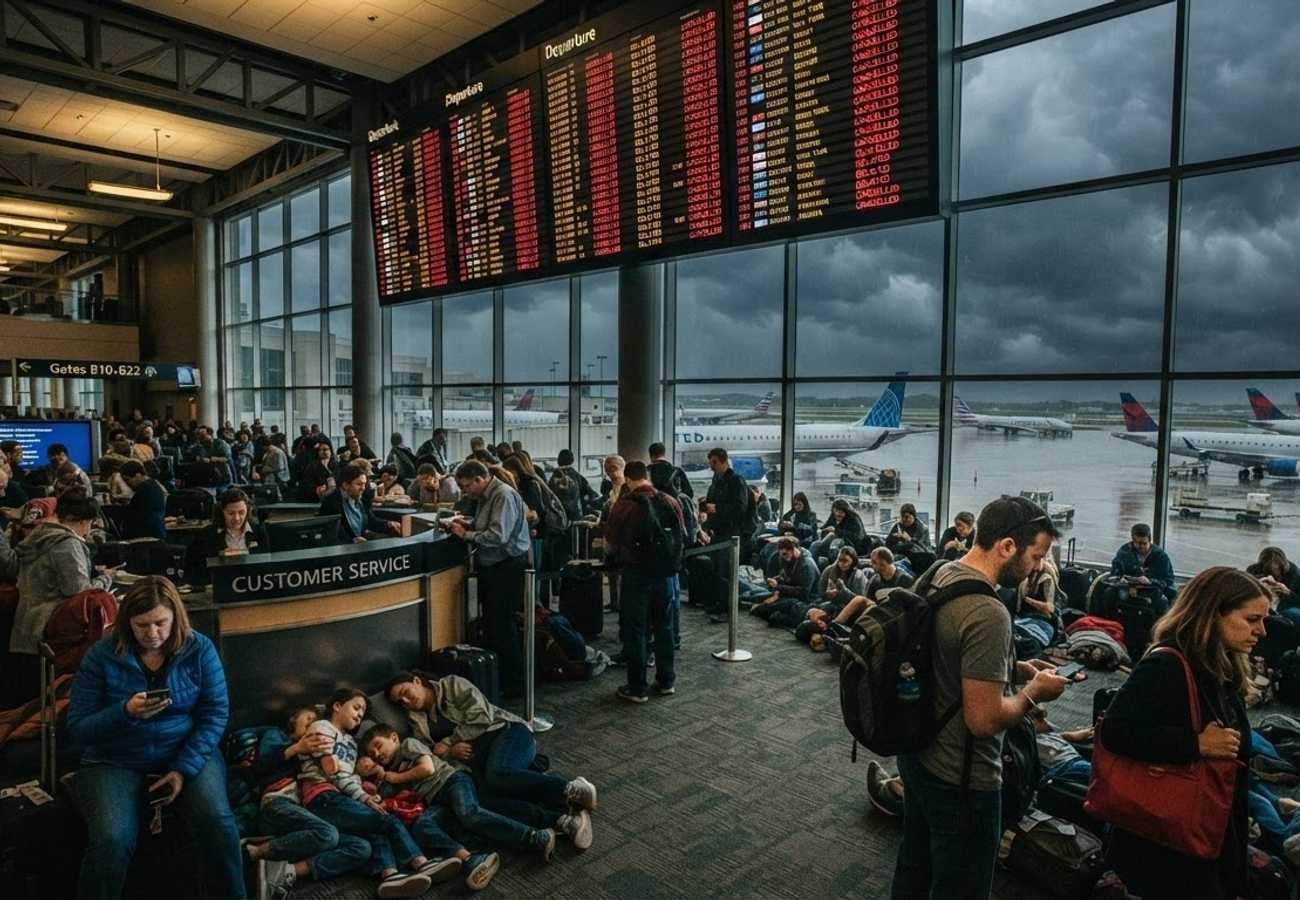
Image generated by AI
Thunderstorms and FAA traffic restrictions have paralyzed US airspace, resulting in 6,401 delays and 248 cancellations in a single day. The disruption highlights the fragile interdependence of the national aviation network.
Severe weather patterns combined with Federal Aviation Administration (FAA) traffic management initiatives have created a coordinated operational crisis across the United States. The resulting congestion has forced the FAA to implement Ground Stops, Ground Delays, and strict departure restrictions to maintain safety standards at the nation's most congested gateways.
The impact was most acute in the Midwest and Northeast. Chicago O’Hare International Airport emerged as the primary hotspot for delays, while New York’s LaGuardia Airport suffered the highest volume of total cancellations.
Regional Breakdown of Aviation Disruptions
The crisis manifested differently across three primary geographic sectors:
- The Midwest: Chicago O’Hare (ORD) faced the heaviest burden with 611 delays. This was driven by a combination of local traffic volume and the "ripple effect" of delayed arrivals from other disrupted regions. Minneapolis–St. Paul (MSP) further complicated regional flow under a total Ground Stop.
- The Northeast Corridor: This region saw the most widespread restrictions. A cluster of airports—including Boston Logan, JFK, LaGuardia, Newark Liberty, Reagan National, Washington Dulles, and Baltimore/Washington—operated under simultaneous FAA measures. Due to the dense interconnection of these hubs, a capacity drop at one airport quickly triggered delays across the entire corridor.
- The Southern Network: Major connecting hubs including Dallas/Fort Worth, Charlotte Douglas, and Houston Bush Intercontinental handled elevated delay volumes. Orlando International (MCO) was particularly hard hit by a combination of thunderstorms and FAA-mandated restrictions.
FAA Operational Impact and Traffic Measures
The FAA utilized three distinct tools to manage the airspace, each with varying levels of impact on passenger movement. A Ground Stop is the most severe, halting all departures and arrivals to a specific airport. Ground Delays allow flights to proceed but increase the spacing between aircraft to prevent runway saturation. Departure Delays require aircraft to wait for specific takeoff slots.
The current operational status across key hubs is detailed below:
| Airport | Latest FAA Measure | Primary Reason | Current Operational Impact |
|---|---|---|---|
| Chicago O’Hare (ORD) | Departure Delay | Traffic volume | Average delay 15 mins (increasing) |
| Minneapolis–St. Paul (MSP) | Ground Stop | Operational restrictions | Departures temporarily halted |
| Orlando International (MCO) | Departure Delay | Thunderstorms / Traffic | Average delay 60 mins (increasing) |
| LaGuardia (LGA) | Ground Stop | Thunderstorms | Departures temporarily suspended |
| John F. Kennedy (JFK) | Departure Delay | Traffic / Thunderstorms | Average delay 30 mins (increasing) |
| Houston Bush Intercontinental (IAH) | Departure Delay | Thunderstorms | Average delay 15 mins (increasing) |
| Washington Dulles (IAD) | Departure Delay | Thunderstorms | Average delay 75 mins (increasing) |
| Newark Liberty (EWR) | Departure Delay | Traffic / Weather | Average delay 75 mins (increasing) |
| Reagan National (DCA) | Ground Delay | Thunderstorms | Average ground delay 41 mins |
| Baltimore/Washington (BWI) | Departure Delay | Traffic / Thunderstorms | Average delay 60 mins (increasing) |
| Boston Logan (BOS) | Departure Delay | Traffic / Weather | Average delay 90 mins (increasing) |
Airline Performance and Network Strain
The disruption affected carriers differently based on their hub-and-spoke models and regional exposure.
Southwest Airlines recorded the highest number of delayed flights. Because of its extensive domestic point-to-point network, a disruption at one major airport quickly cascaded across multiple routes.
Endeavor Air faced the most severe impact in terms of cancellations, suggesting that regional operations were less resilient to the intensifying weather and traffic restrictions.
Other major carriers adopted a "delay over cancel" strategy to preserve network continuity:
- Delta Air Lines and United Airlines both managed hundreds of delays but kept cancellation numbers relatively low, opting to lengthen travel times rather than scrap flights entirely.
- JetBlue Airways saw significant delays due to its heavy concentration of operations in the New York and Boston markets.
- Republic Airways experienced notable setbacks as its regional feeder flights were blocked by restricted arrival windows at major hubs.
The "Ripple Effect" in Modern Aviation
The scale of today's disruption—where a storm in one city delays a flight in another—is a result of tight operational synchronization. Modern aviation relies on the continuous rotation of aircraft, crews, and passengers.
When a hub like Dallas/Fort Worth or Chicago O'Hare slows down, the aircraft intended for a subsequent flight is unavailable. Simultaneously, flight crews may hit their legal duty-hour limits while waiting on the tarmac, leading to further cancellations. This systemic interdependence means that even passengers in clear-weather zones experience delays because their incoming aircraft or crew is trapped in a congested hub elsewhere.
Travelers are advised to monitor real-time FAA advisories and airline apps, particularly those routing through the New York metropolitan area and the Midwest.
Key Takeaways
- Total Impact: 6,401 delays and 248 cancellations recorded across the US.
- Hardest Hit Hubs: Chicago O'Hare (611 delays) and LaGuardia (107 cancellations).
- Airline Impact: Southwest Airlines had the most delays; Endeavor Air had the most cancellations.
- Primary Causes: Thunderstorms combined with FAA Ground Stops and Departure Delays.
- Systemic Failure: The "ripple effect" caused delays in clear-weather cities due to aircraft and crew displacement.
FAQ
What is the difference between a Ground Stop and a Ground Delay? A Ground Stop completely halts flights from departing or arriving at a specific airport. A Ground Delay allows flights to continue but increases the time between departures to prevent overcrowding at the destination.
Why is my flight delayed if there is no weather at my airport? This is known as the ripple effect. Your aircraft or flight crew may be delayed at a different hub (like ORD or LGA), meaning they cannot reach your airport in time for your scheduled departure.
Which airline was most affected by the 2026 disruptions? Southwest Airlines experienced the highest number of delays, while Endeavor Air saw the highest number of cancellations.
Related Travel Guides
Disclaimer
This article is for informational and educational purposes only. It does not constitute legal, financial, or professional advice. While we strive to provide accurate and up-to-date information, travel policies, regulations, and conditions change rapidly. Always verify information with official sources before making travel decisions. Nomad Lawyer makes no representations about the accuracy, reliability, completeness, or suitability of the information provided. Readers should consult qualified professionals for advice specific to their circumstances. The views expressed in this article are those of the author and do not necessarily reflect the views of Nomad Lawyer.
Raushan Kumar
Founder & Lead Developer
Full-stack developer with 11+ years of experience and a passionate traveller. Raushan built Nomad Lawyer from the ground up with a vision to create the best travel and law experience on the web.
Learn more about our team →